
VFX Breakdown · Spring 2025 — Spring 2026
4 WAYS TO DESTROY SOUTH ASPEN HIGH
Role — VFX Supervisor · Compositor · CG Generalist
Duration — May 2025 – Jun 2026
Tools — Nuke · Houdini (Karma) · Maya · After Effects · BeebleAI
75 collaborators. 13 majors. 9 months of VFX. 1 short film.
01
May - September 2025
Ideation & Pre-Production
Concept · Storyboards · Animatic · Shot List
4 Ways to Destroy South Aspen High is a SCAD senior thesis short film built around a superhero-grounded high school story. The film's four core VFX pillars were defined early in pre-production: a custom particle speed trail for Taylor the speedster, a dimension-eating void effect for Eve, subsurface-glowing skin for the explosion build-up sequences, and large-scale destruction FX for the school itself.
This project was one of the largest collaborations even complete at SCAD, spanning 13 different majors, both current students and alumni. With a crew of over 75 people, we were able to assemble the “Avengers” of SCAD. Here is a combined list of all crew members involved.
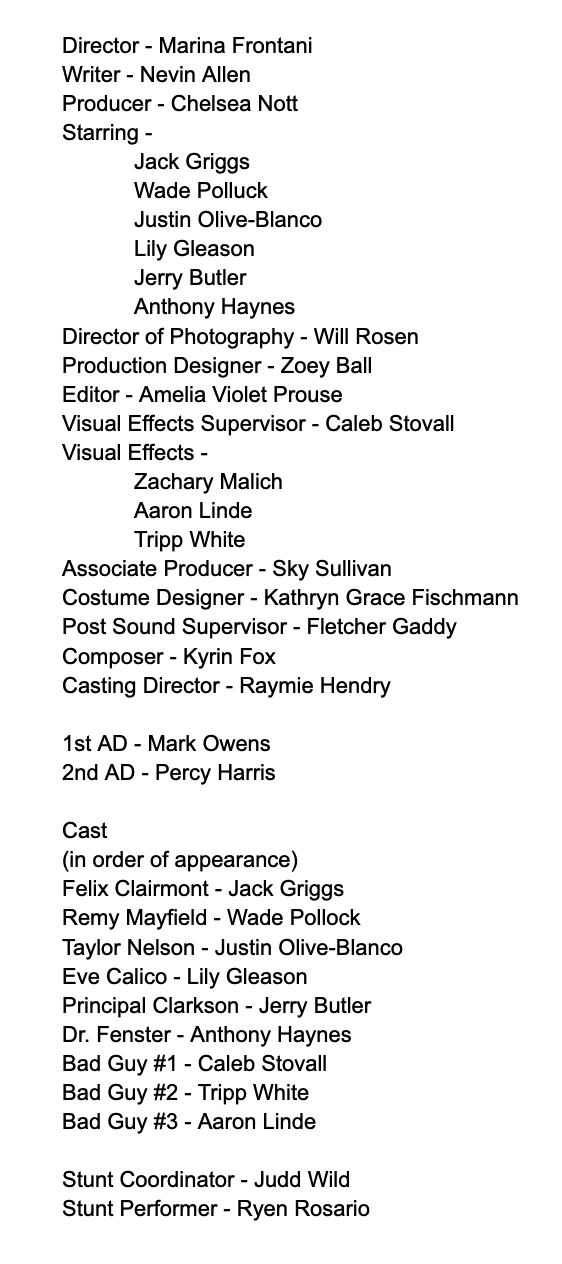
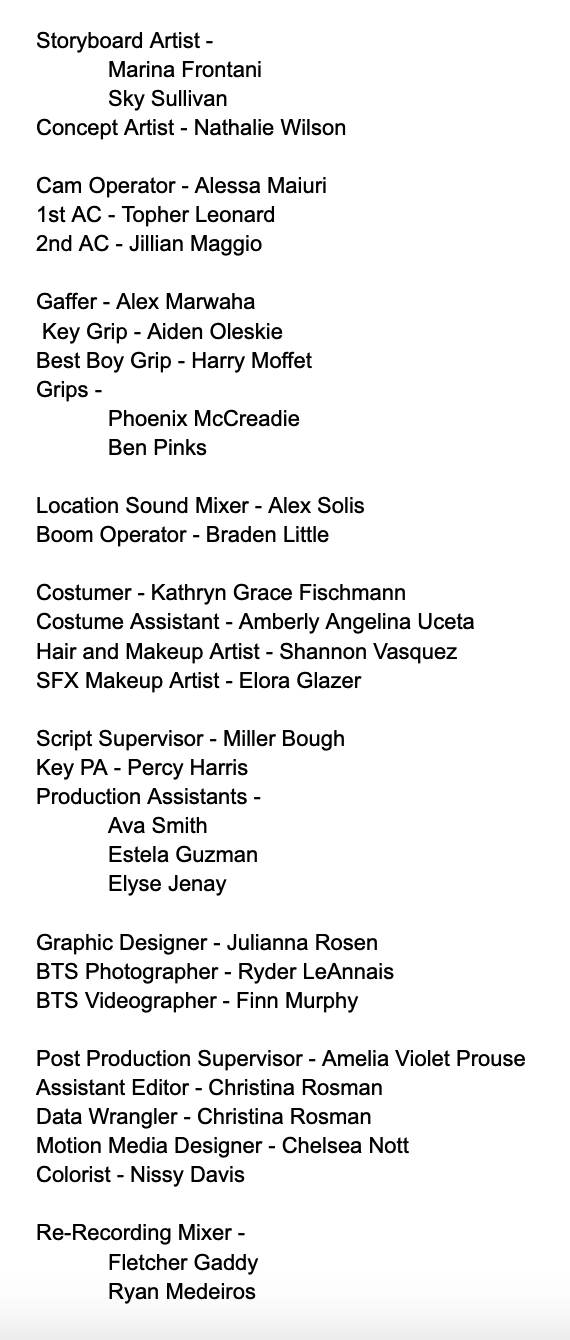
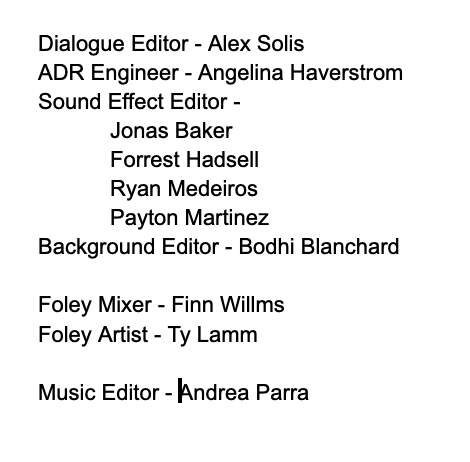
Early animatics were developed and iteratively refined across the fall, eventually getting the story cut from 15 minutes down to a tighter 11.5-minute assembly. From those animatics, a preliminary shot list of 119 total shots was broken down between the VFX team and director Marina, flagging every shot requiring VFX work. Weekly meetings were held between the VFX team, the director, and producer Chelsea to keep the shotlist continuously updated as the story developed.
Here is the final animatic made during our pre-production.
02
August 2025 - January 2026
Pipeline & Pre-Visualization
Nuke Pipeline · Shot Structure · Shoot Day Sheets · Set Extension Tests
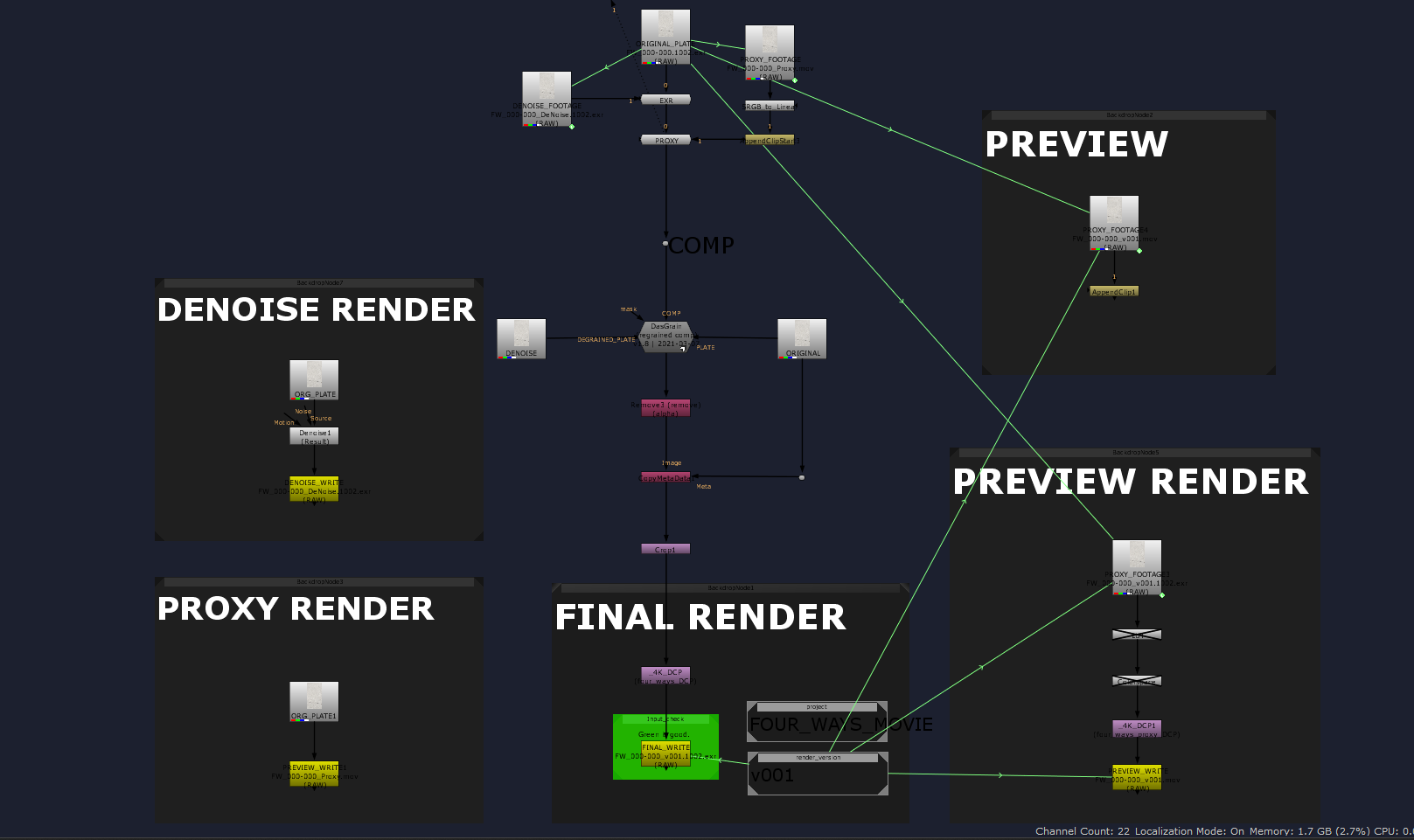
Over the winter break, I designed and built a pipeline-ready Nuke file that auto-generates the entire shot project file structure directly into our collaborative space from a single input file name. Once footage was locked and normalized to EXR, the tool created all necessary read nodes, export paths, and folder structure automatically, significantly reducing overhead at the start of post.
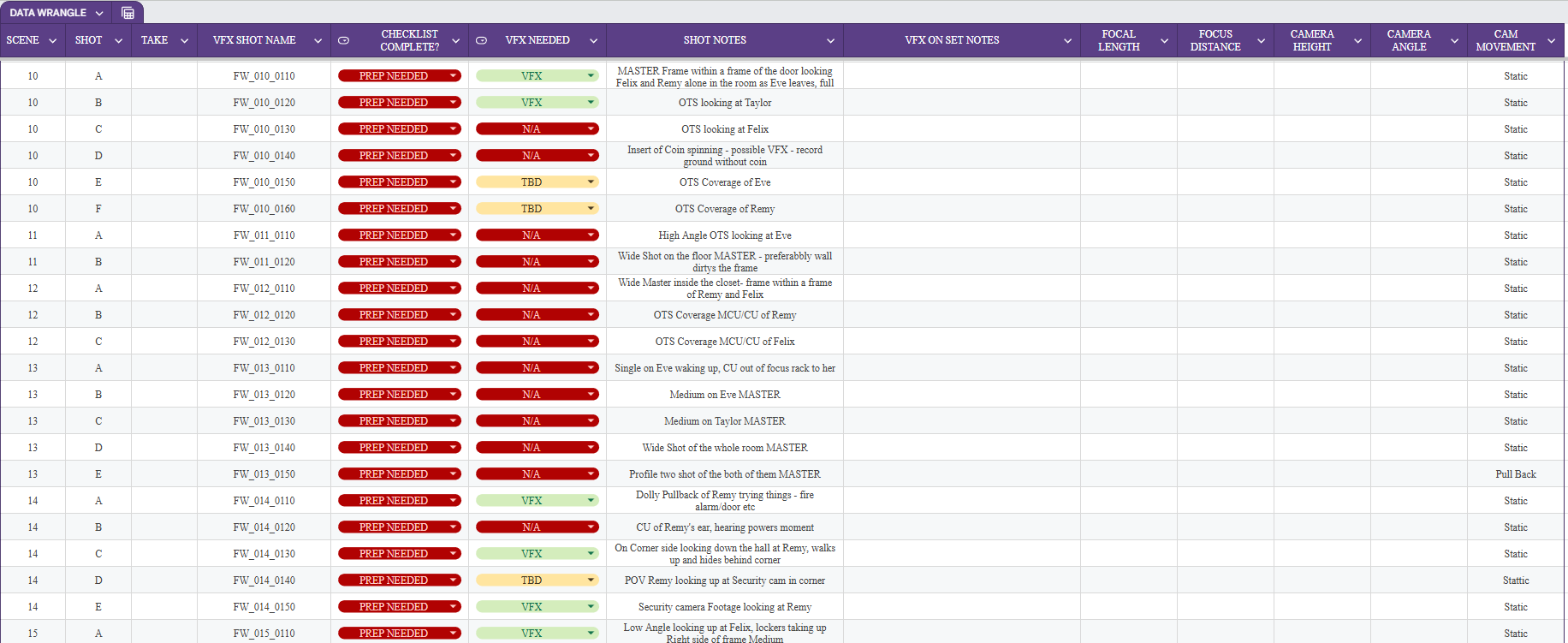
A shoot day tracking sheet was built in Google Sheets containing all shot-level notes, VFX flags, and data capture requirements for production day, keeping the VFX team organized and the pipeline consistent between on-set capture and post handoff. Zach's anamorphic workflow for camera data and match-move export became the backbone of our plate delivery pipeline (https://www.zmalichvfx.com/anamorphic-workflow), every tracked camera was delivered as an Alembic solve, which made wire removal and CG integration significantly cleaner throughout post.
Set extension tests were run on location test footage from Arnold Hall using SynthEyes for tracking. Tripp's Houdini-modeled locker environment was rendered in Karma and comped against the tracked plate, with an AO pass rendered separately for depth control, and a banner asset built using our school logo placed via soft-light blend and gizmo-driven drop shadow for integration.
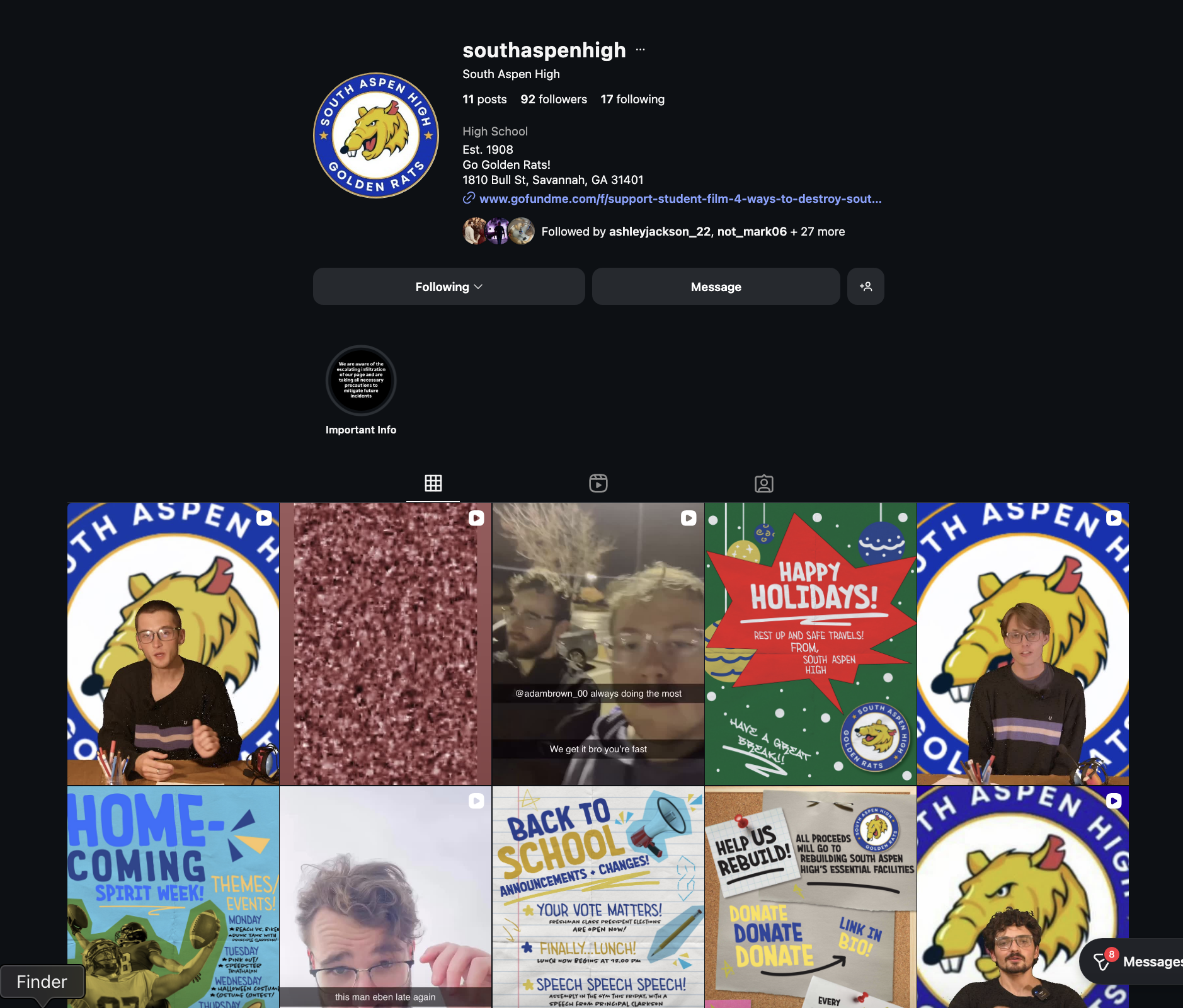
Furthermore, during our winter break, we worked with our AD Mark Owens, on creating some VFX spots for out instagram page, in order to promote and crowdfund our film, to help with production. Here are the spots I was responsible for as well as the instagram page.
03
September 2025 - March 2026
Speed Trail Development
Houdini Simulation · Karma Rendering · Comp Iteration · BeebleAI Relighting
The speed trail was the most iterated effect in the film, spanning from initial proof-of-concept tests in September 2025 through final pixel delivery in March 2026. The design process was extensive: references included Sonic (movie), Quicksilver, and Mekkari-style trails, and multiple simulations were built and compared before landing on a fully custom approach. The winning design used two layered Houdini simulations, a refined point-specific trail and a broader wave sim, combined with graduated noise decay and a longer stride pacing, giving the trail a distinct, organic feel rather than reading as off-the-shelf.
Here was the first simulation and early composite.
Using this version, we did some test compositing against live action footage, here were those composites.
From this first iteration, I iterated a number of other options, here are them before compositing.
During this iteration process, we also filmed some new test footage, where I was able to test some compositing with these trail iterations. For these iterations, I tested some decay and retime to give a faster more natural speedster look. This was also the first new set extensions using the new lockers made by Tripp. These weren’t the final model or textures used.
Overall, for the compositing of these shots, our Karma renders were split into two passes, the speed trail and an emission cast pass, with a geometry stand-in built in Houdini to approximate the plate lighting for the cast light interaction. In Nuke, the trail was processed with heat wave distortion, color grading, and muddy gizmos to ground it into the plate.
A kick-up dust pyro was added to the ground beneath the speedster using a POP simulation driven by foot contact, created by transferring foot position attributes from the animated character to the ground plane via an attribute transfer, then retaining the stamps through a SOP Solver with an animated life attribute to control decay. The dust simulation was rendered on the SCAD farm and composited as a subtle layer on top of the speed trail comp.
Ultimately, we didn’t use much dust in our final exports, as our shots were inside, and it made the school seem caked in dust.
For the slow-motion hero speed shot with wire work, faking plausible light interaction from the trail on the live-action plate was a key challenge. After testing several approaches, BeebleAI's normal map generation proved the most reliable path. The plate was fed through BeebleAI to extract a normal map, which was then used inside Nuke's relighting nodes to physically place a moving light source that followed the trail's path.
Full plate relighting was avoided, it struggled to handle skin subsurface accurately, so the relight pass was multiplied onto the plate and merged using a plus operation, giving a convincing result without the typical over-driven look of direct AI relighting.
04
August 2025 – April 2026
Void & FX Development
Houdini Procedural Growth · Infection Solver · Vein System · Comp Integration
The void effect, a dimension-eating darkness that grows and consumes, went through a significant design pivot mid-project. The original concept involved shadow demons, which was abandoned in favor of a procedurally growing void that better matched the visual language of the film's other FX. The base void growth system was built in Houdini using a distance-normalized mask from a user-defined point position, animated to grow outward with noise-driven breakup across the geometry surface. Veins were developed on top as an optional layer to add depth, gore, and organic complexity to what would otherwise be pure black. The veins were late abandoned altogether.
Here was the original design, using projected shadows, and simple nuke compositing.
The new design used this infection solver, driven by the veins growing from any desired point.
05
January 16–19, 2026
Production
4-Day Principal Photography · Wire Work · Anamorphic Capture · VFX On-Set Notes
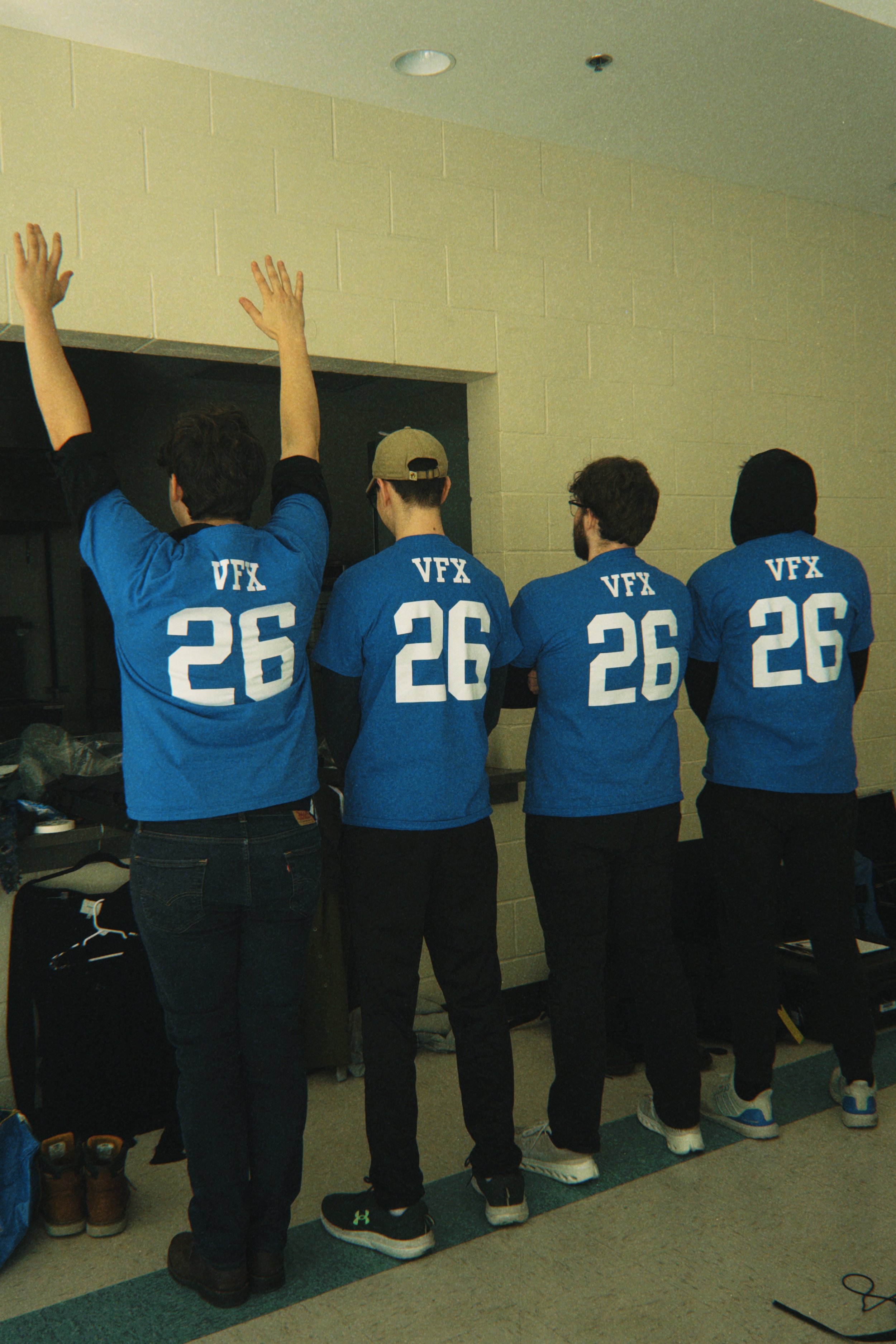
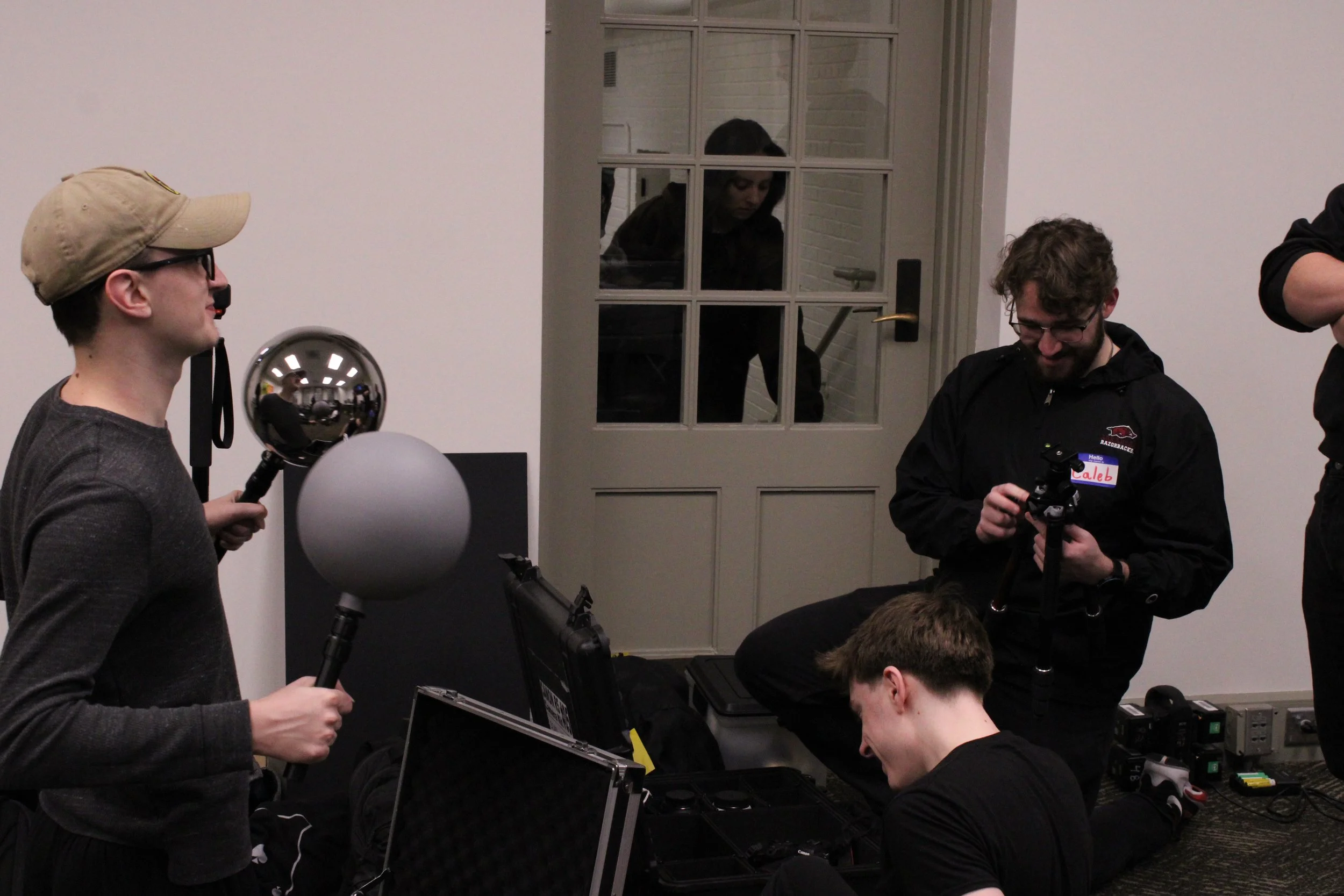
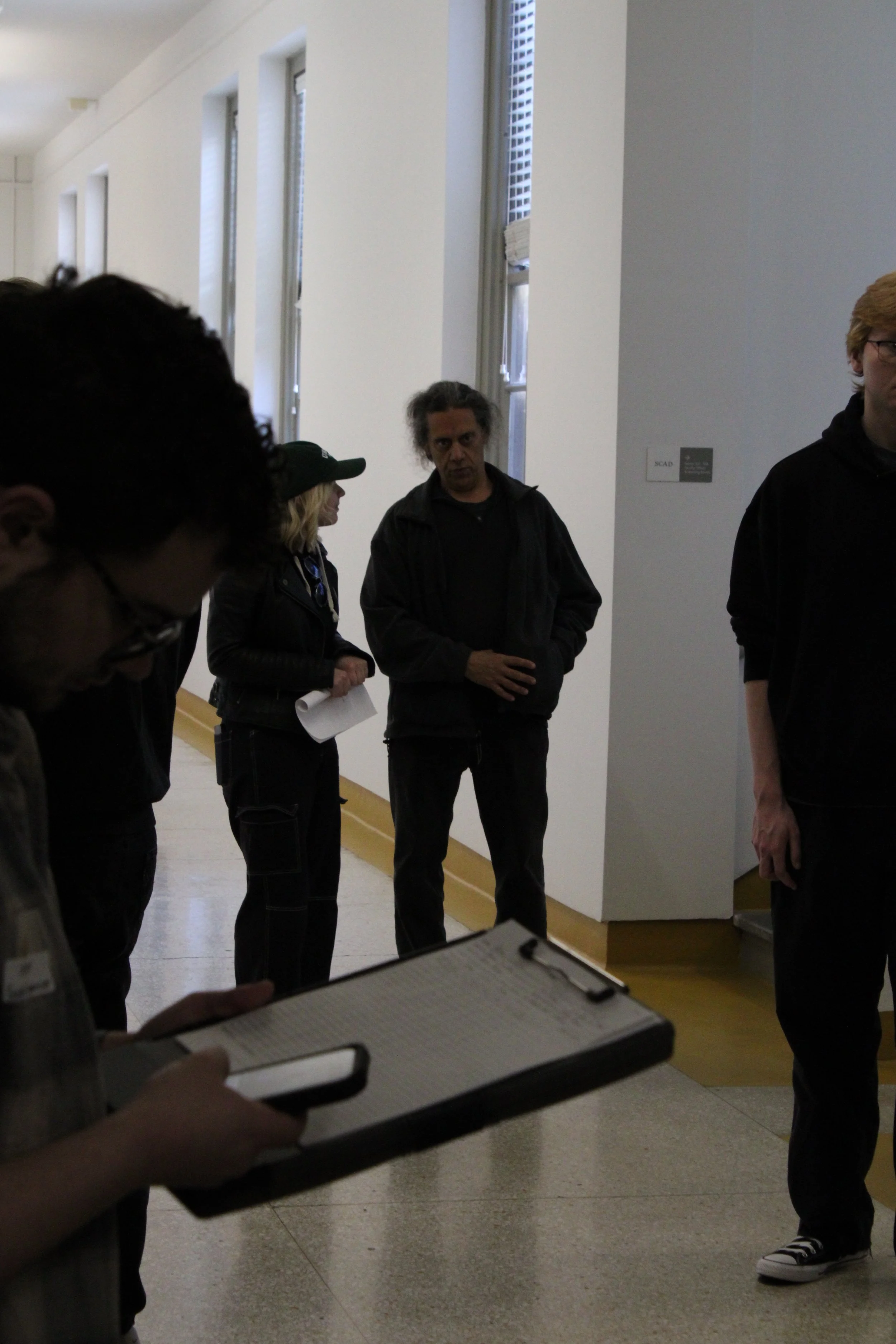
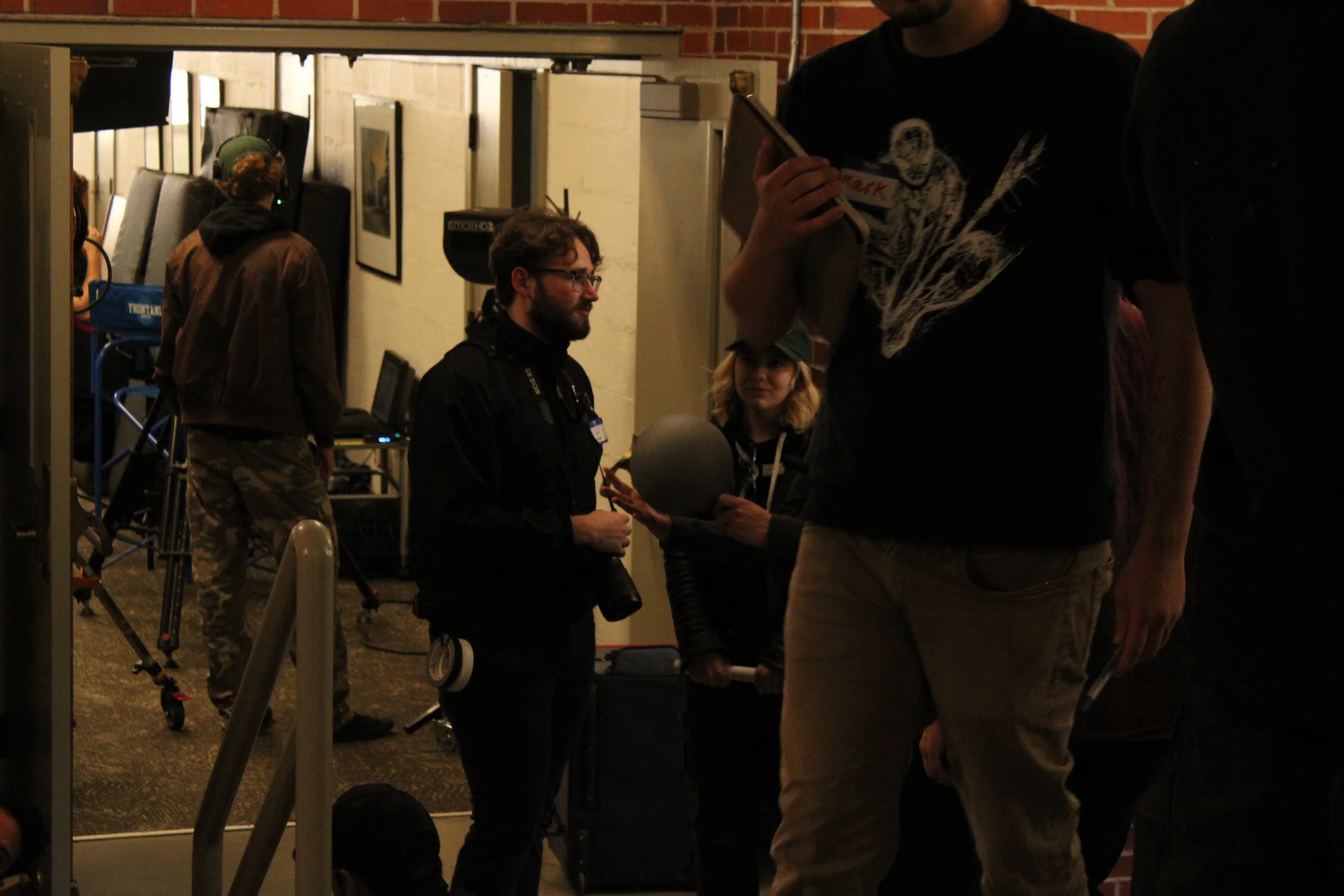
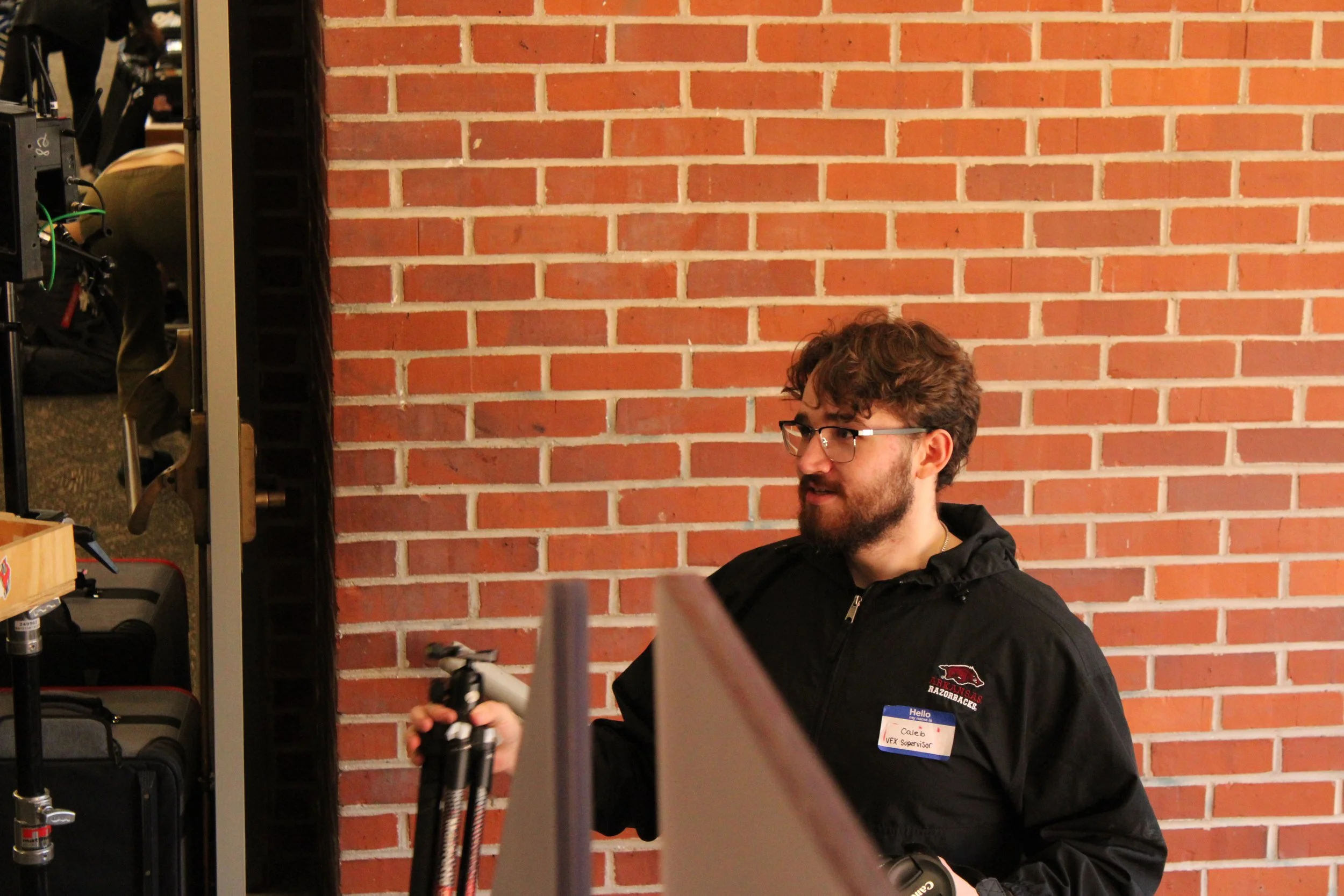
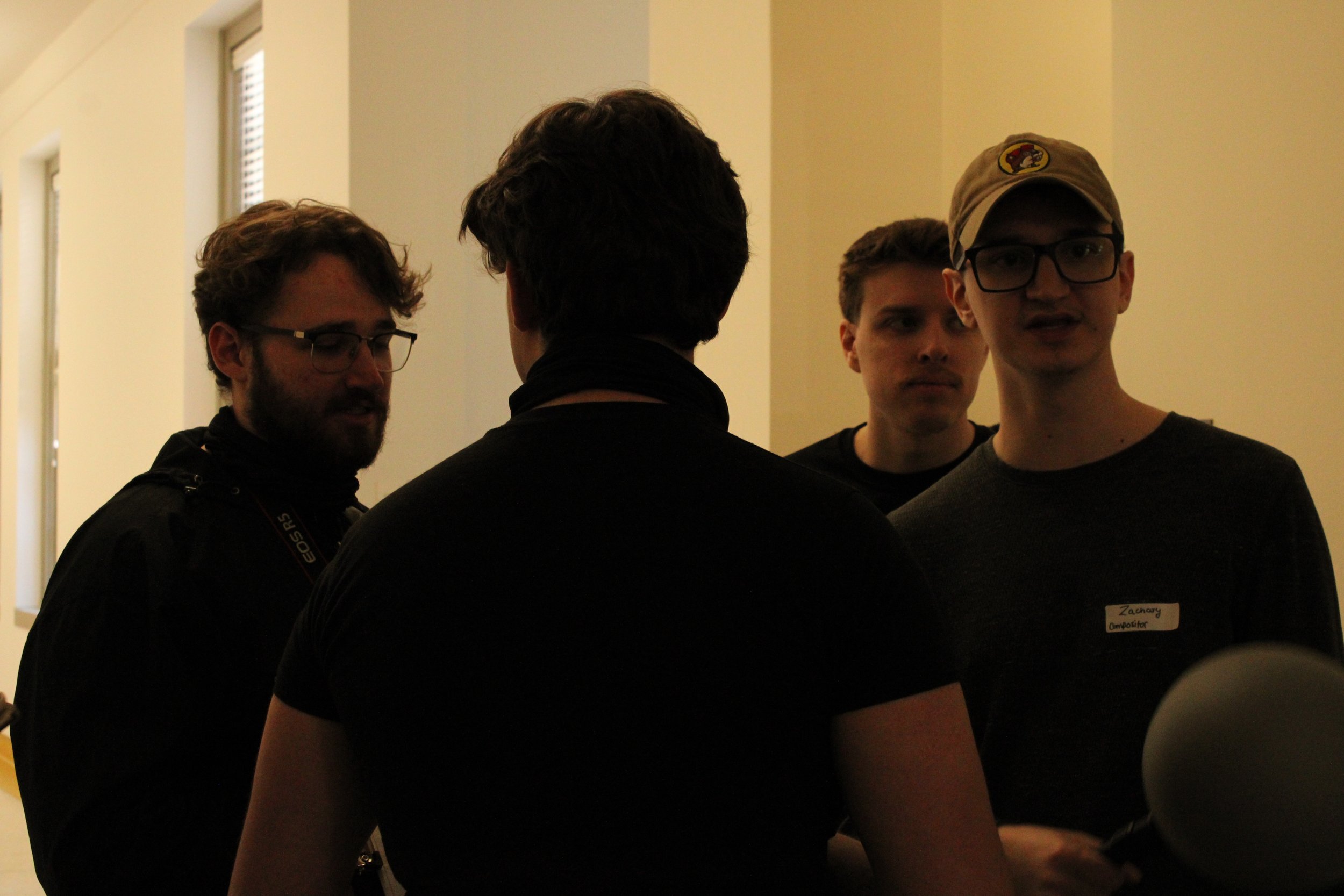
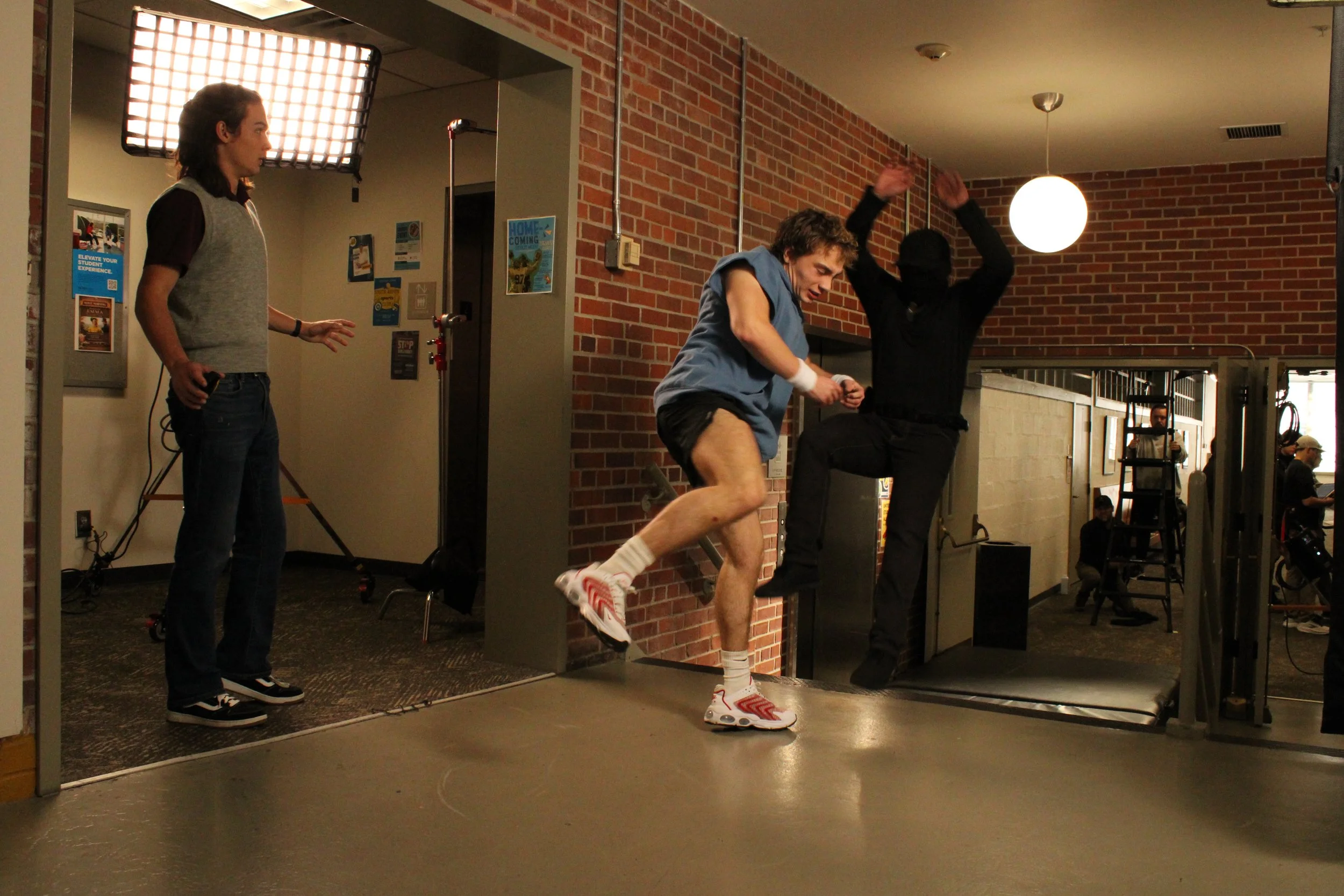
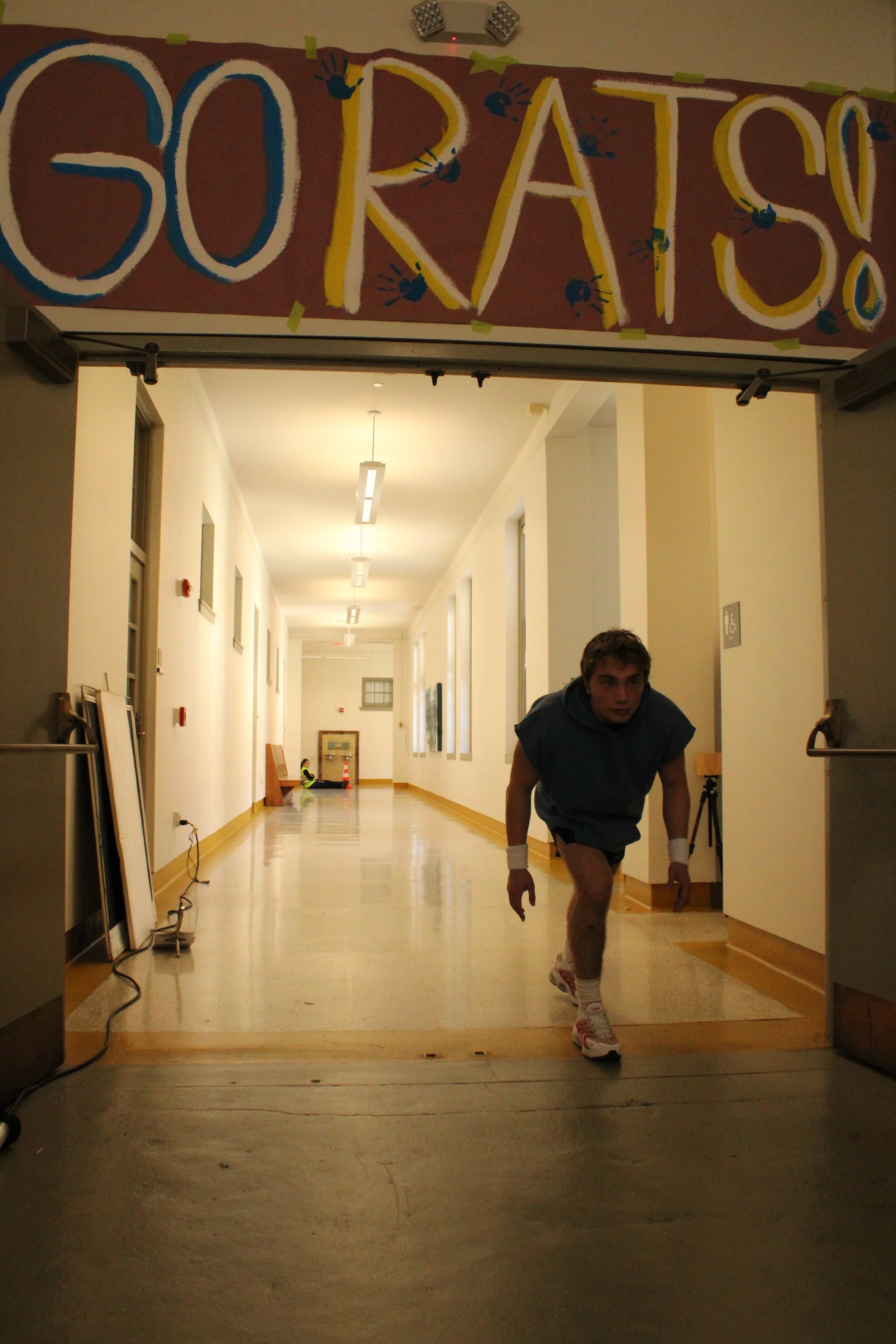
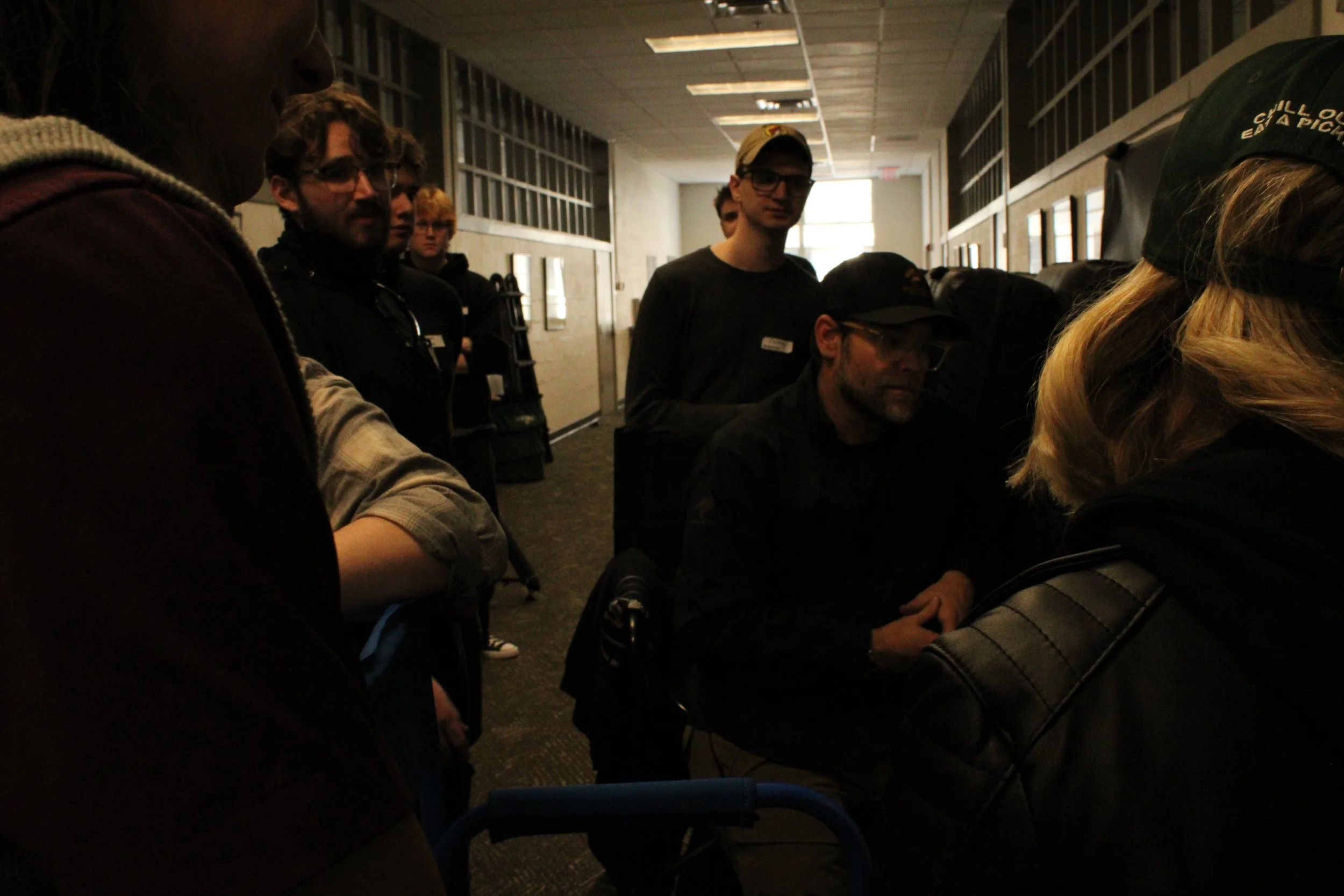
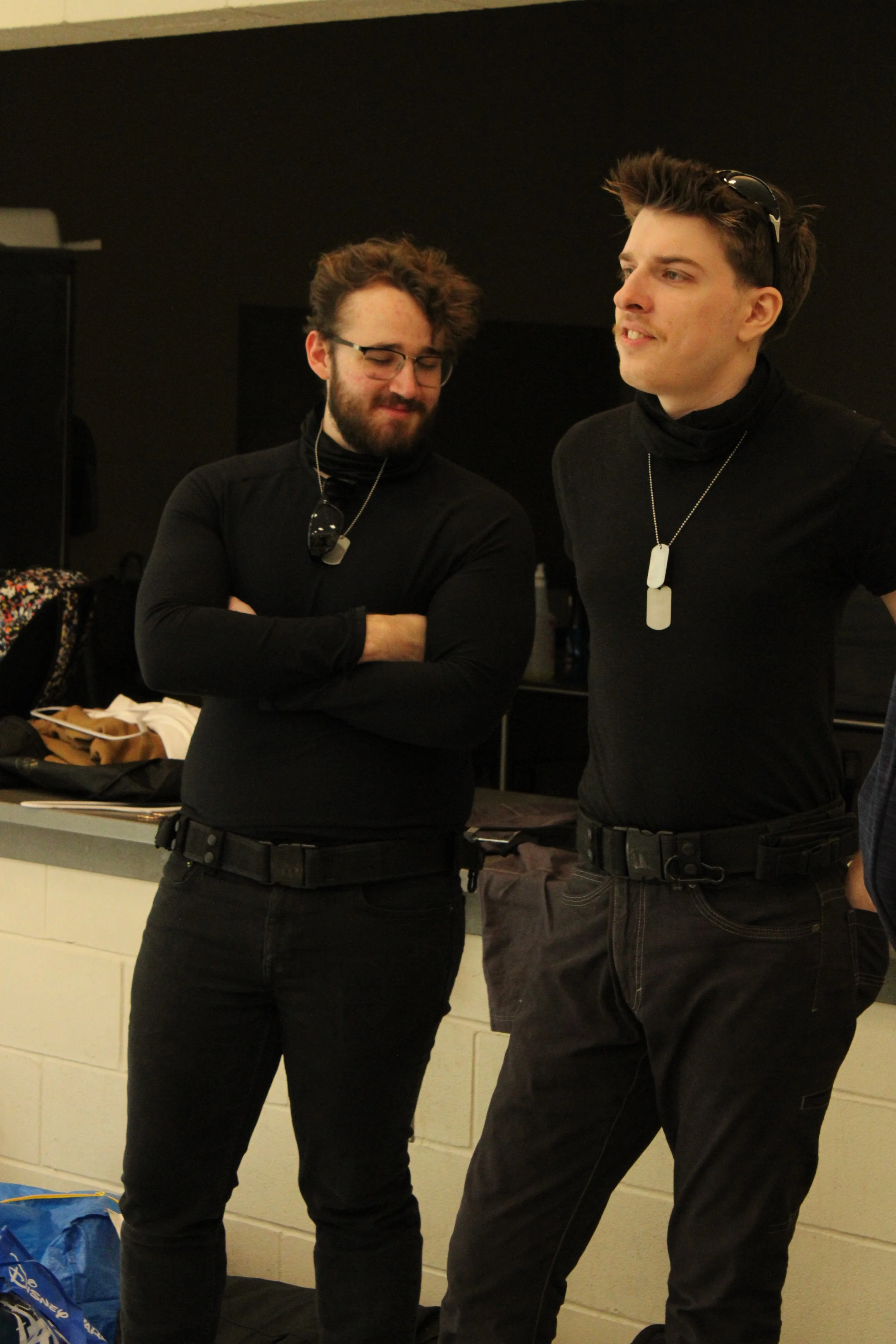
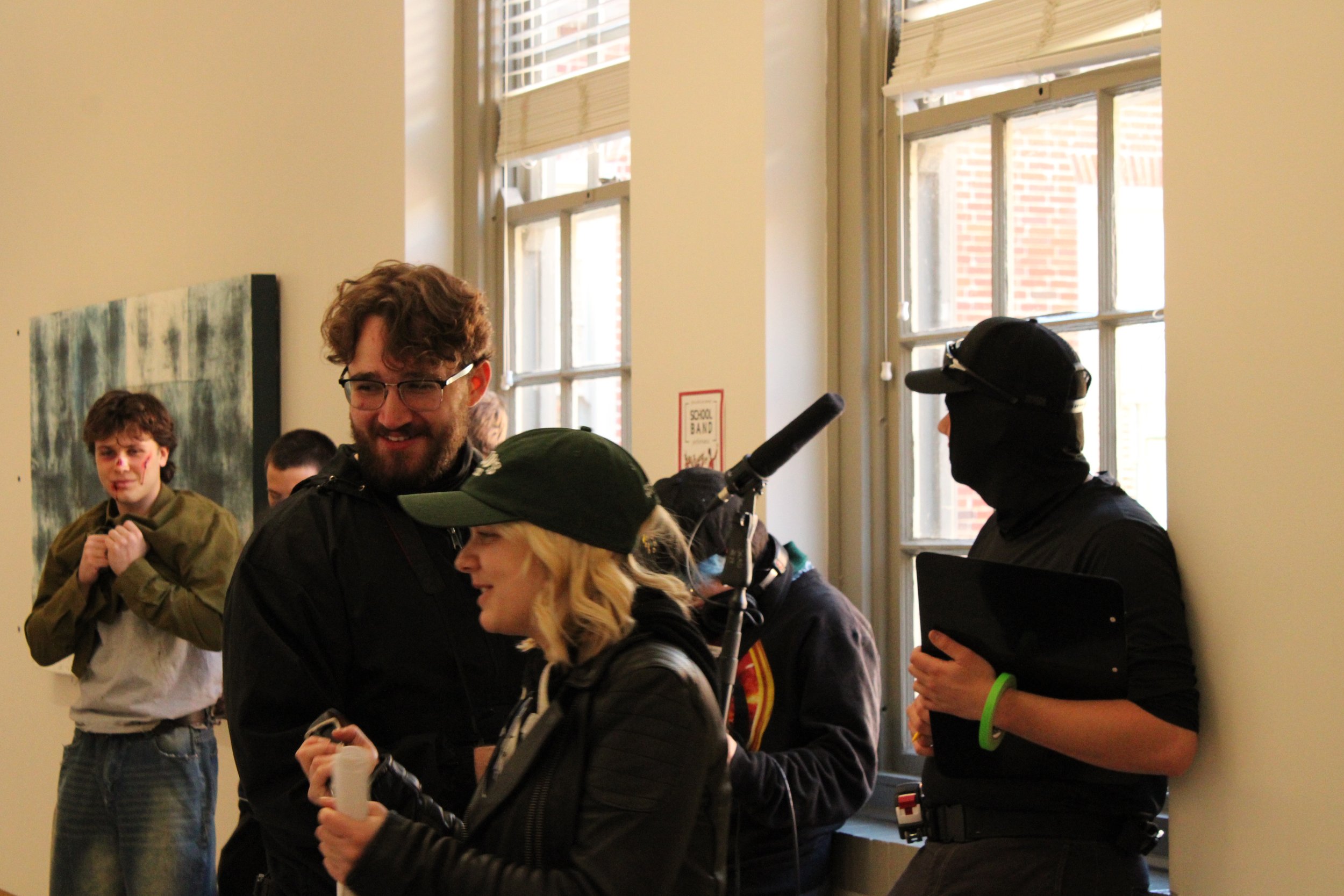
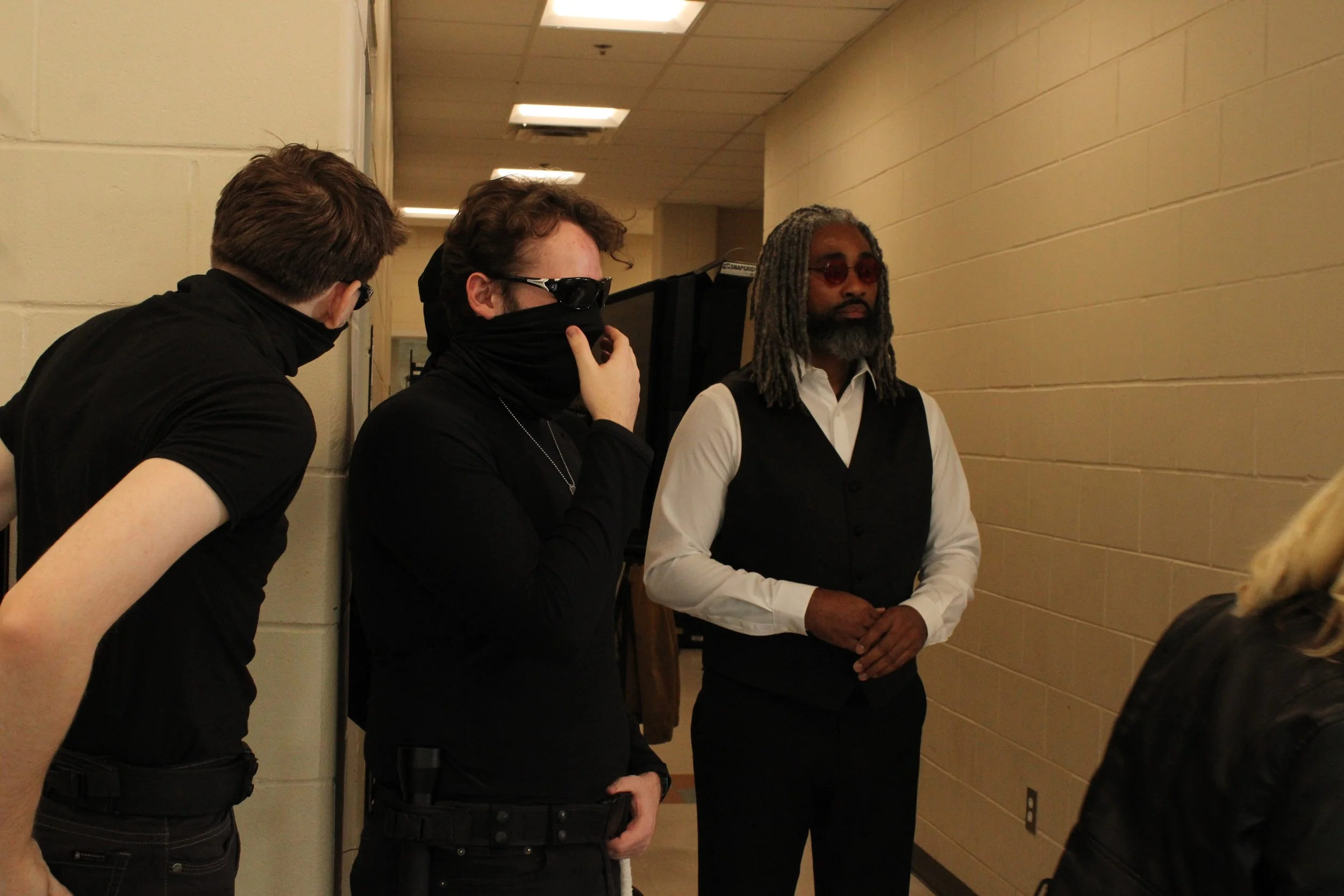
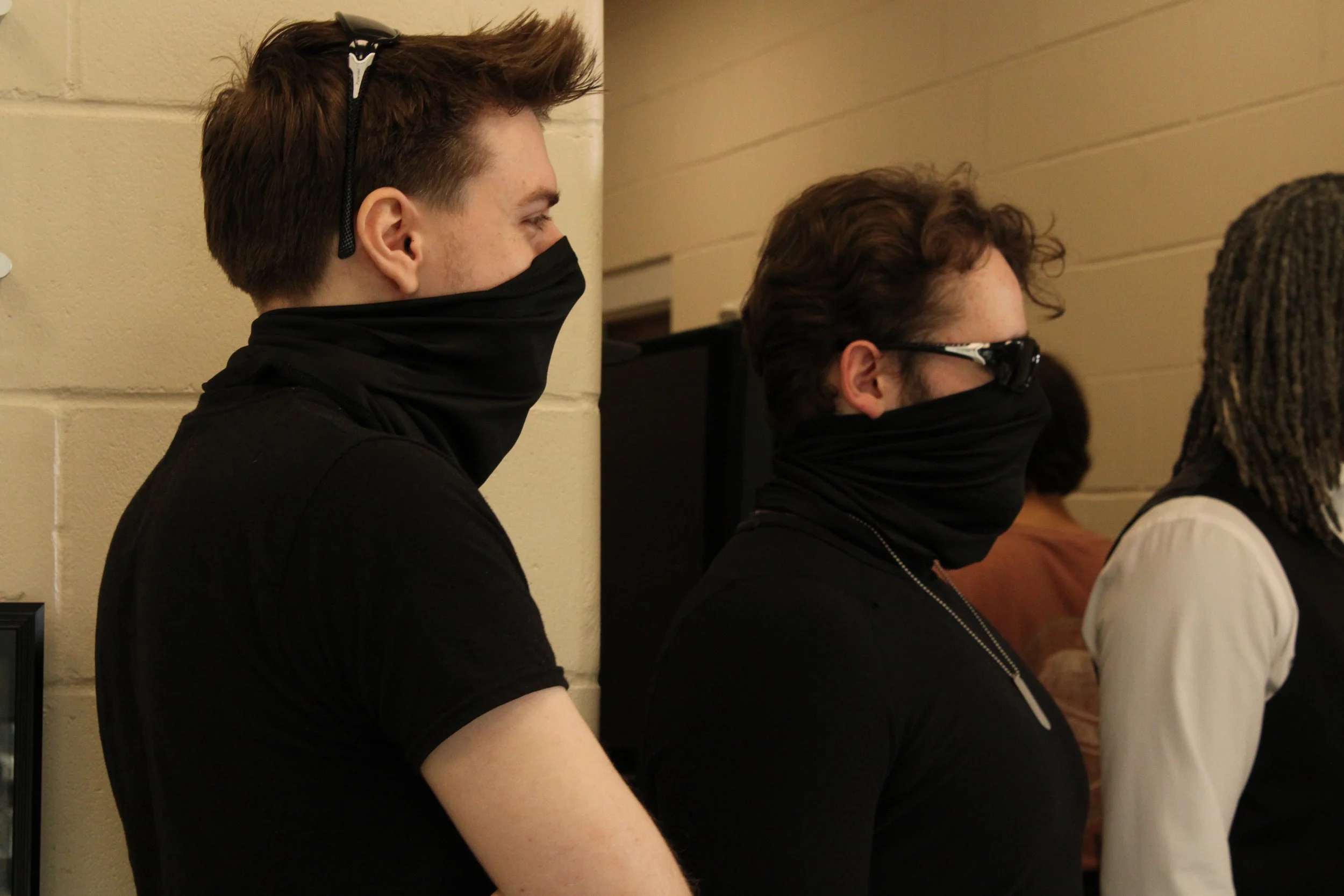
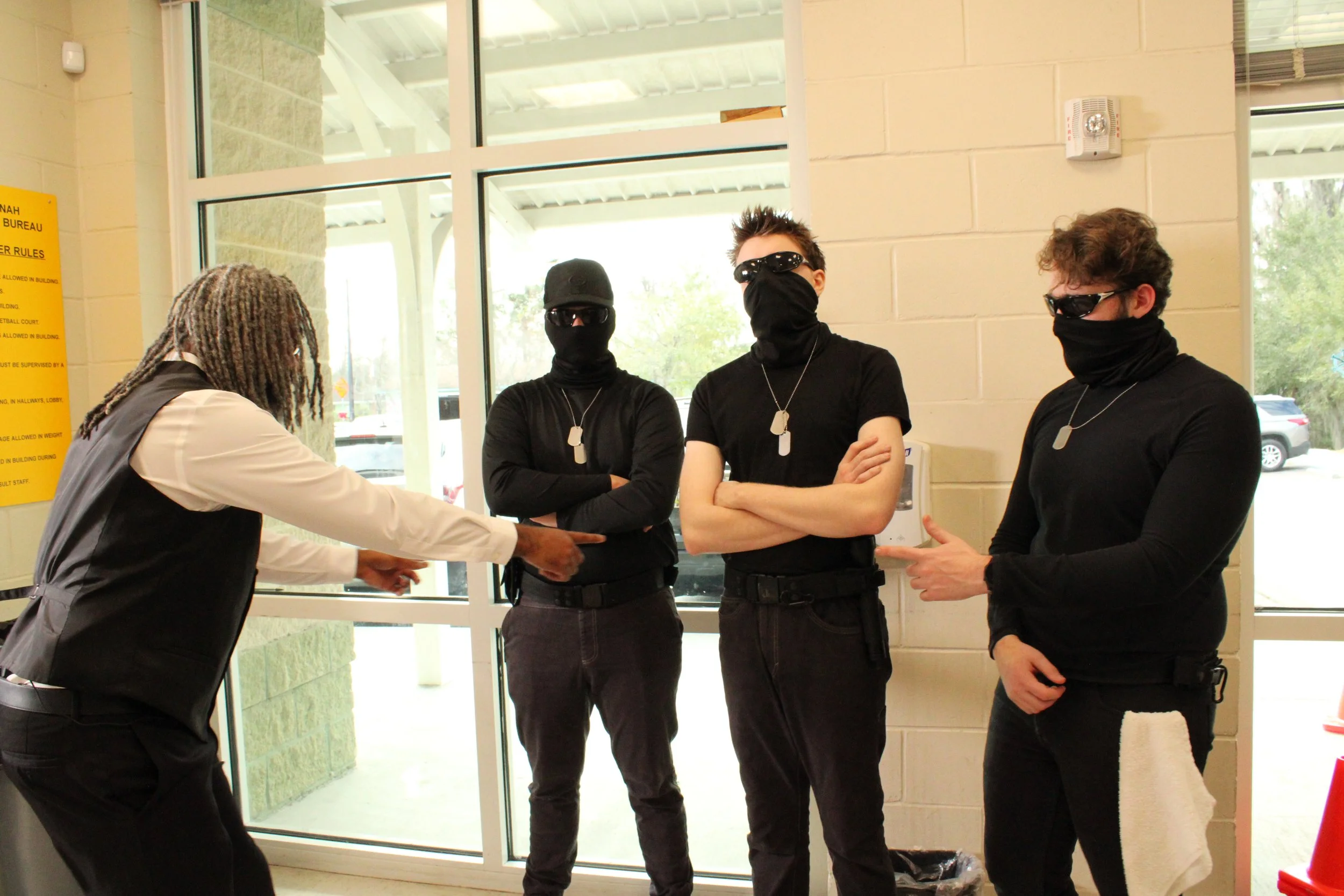
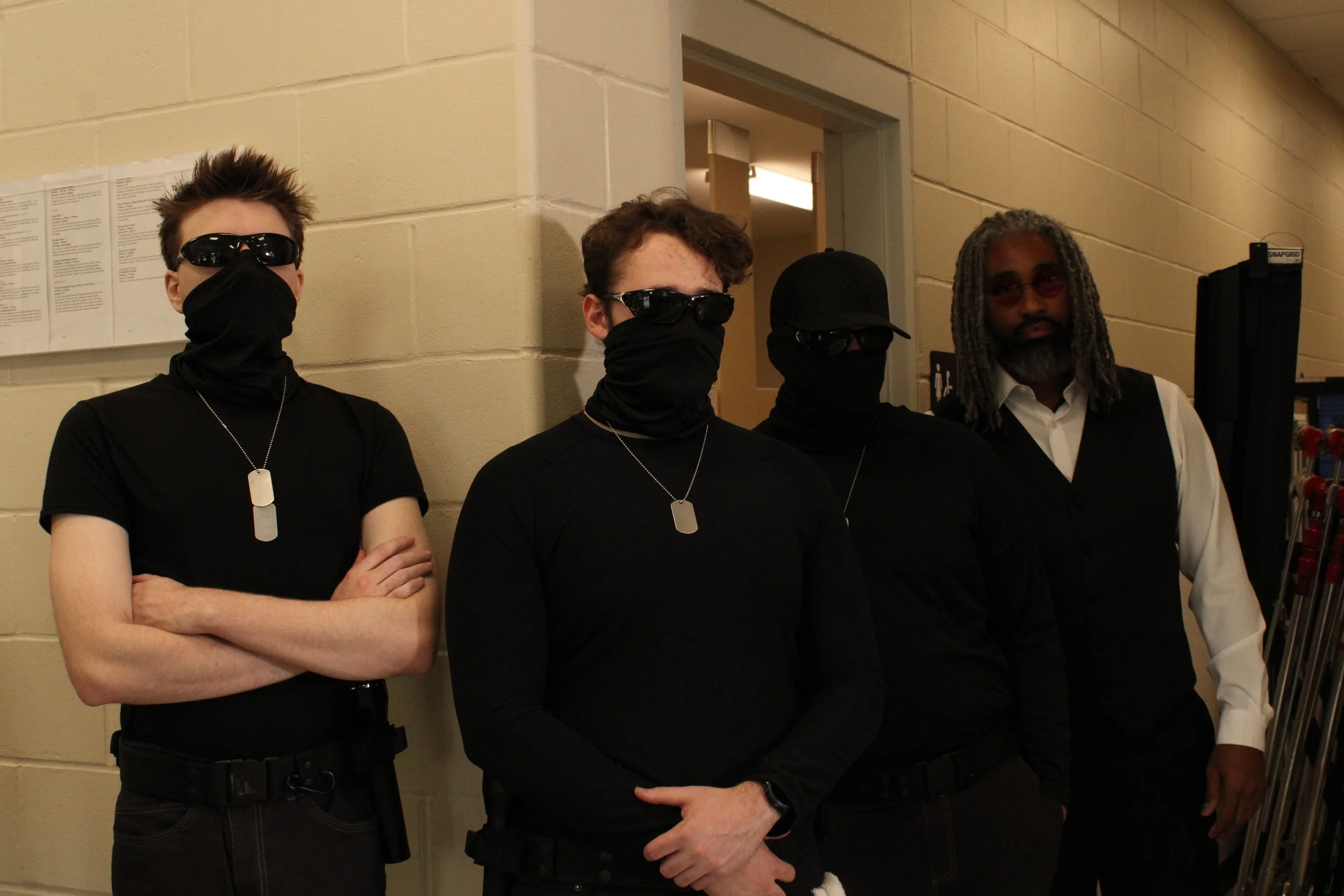
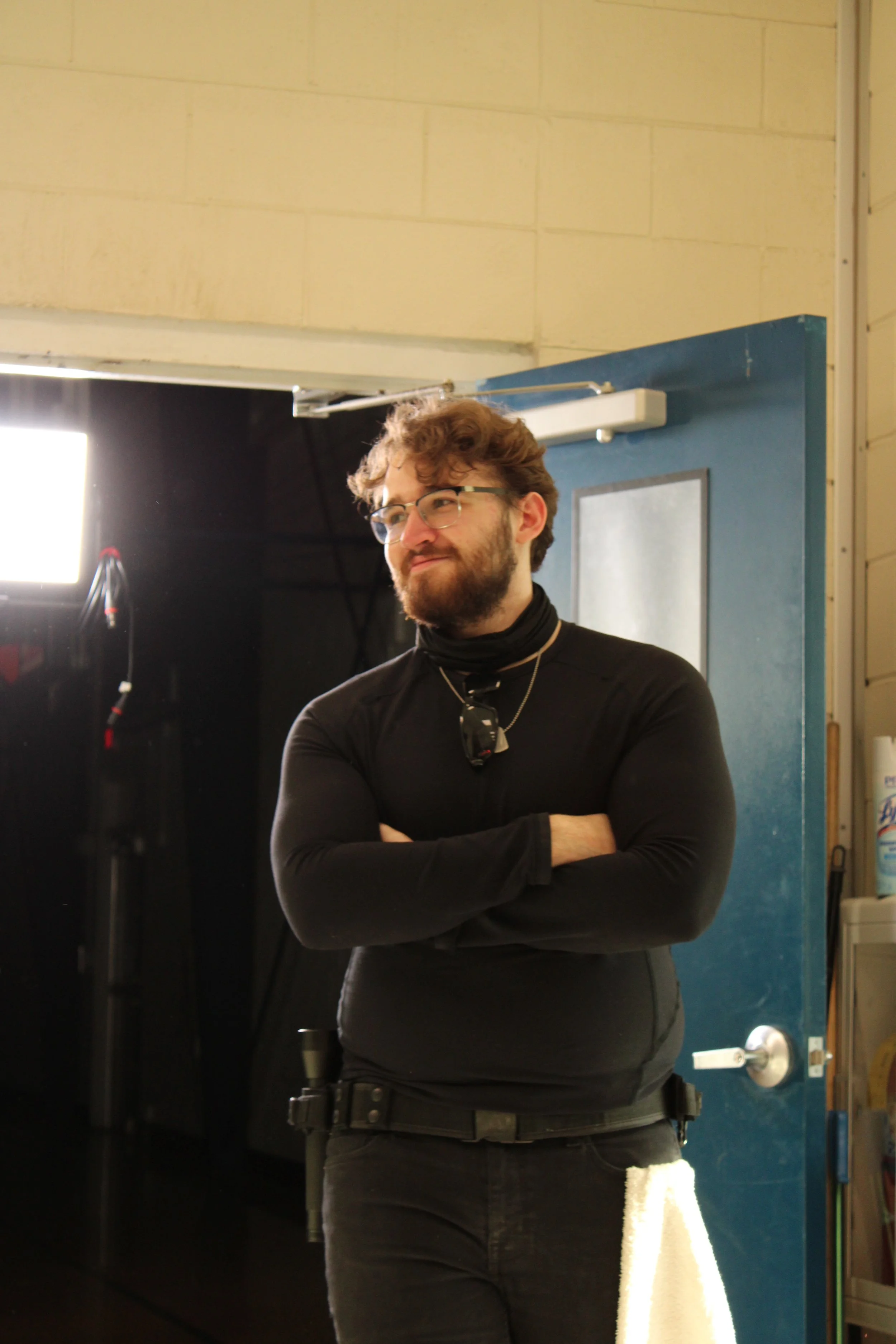
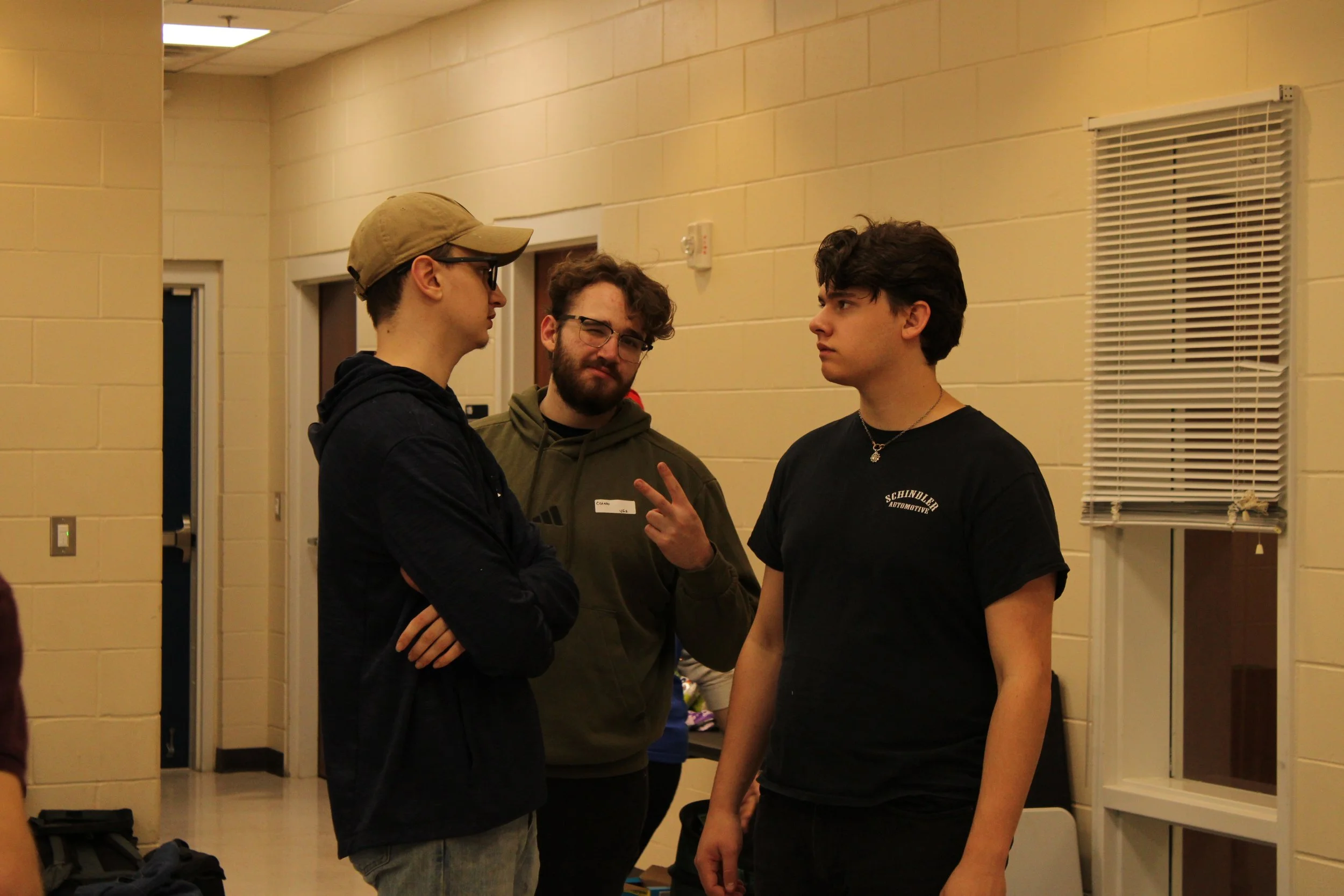
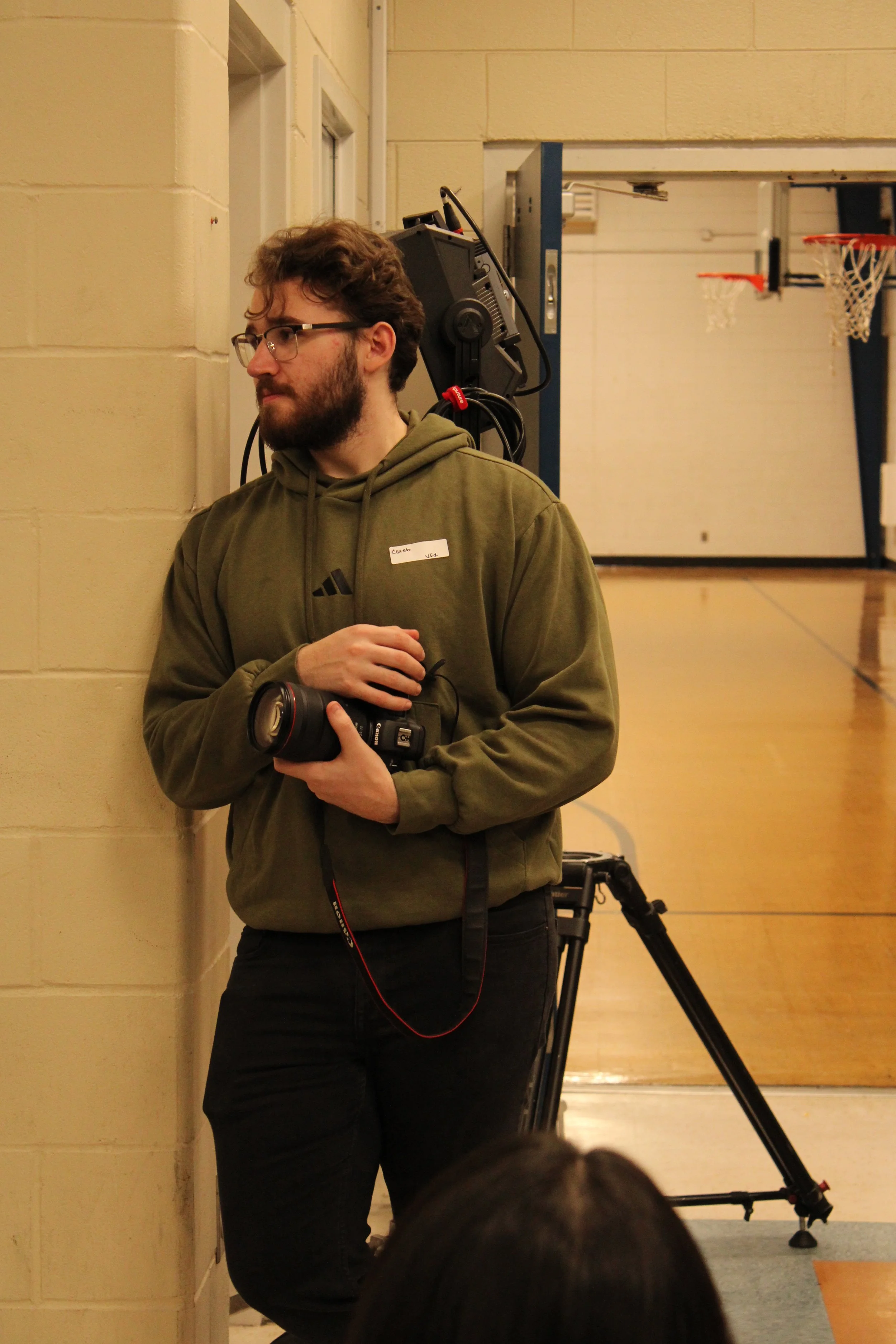
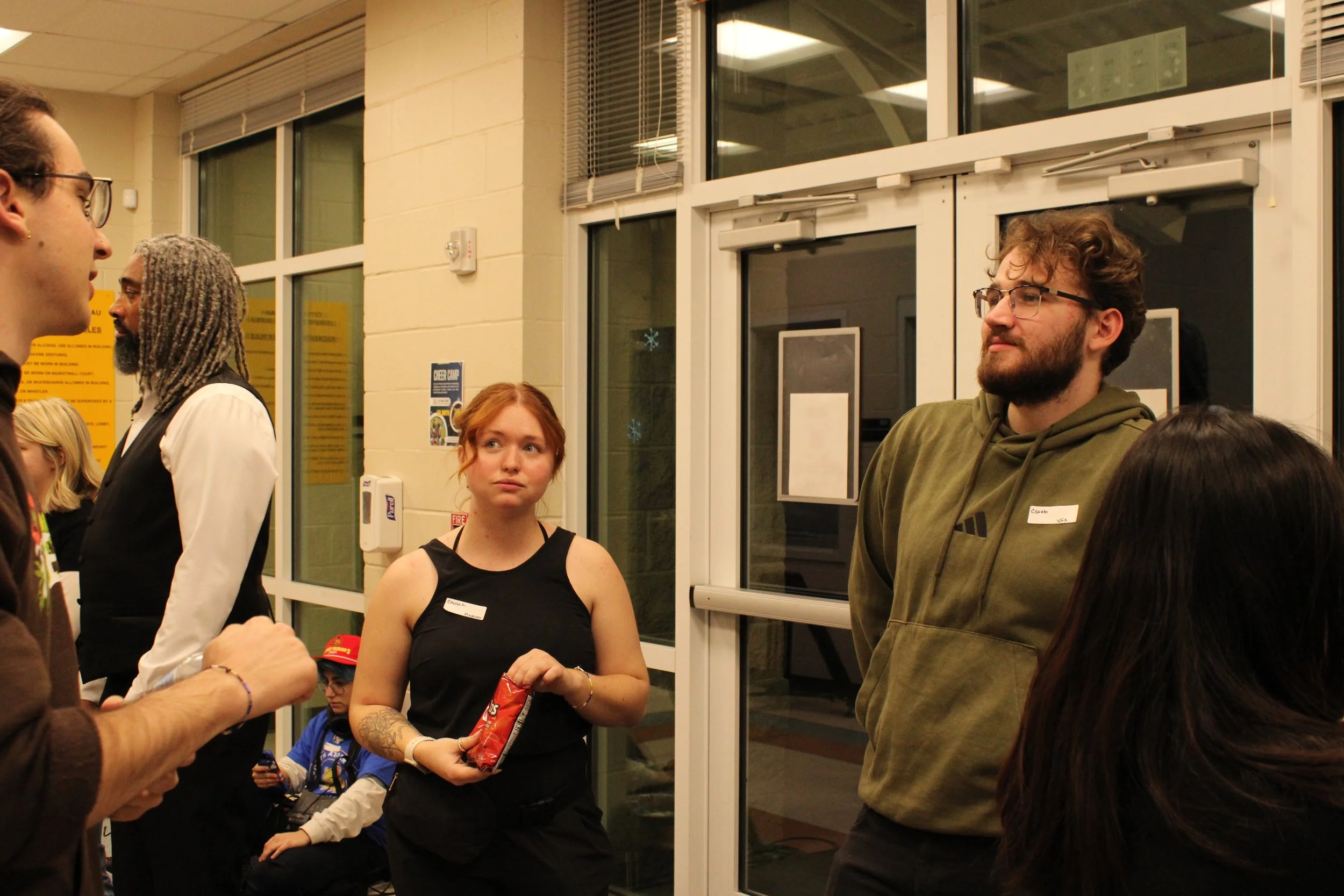
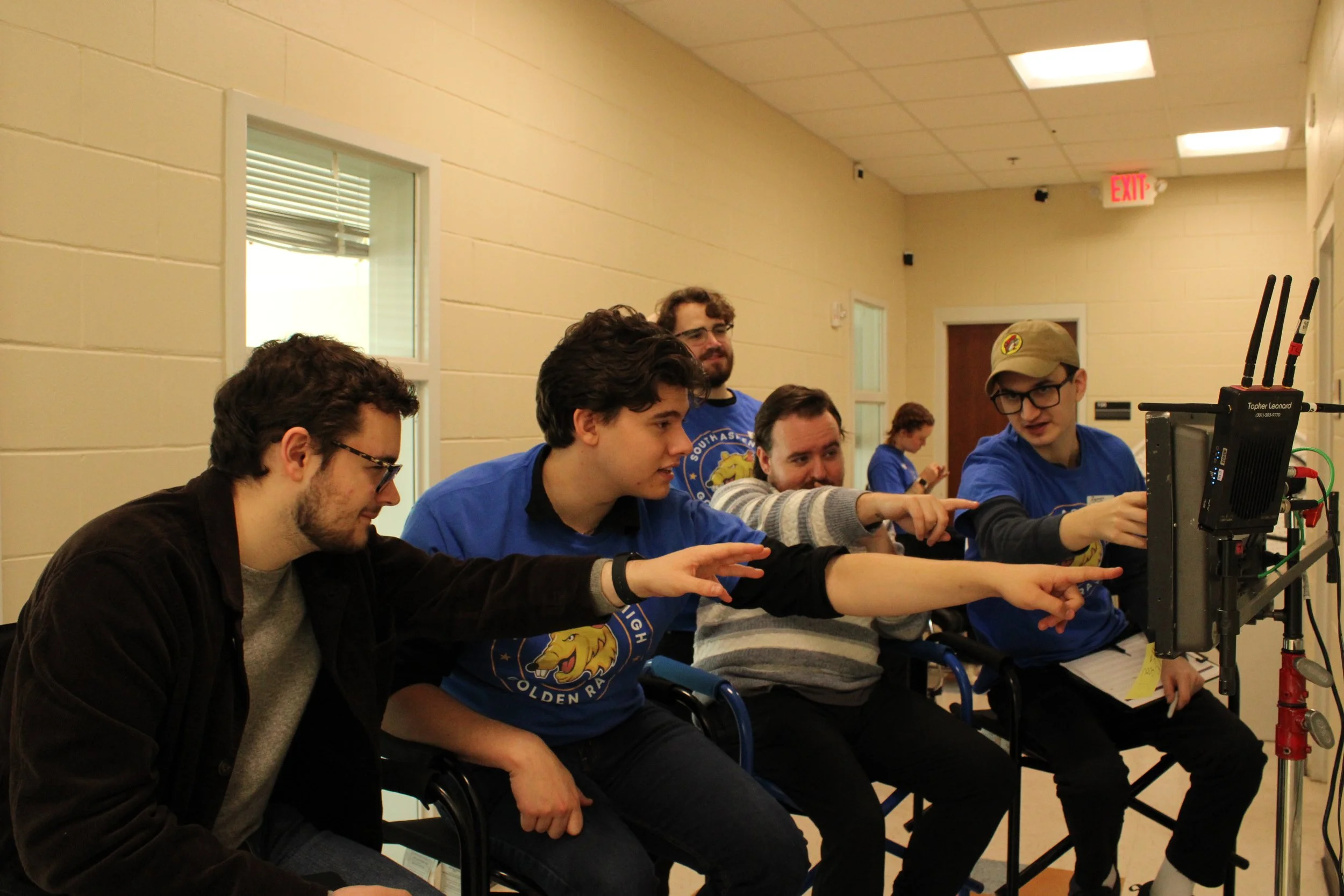
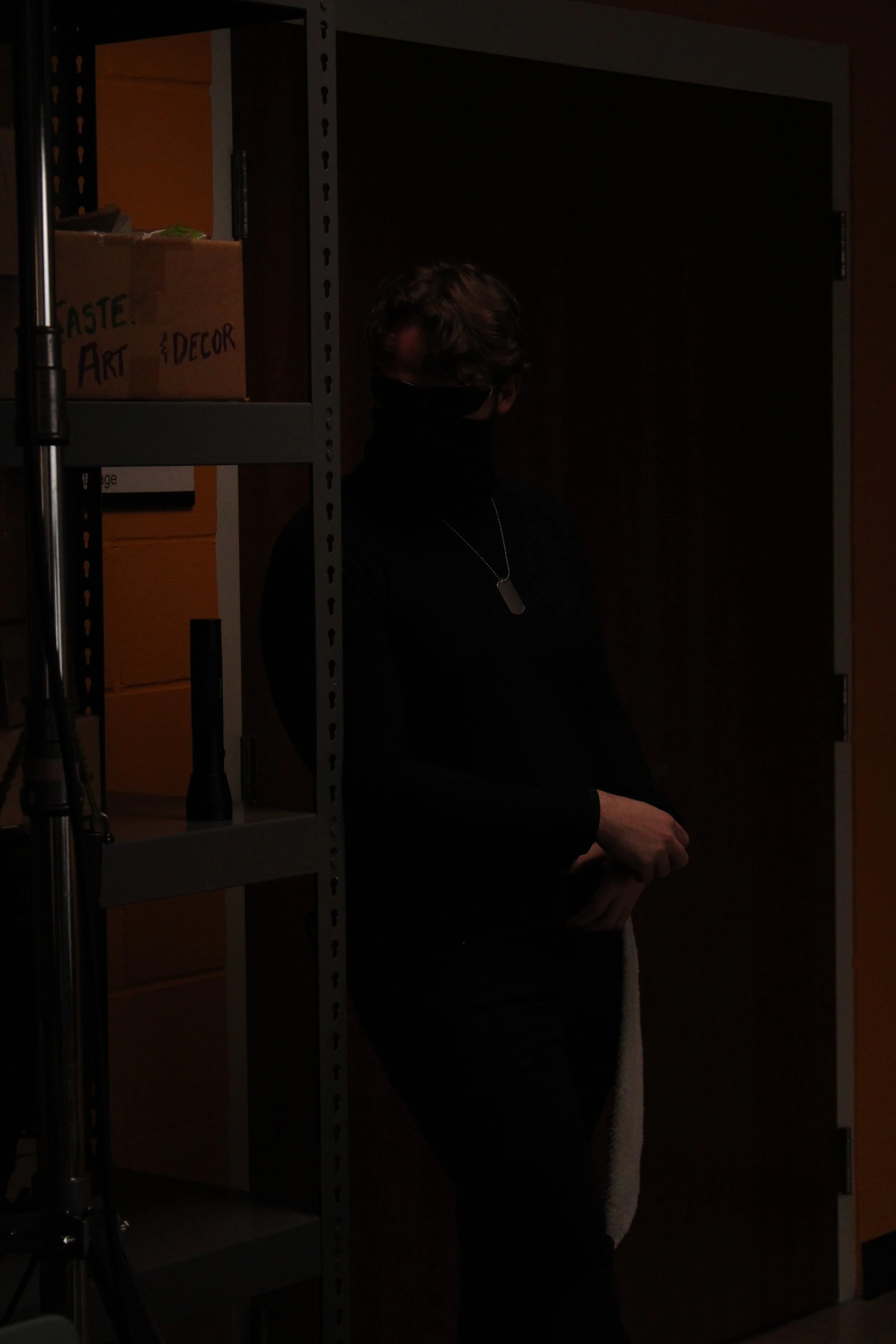
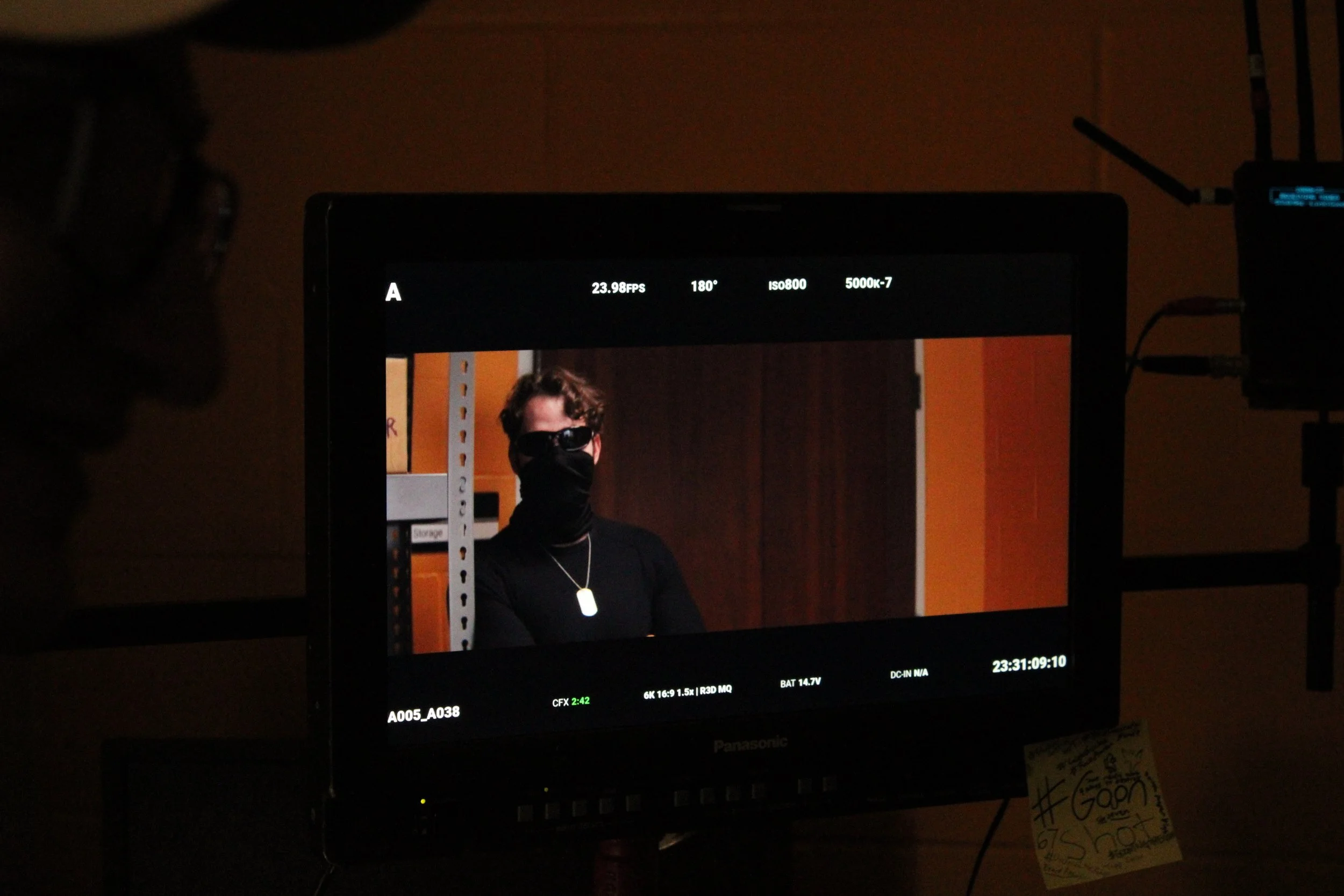
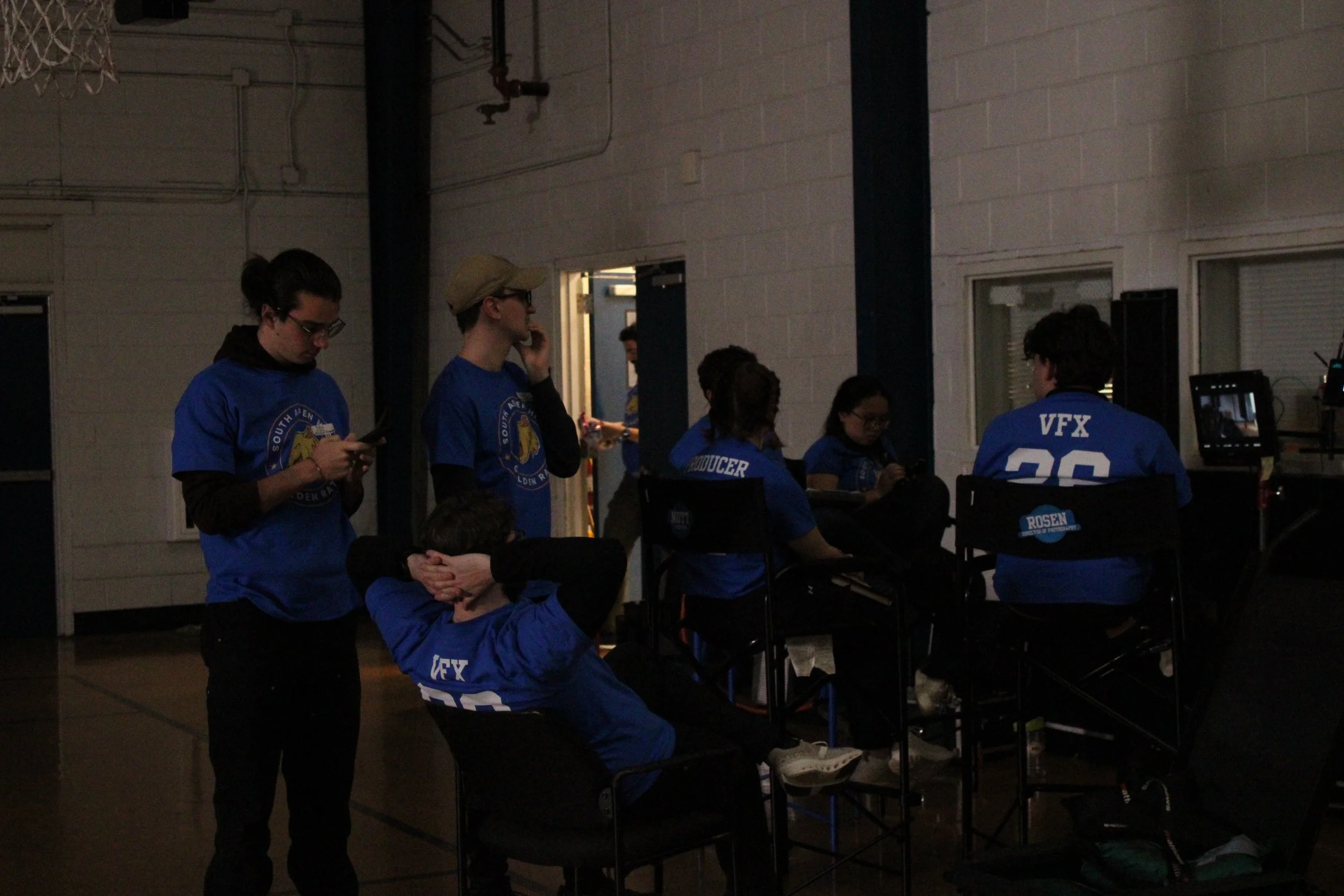
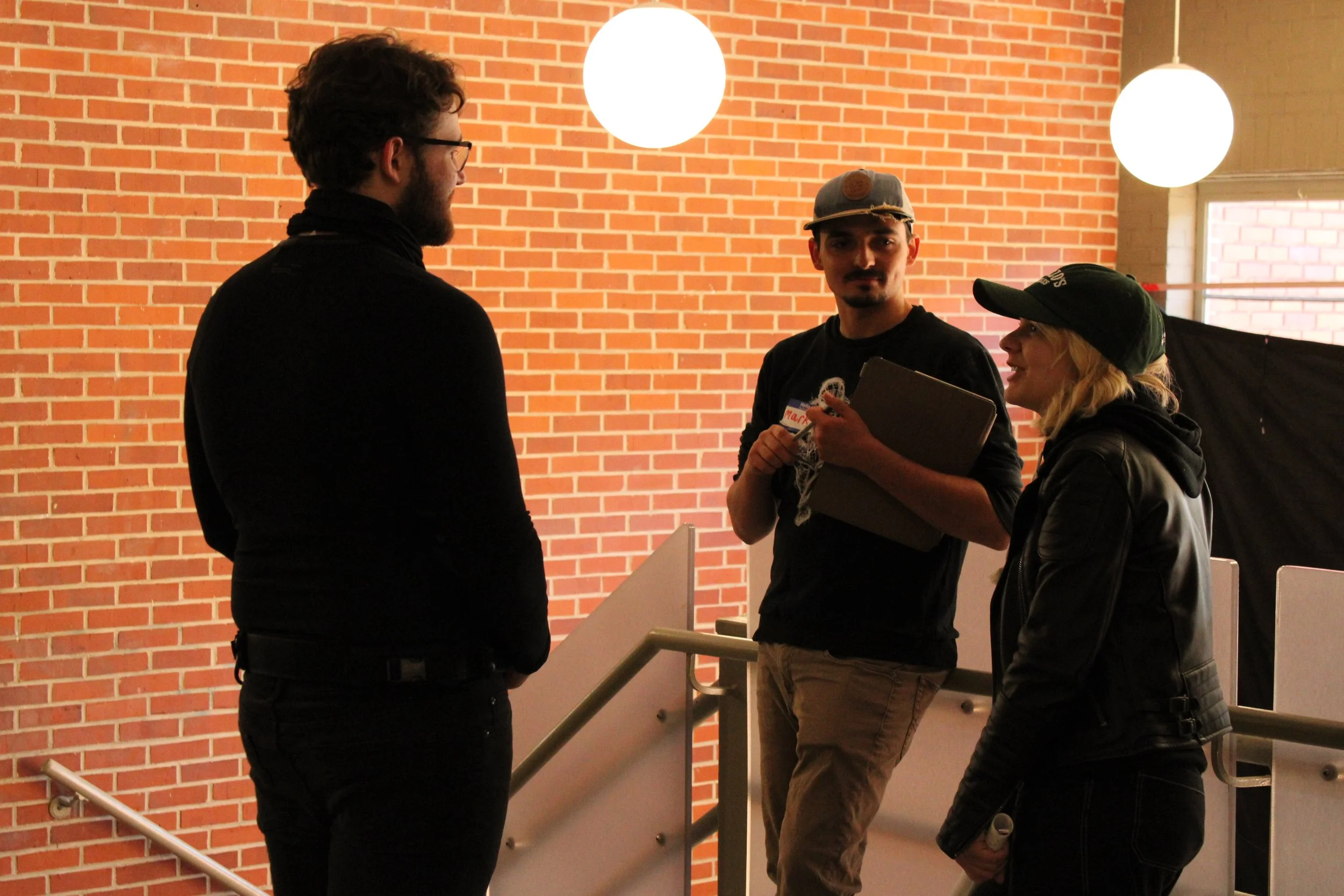
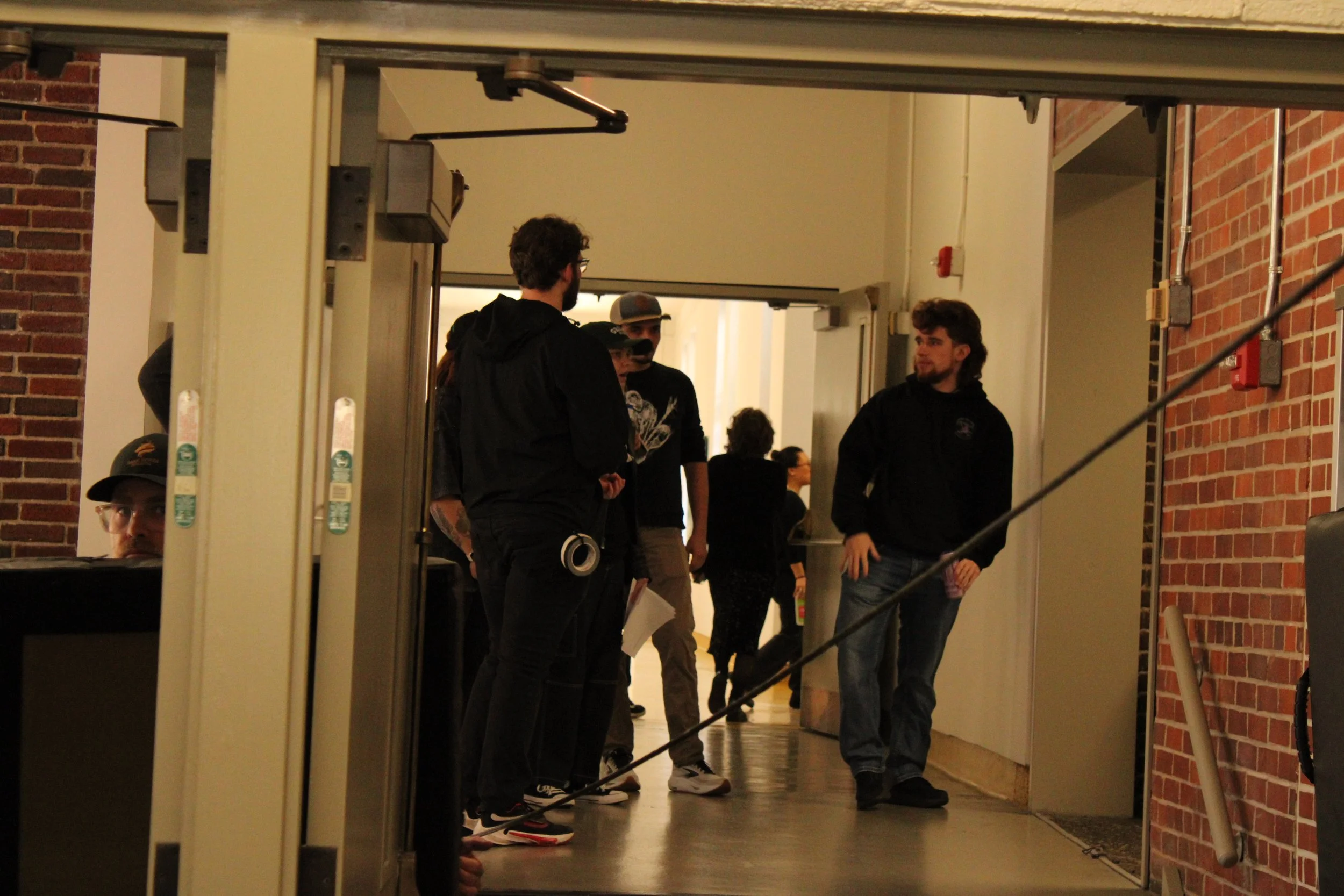
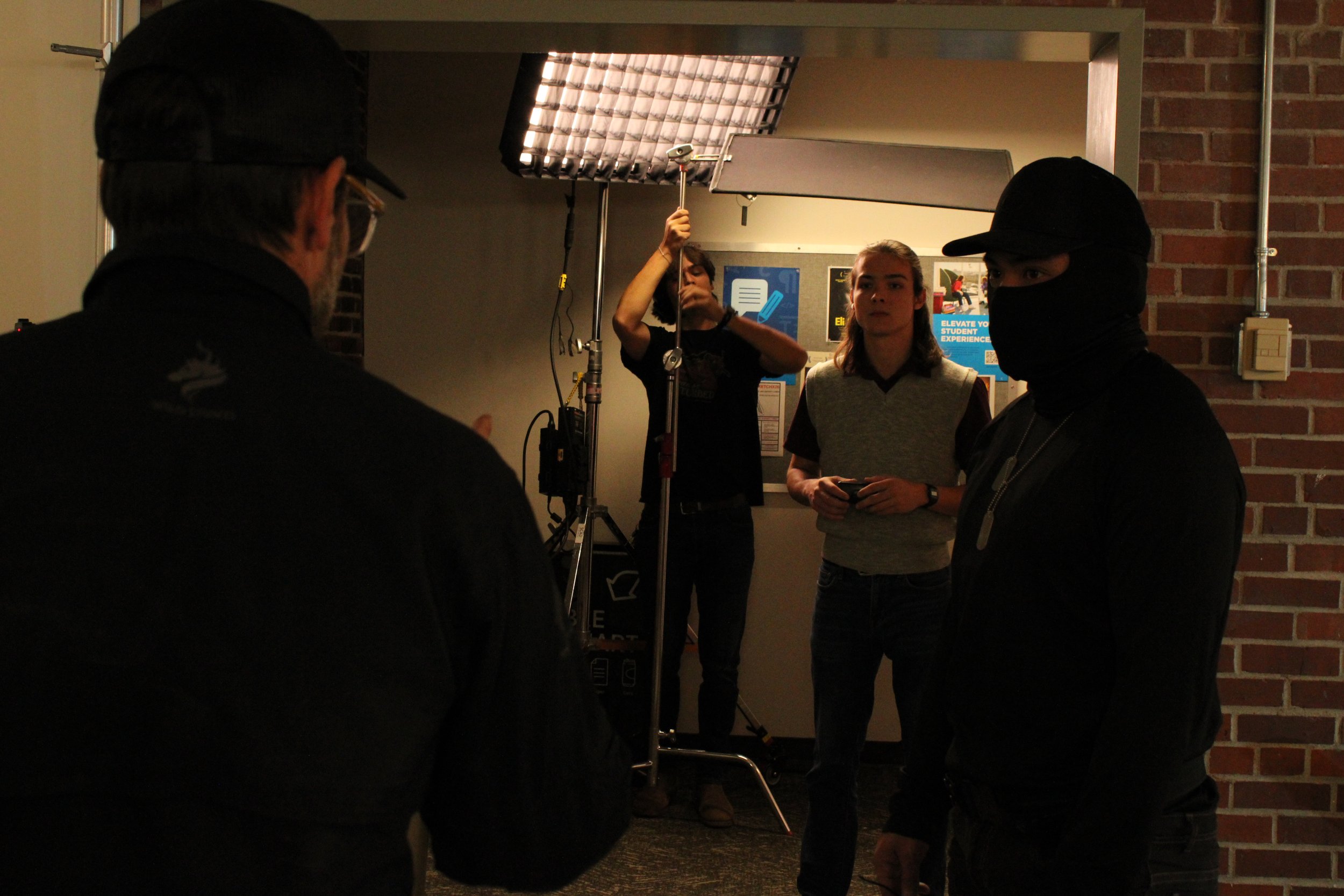
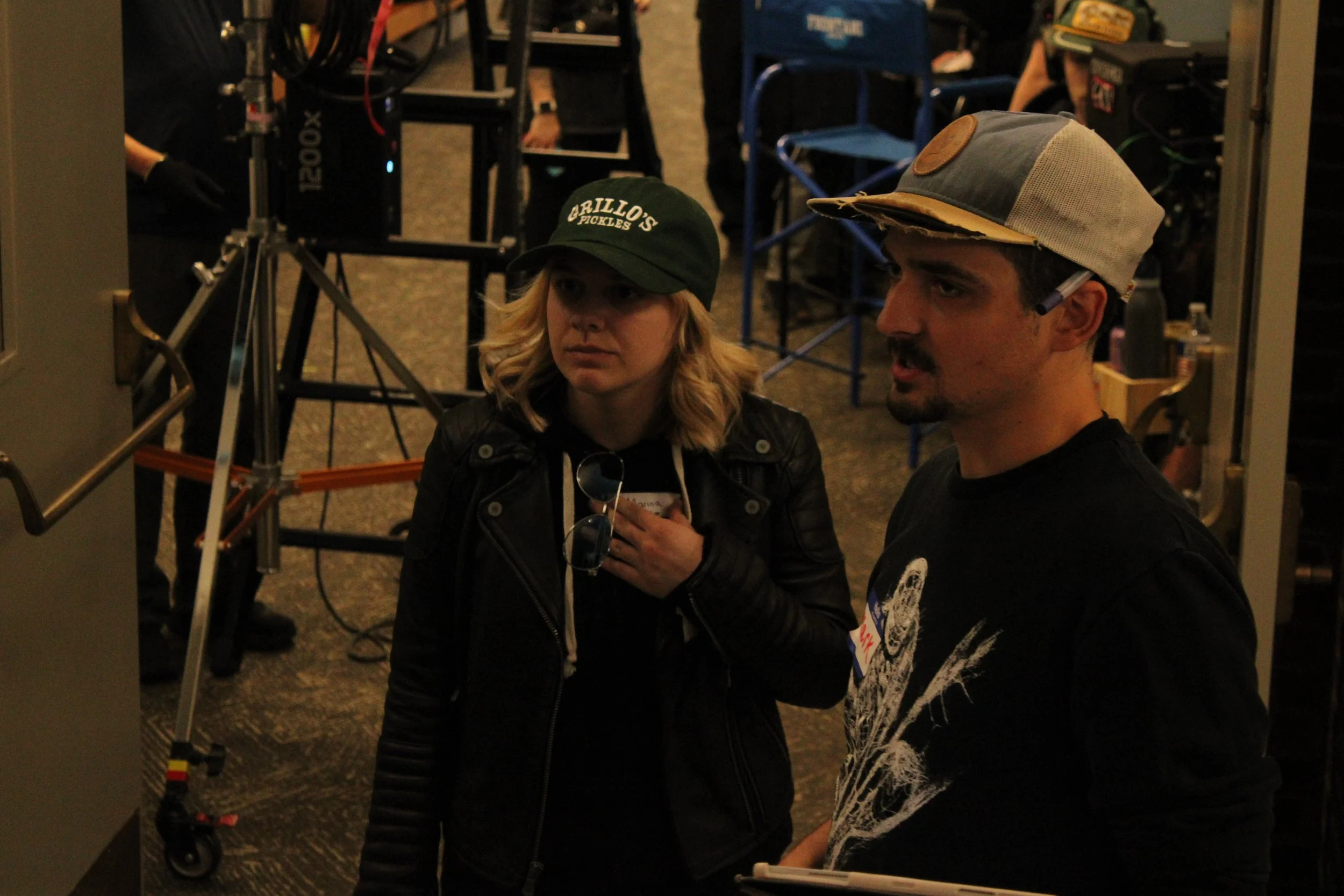
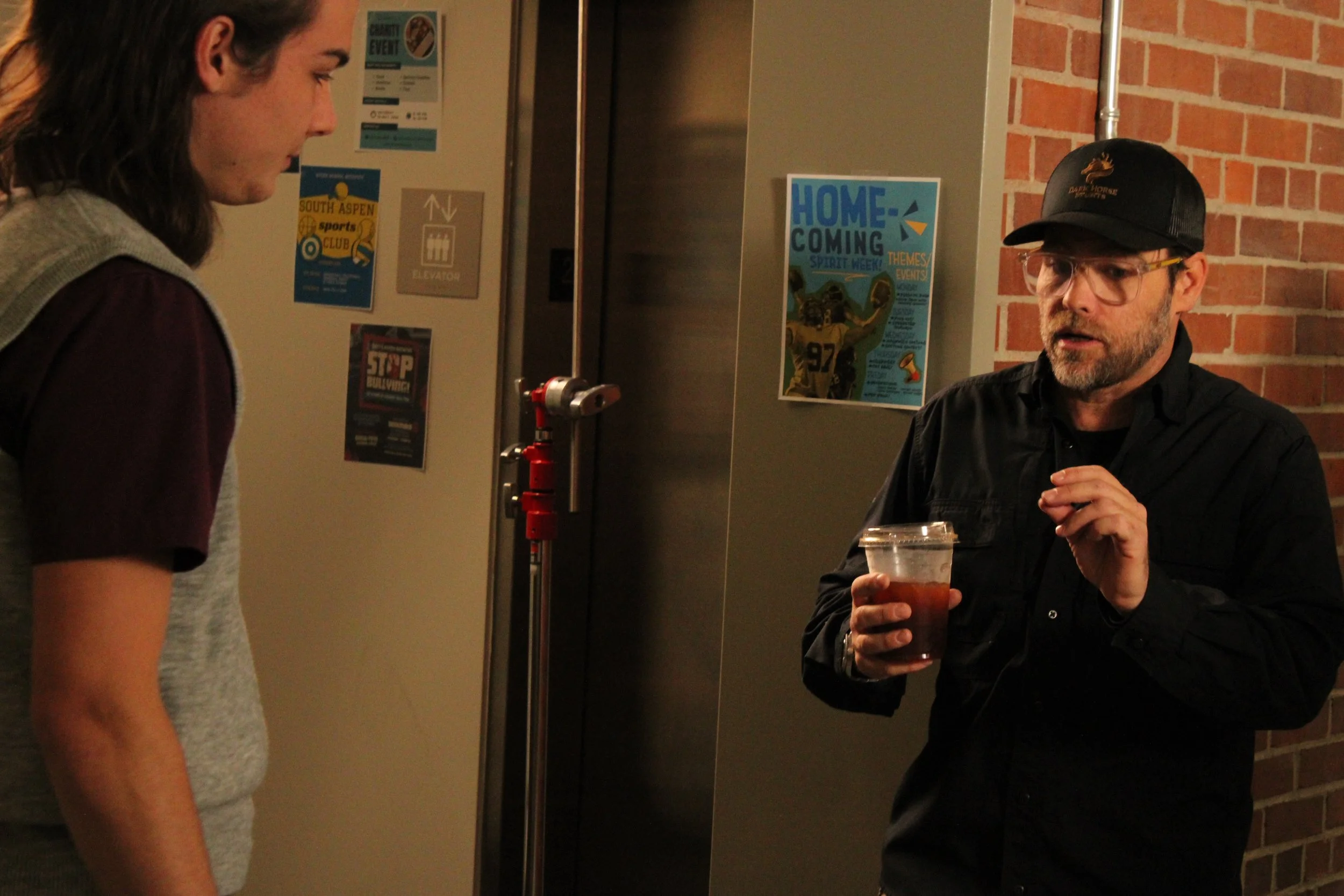
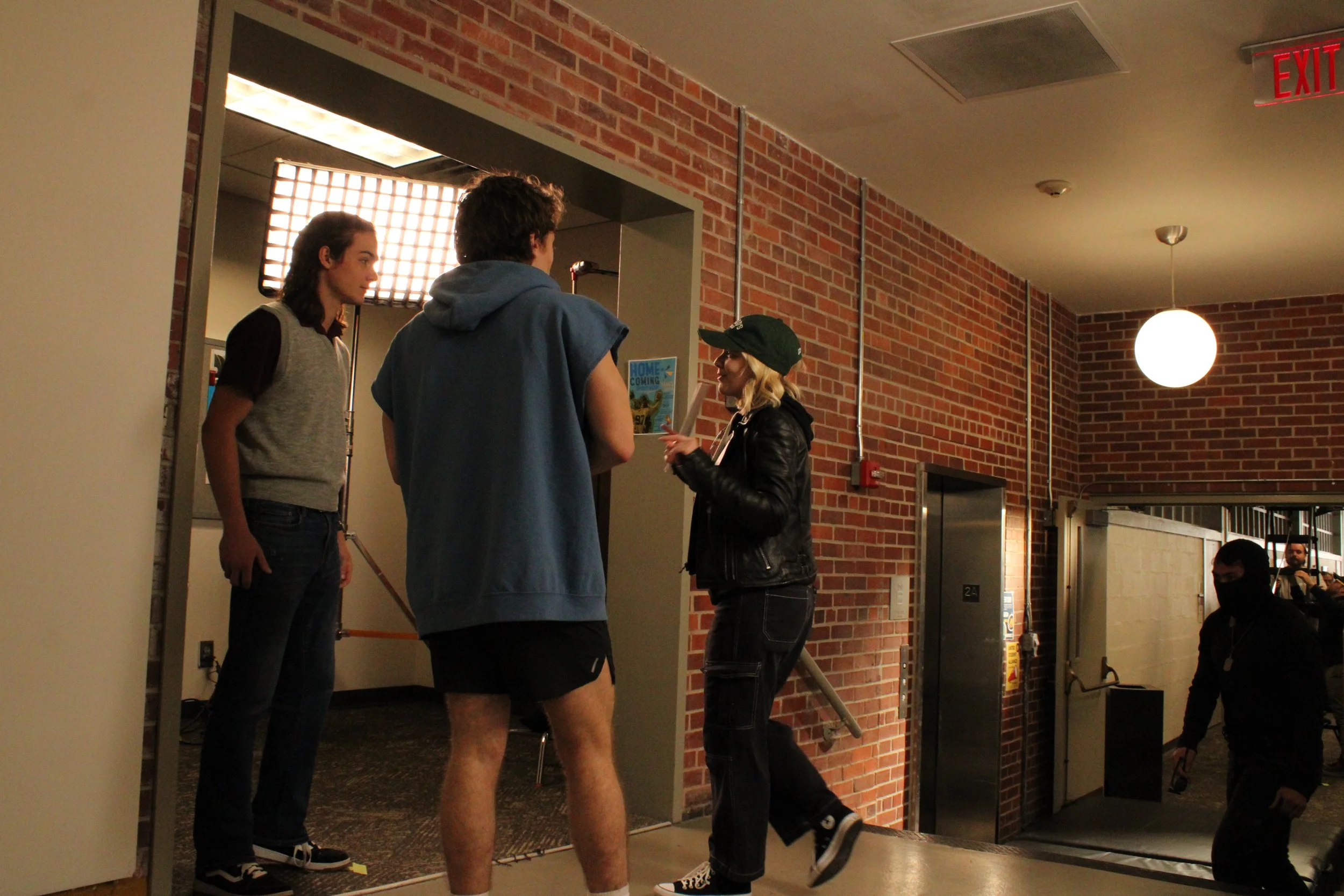
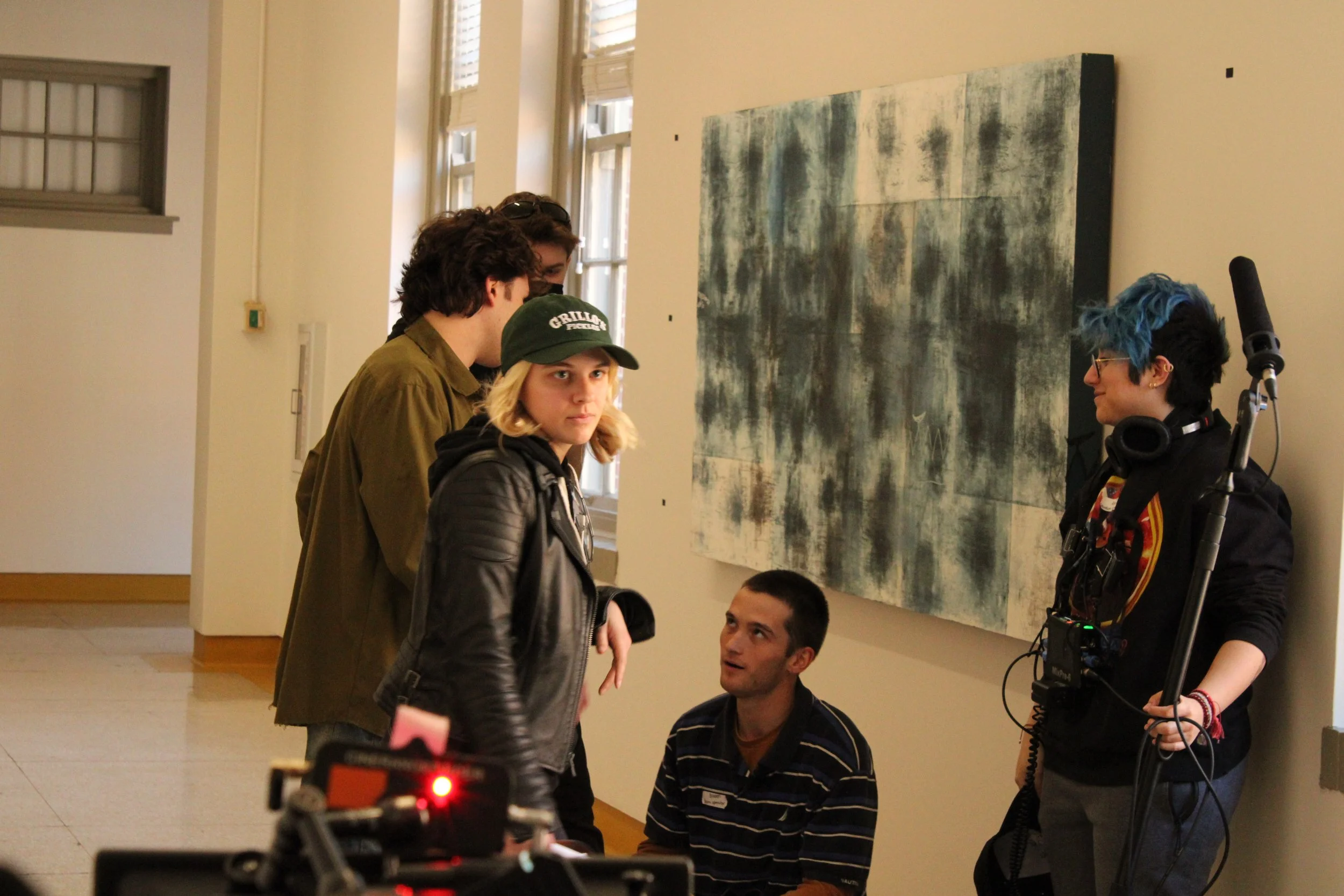
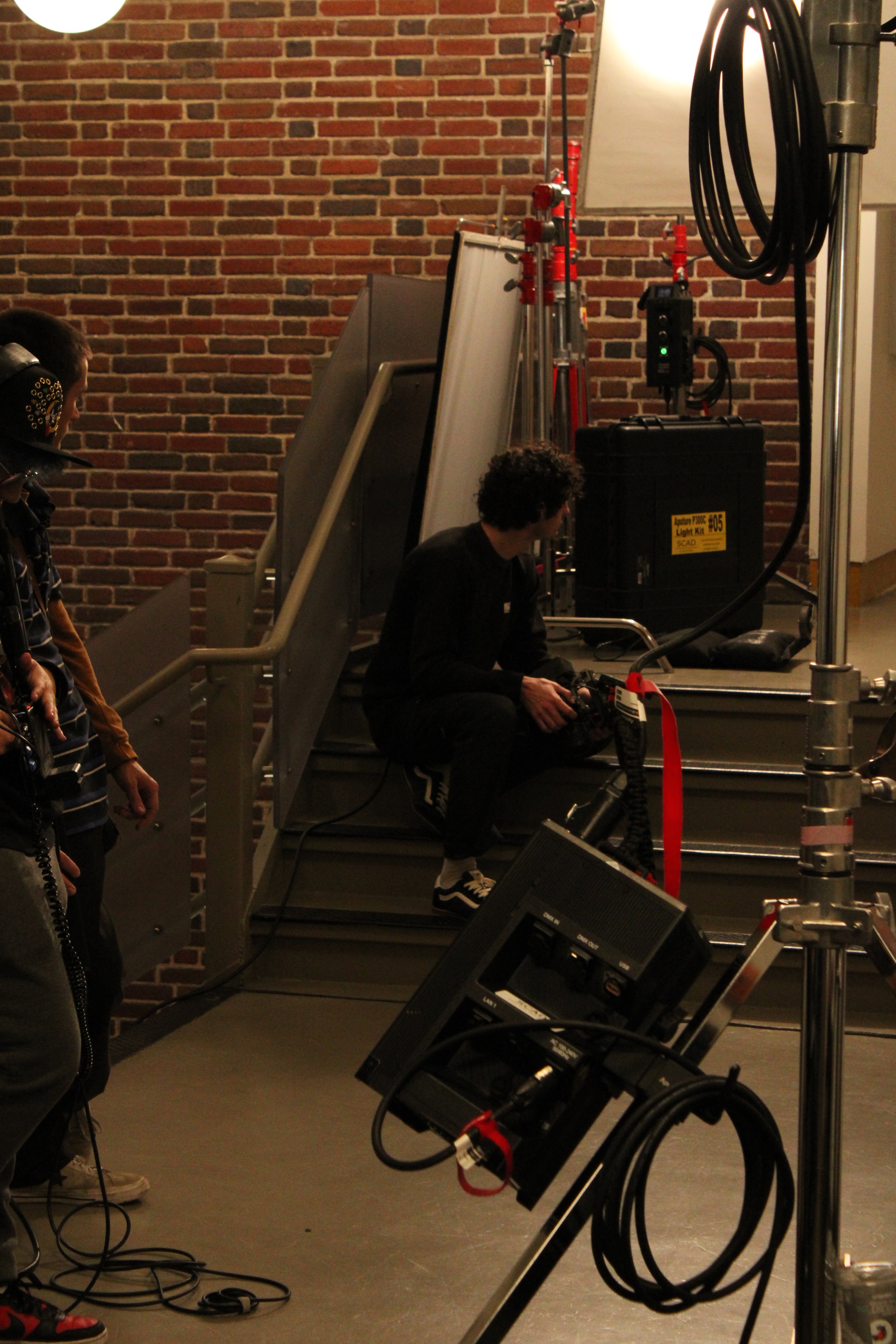
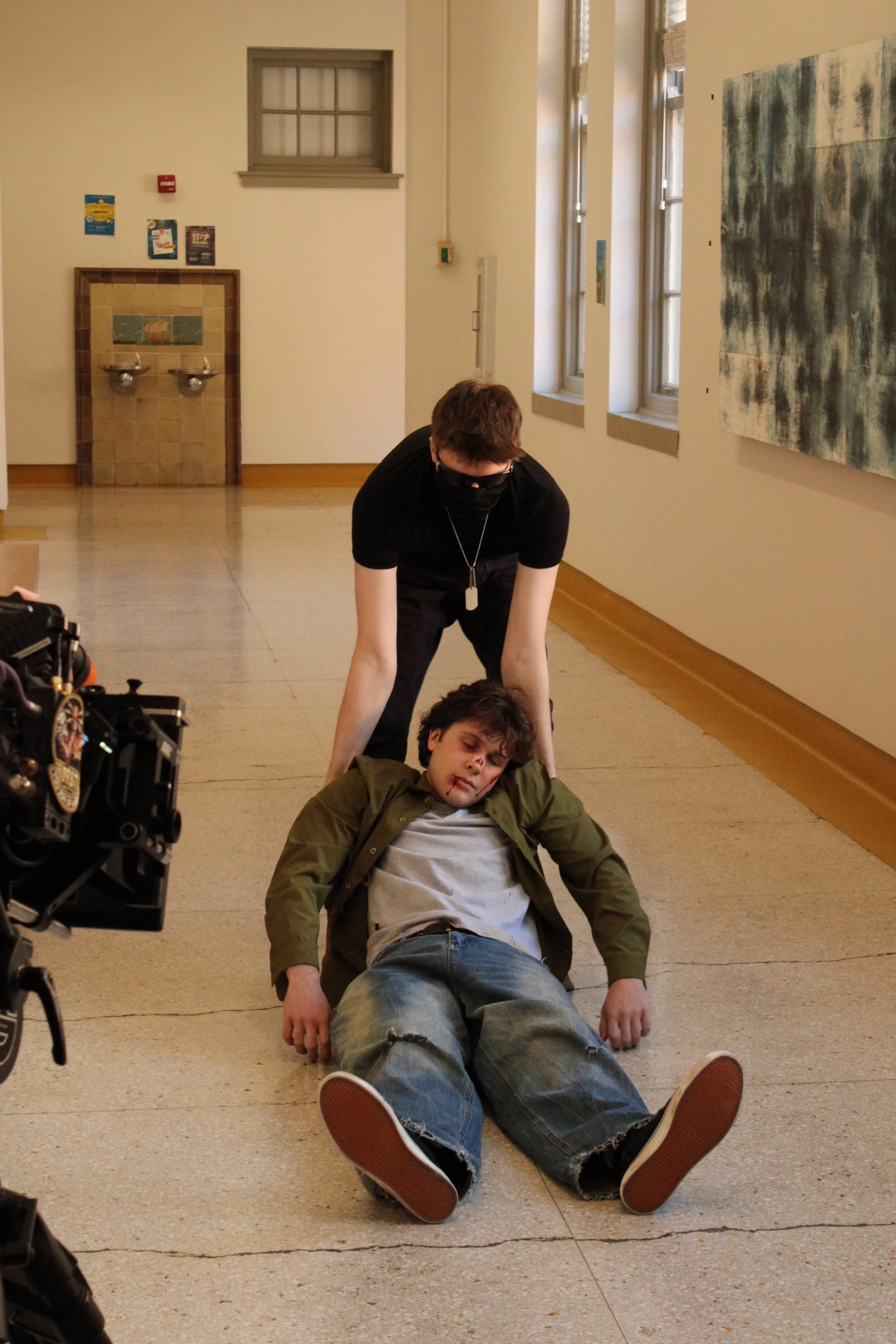
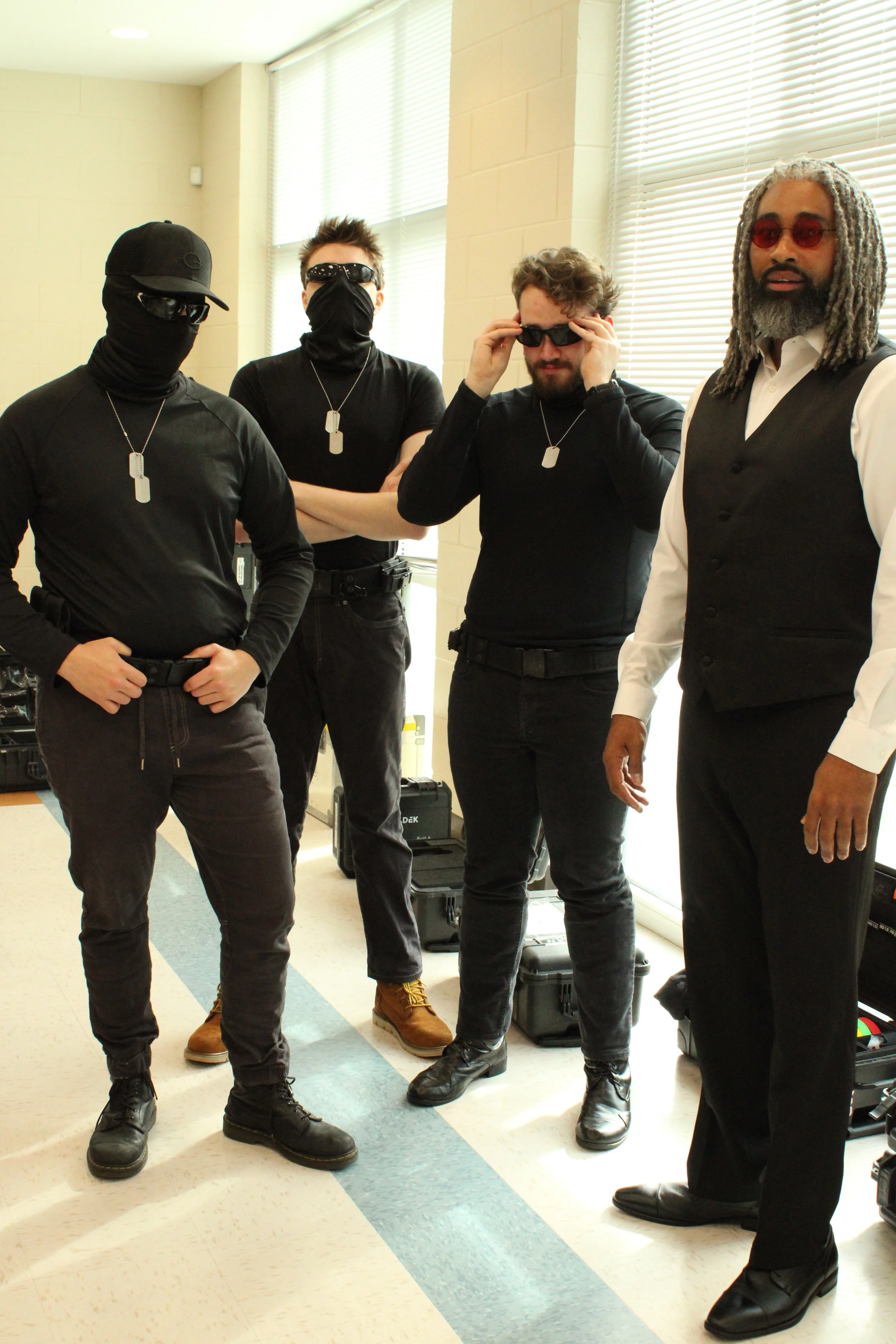
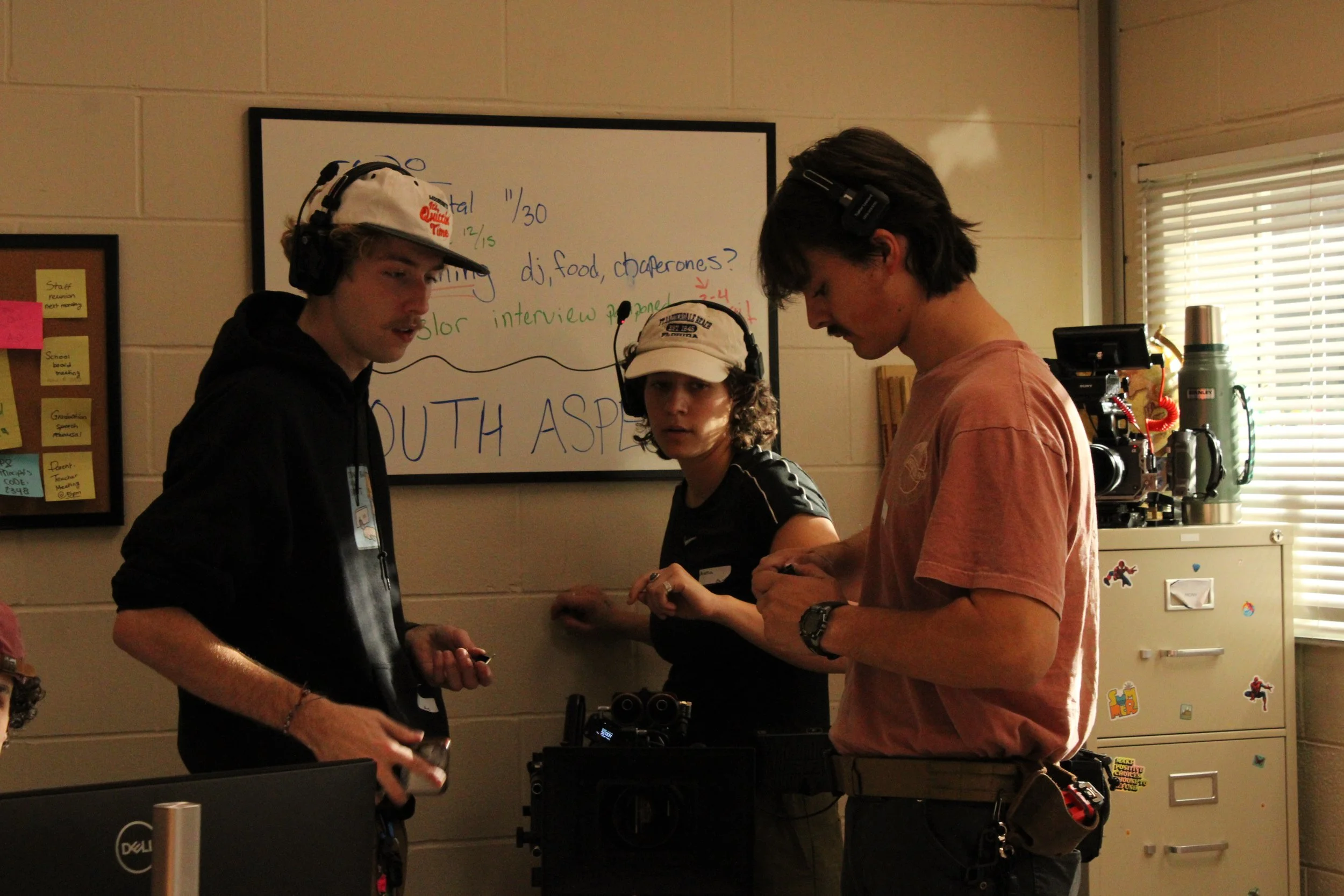
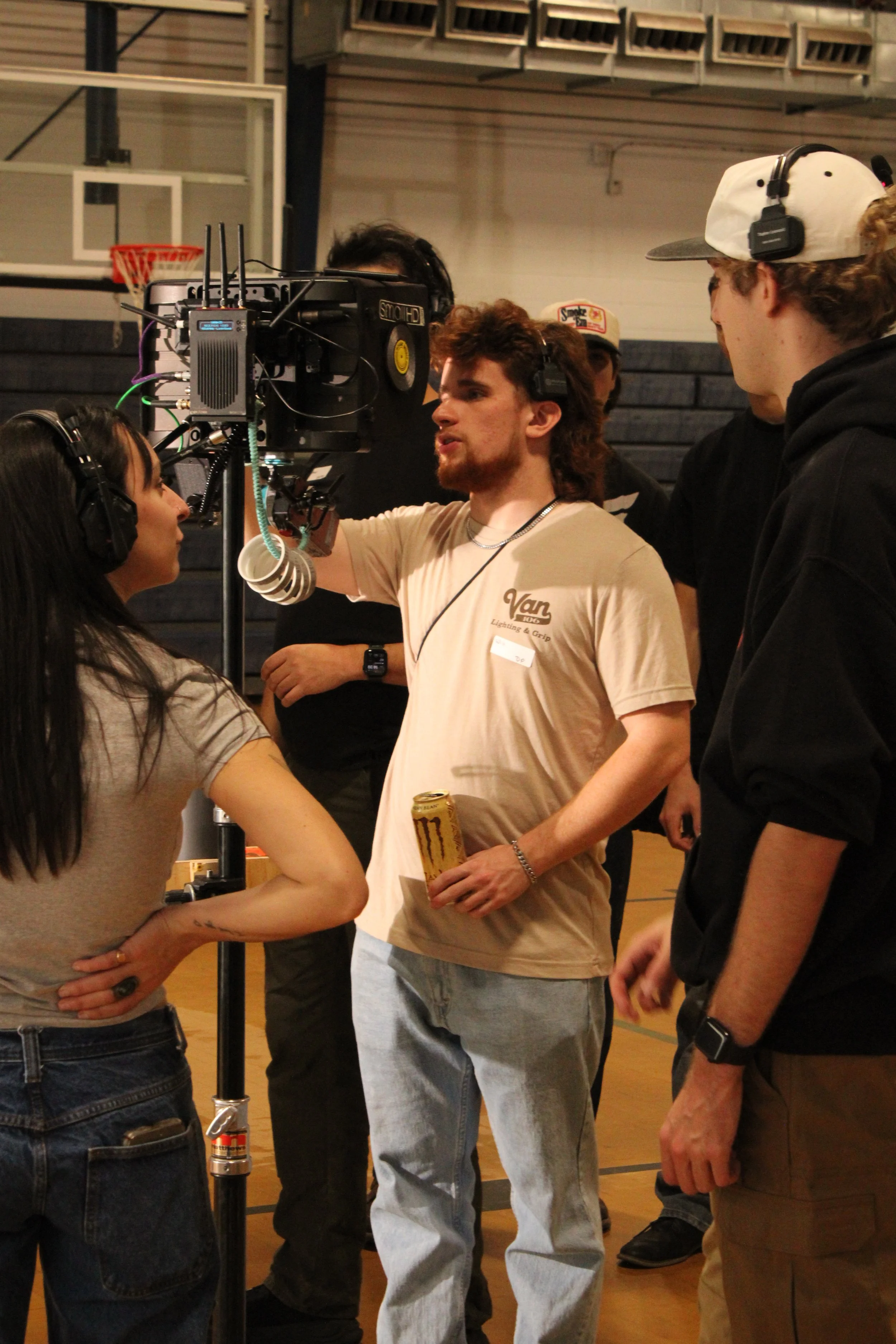
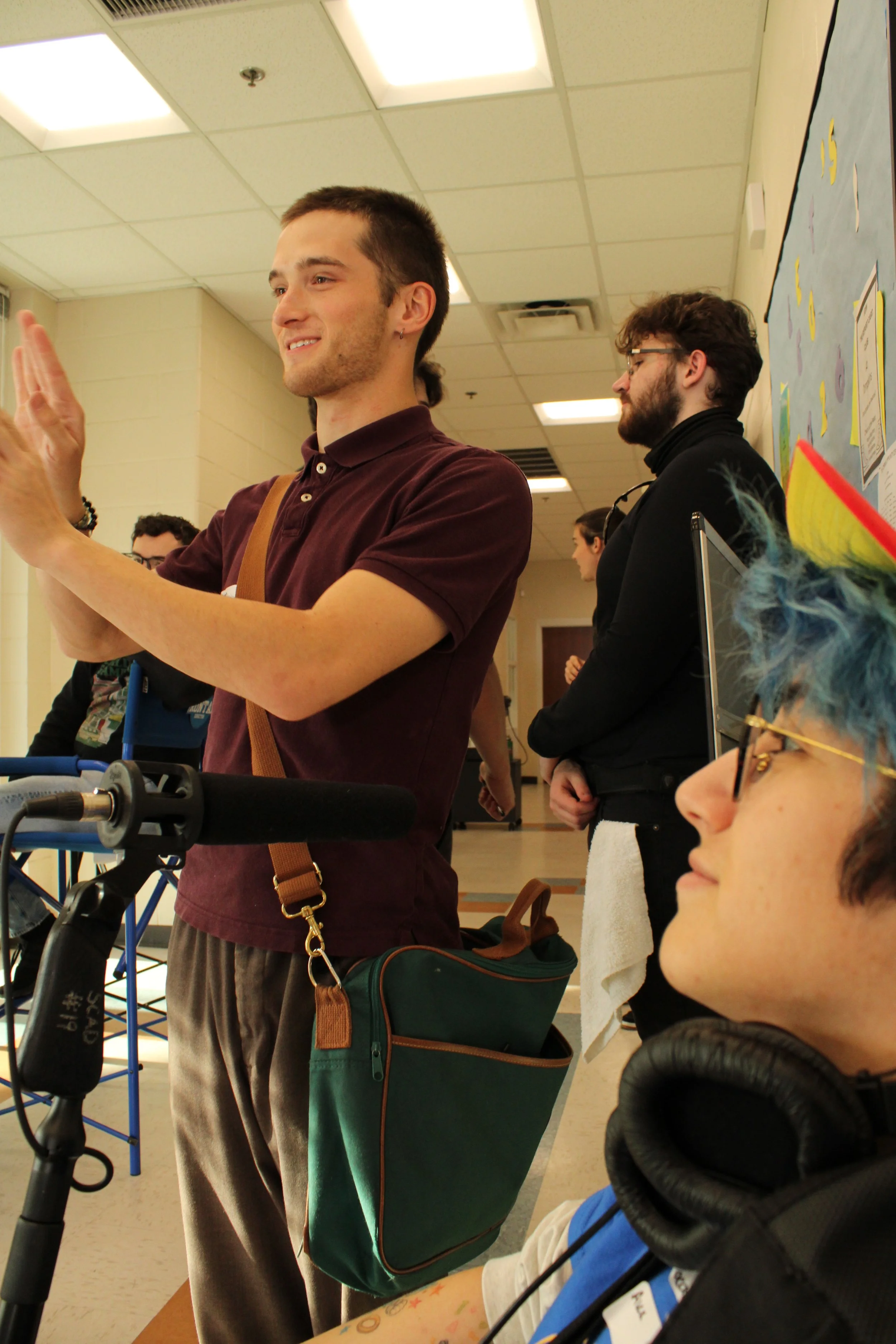
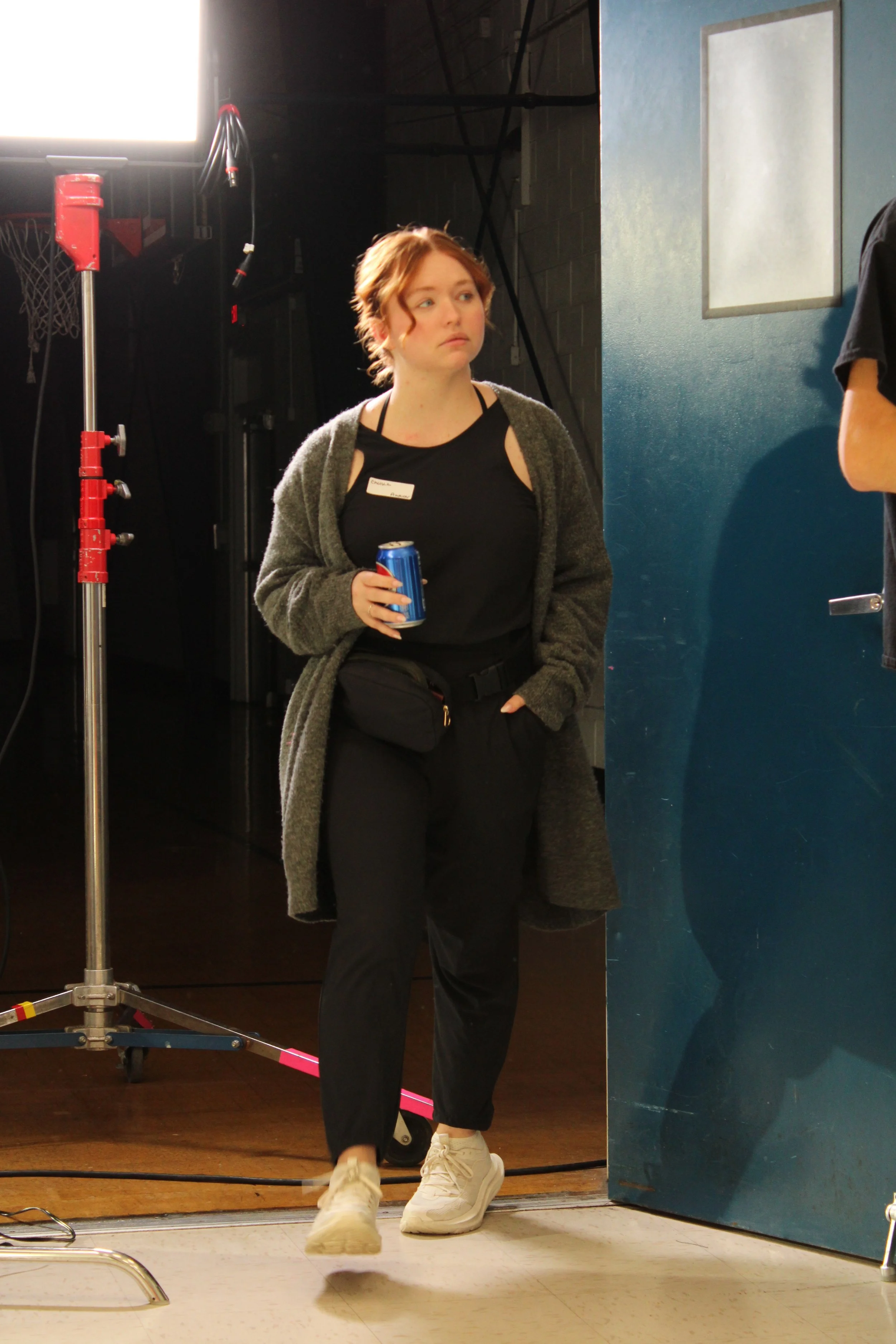
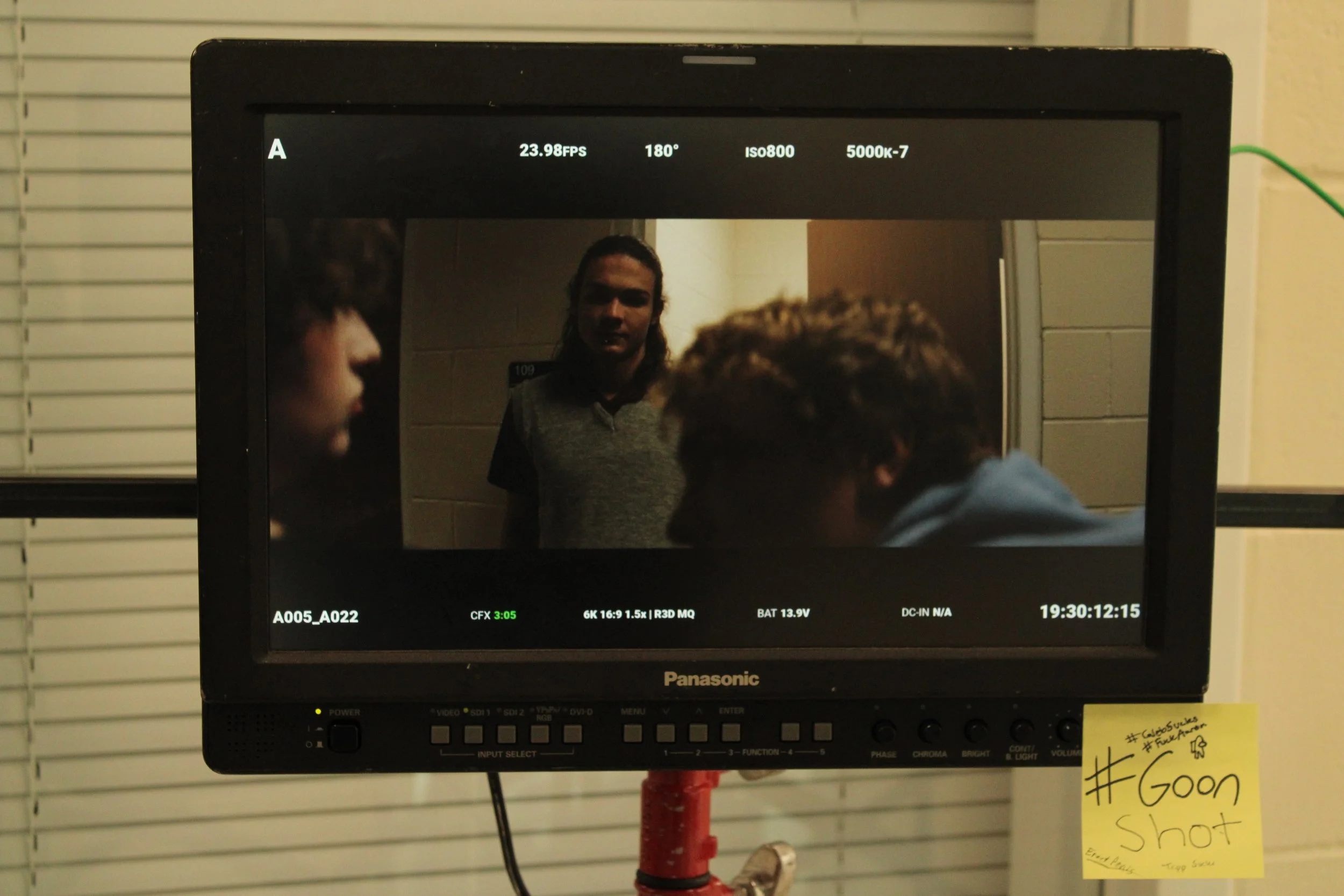
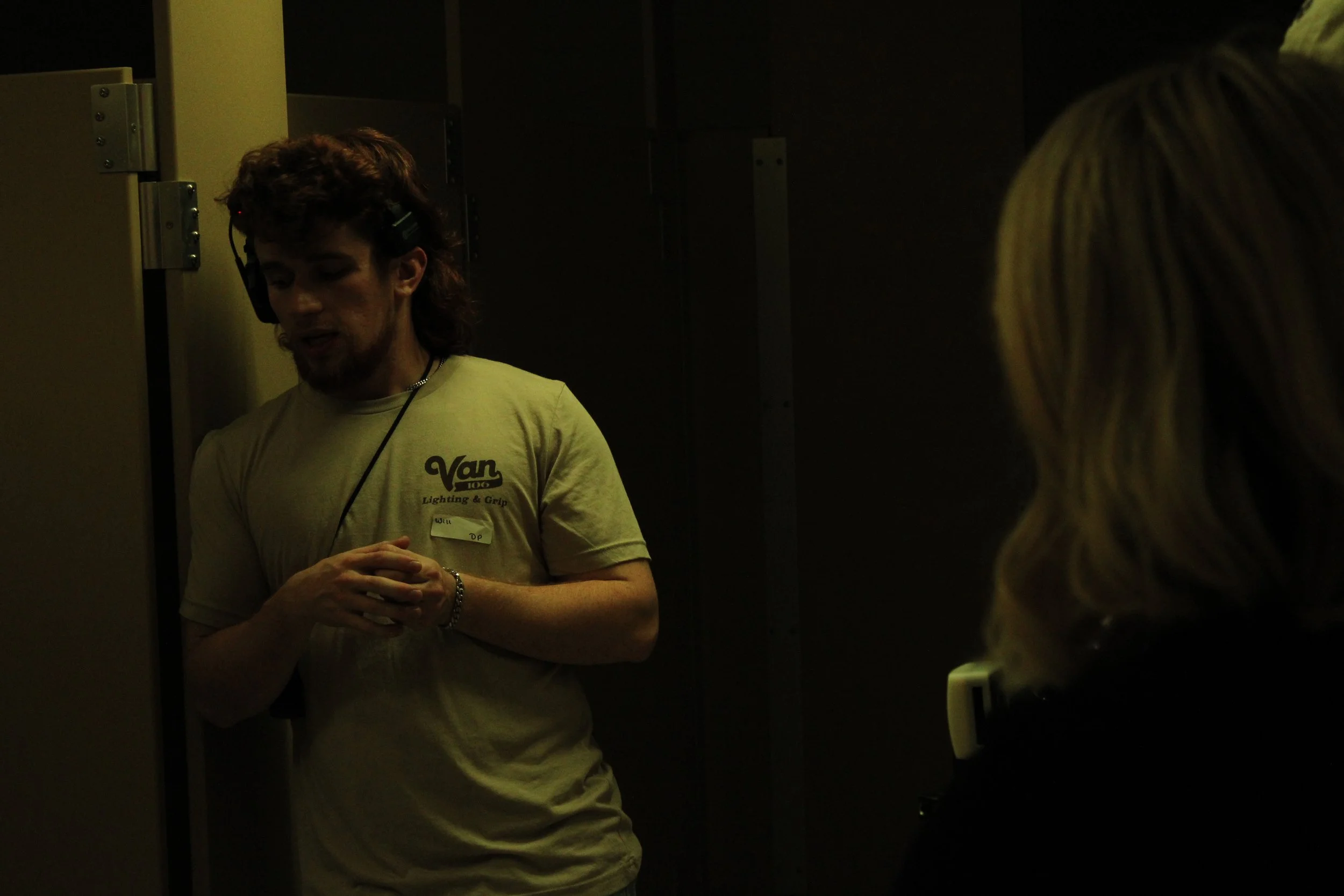
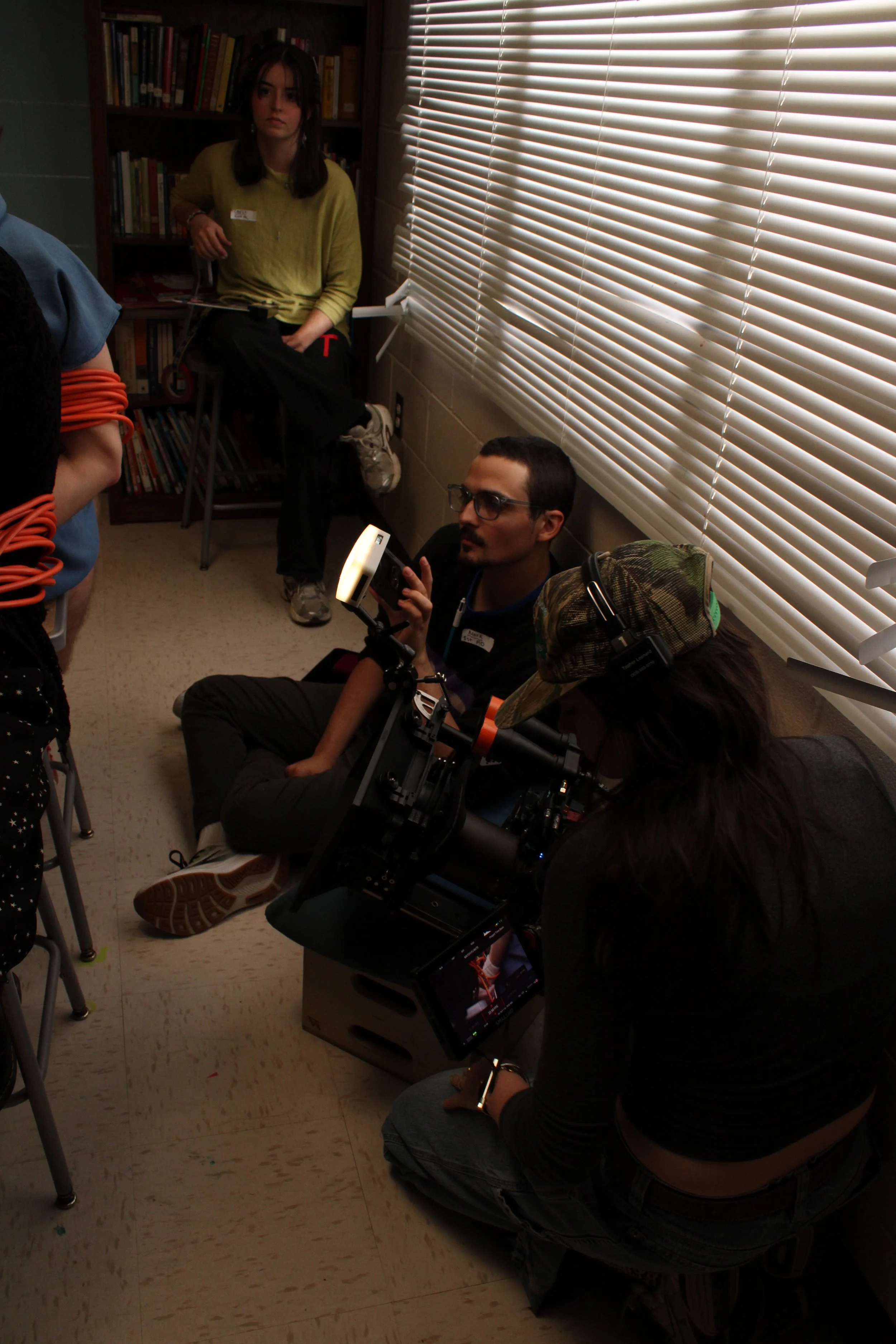
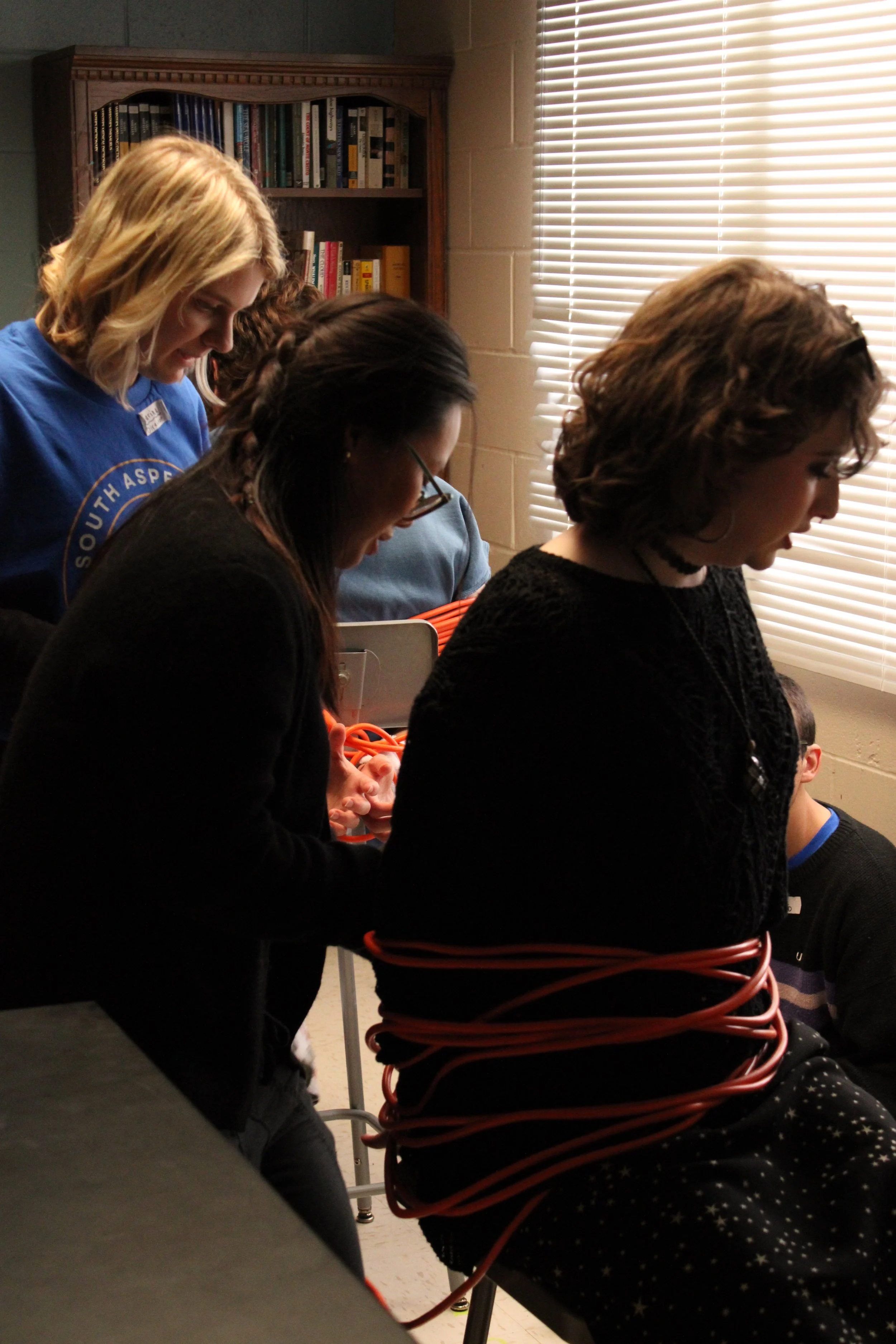
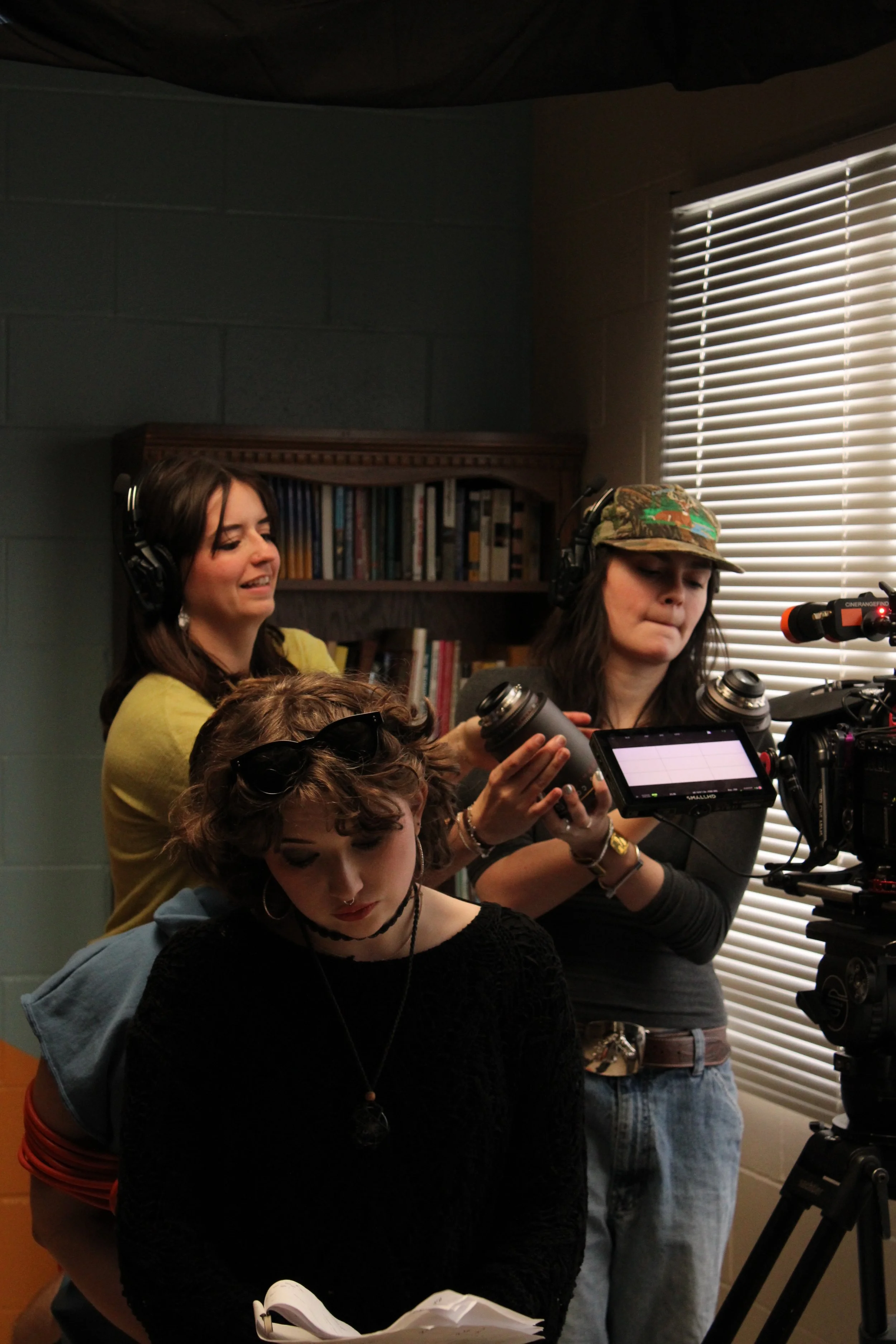
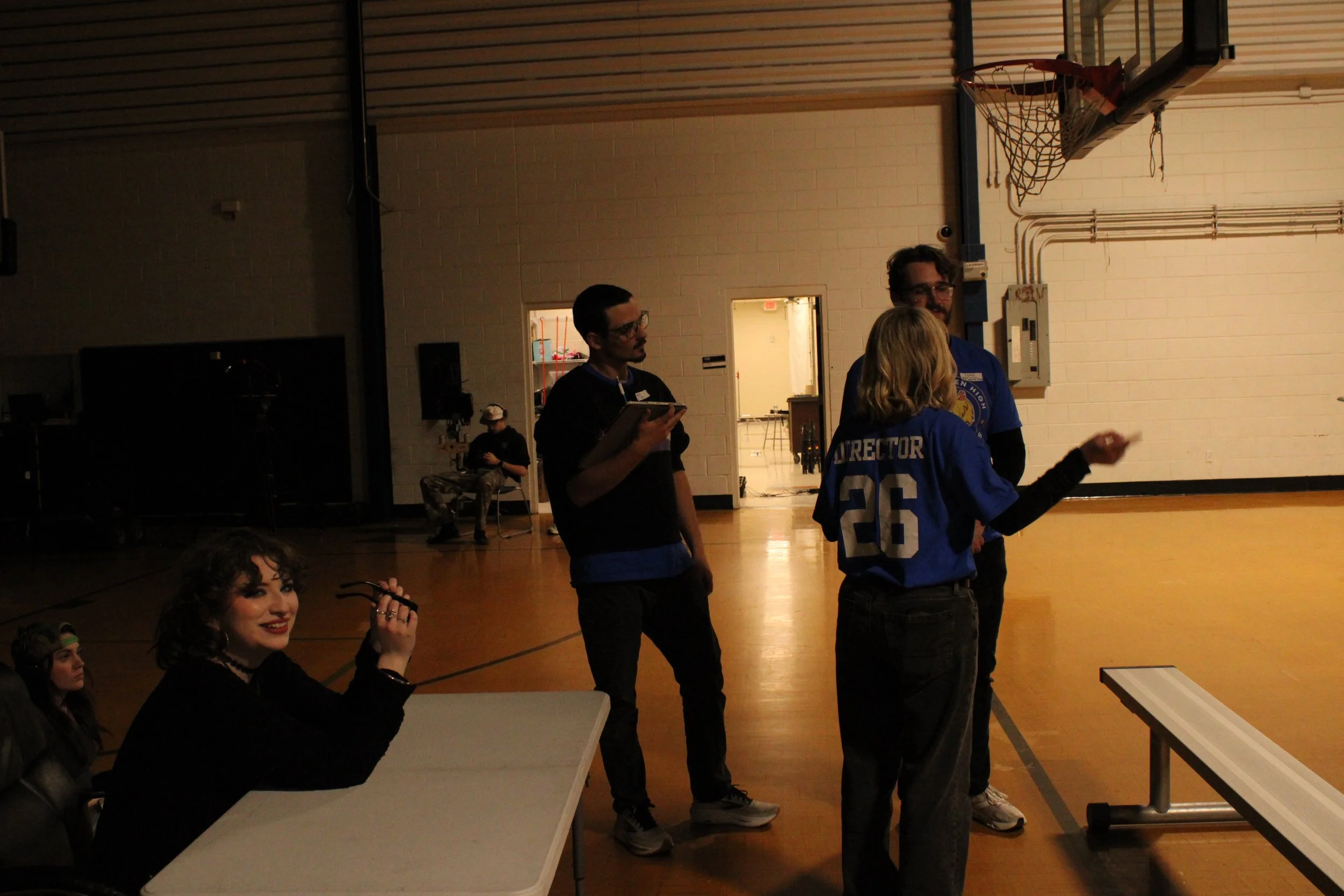
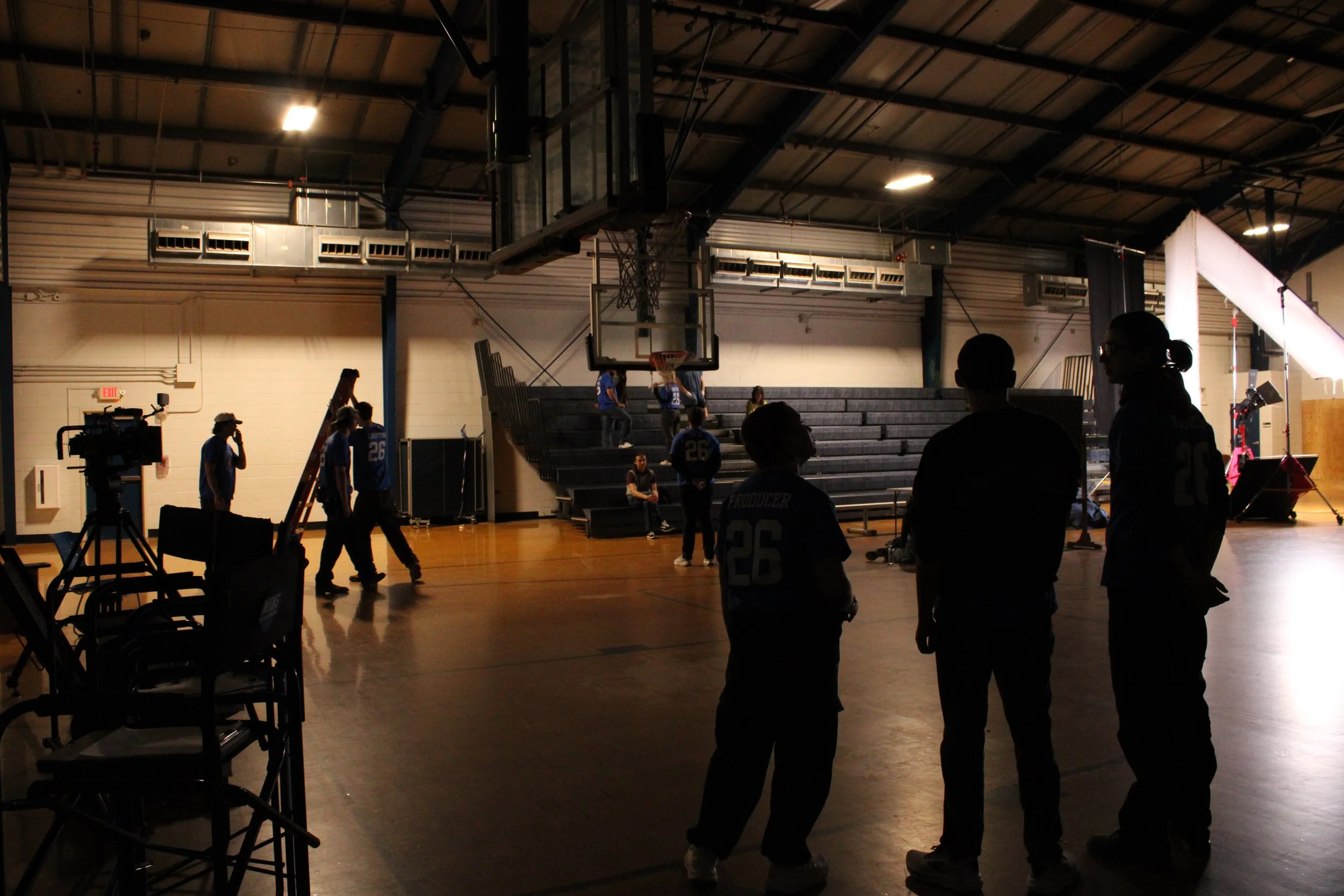
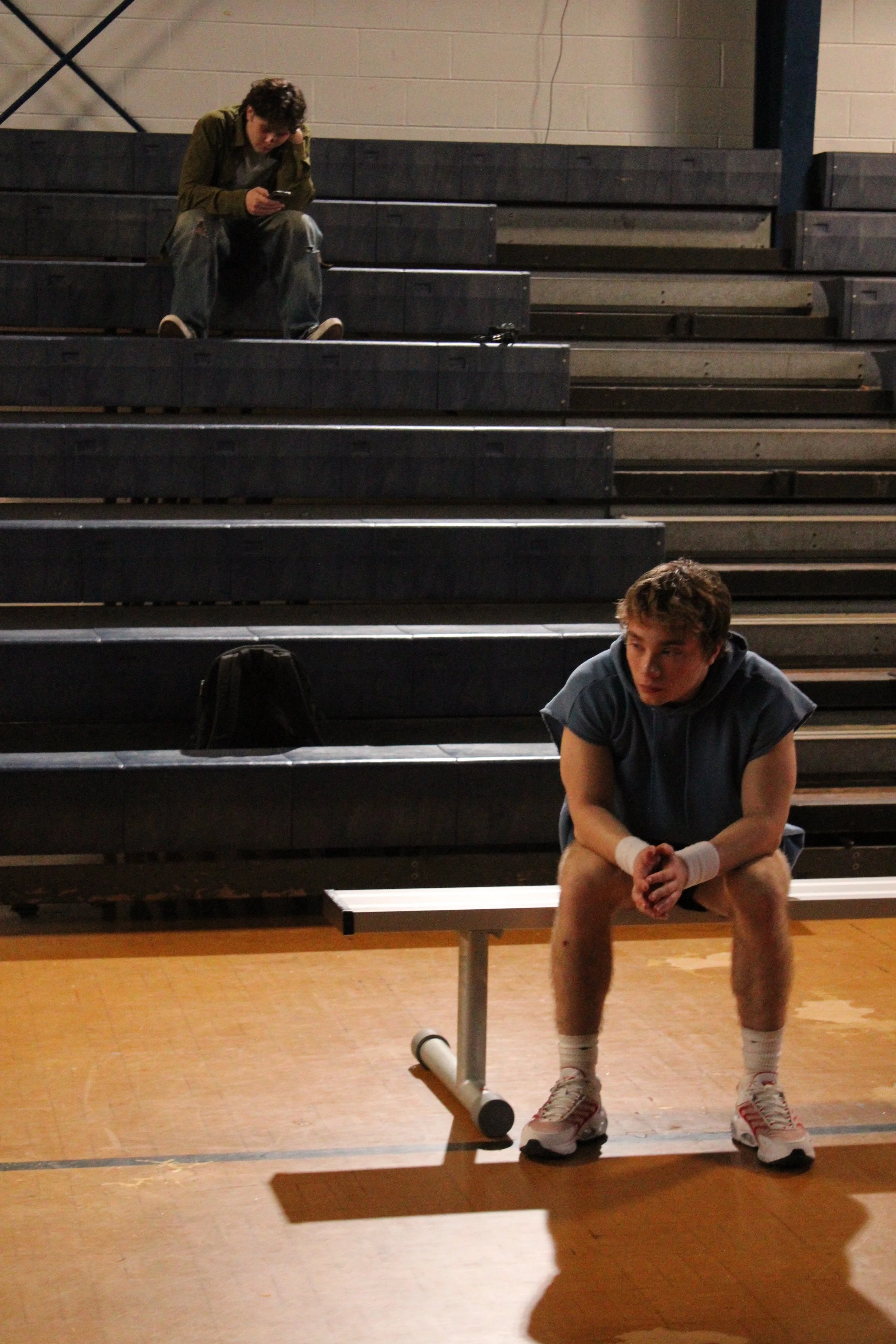
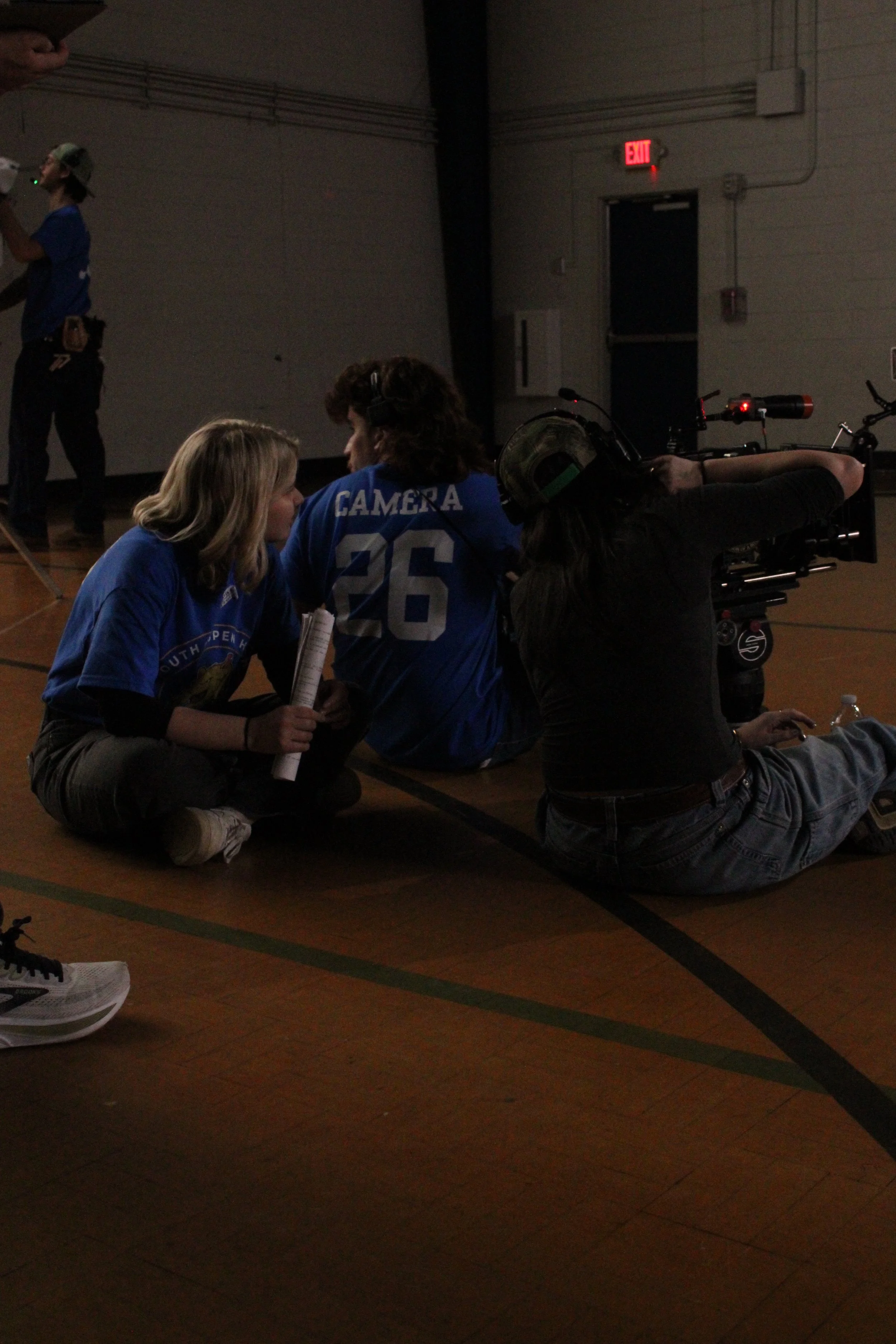
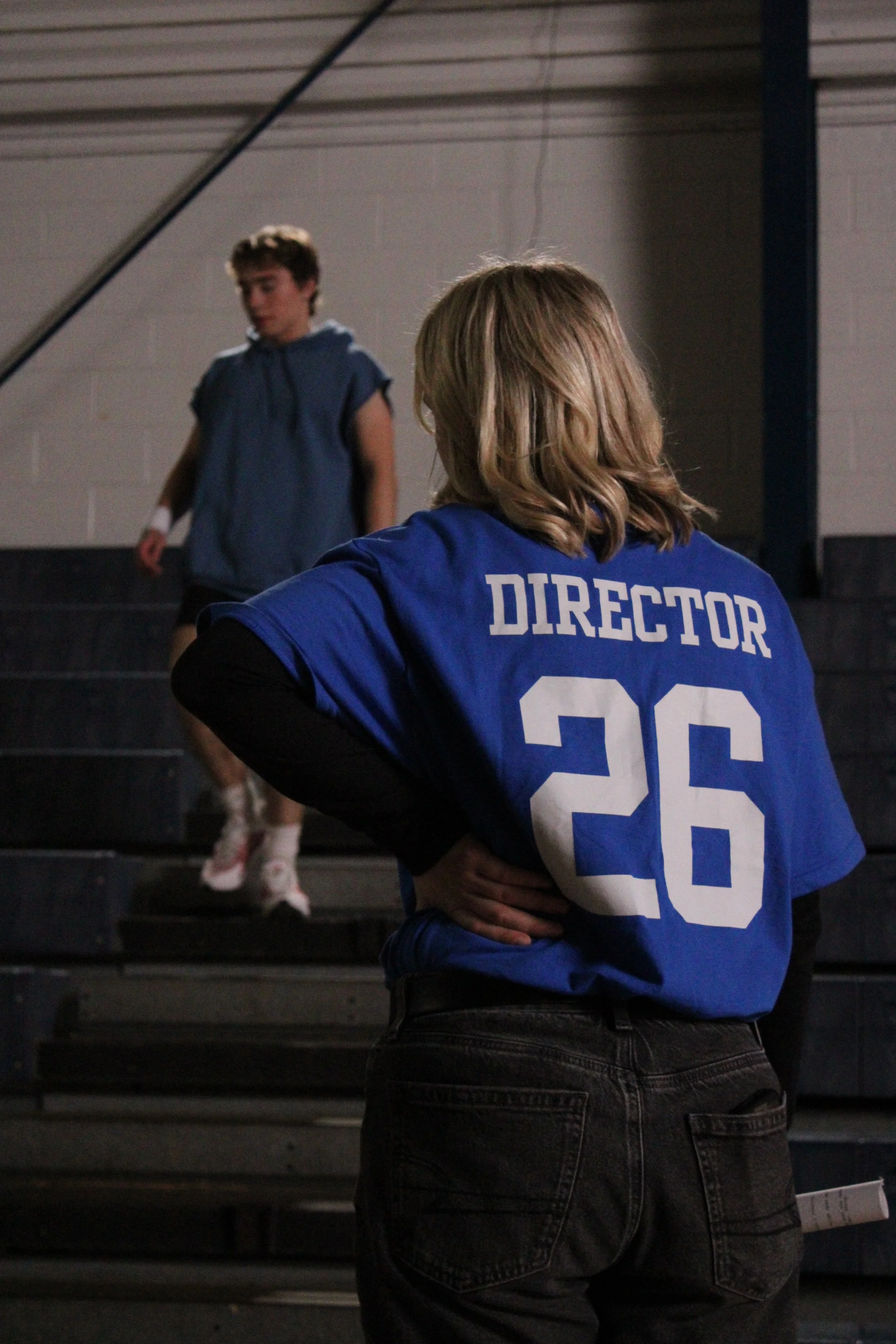
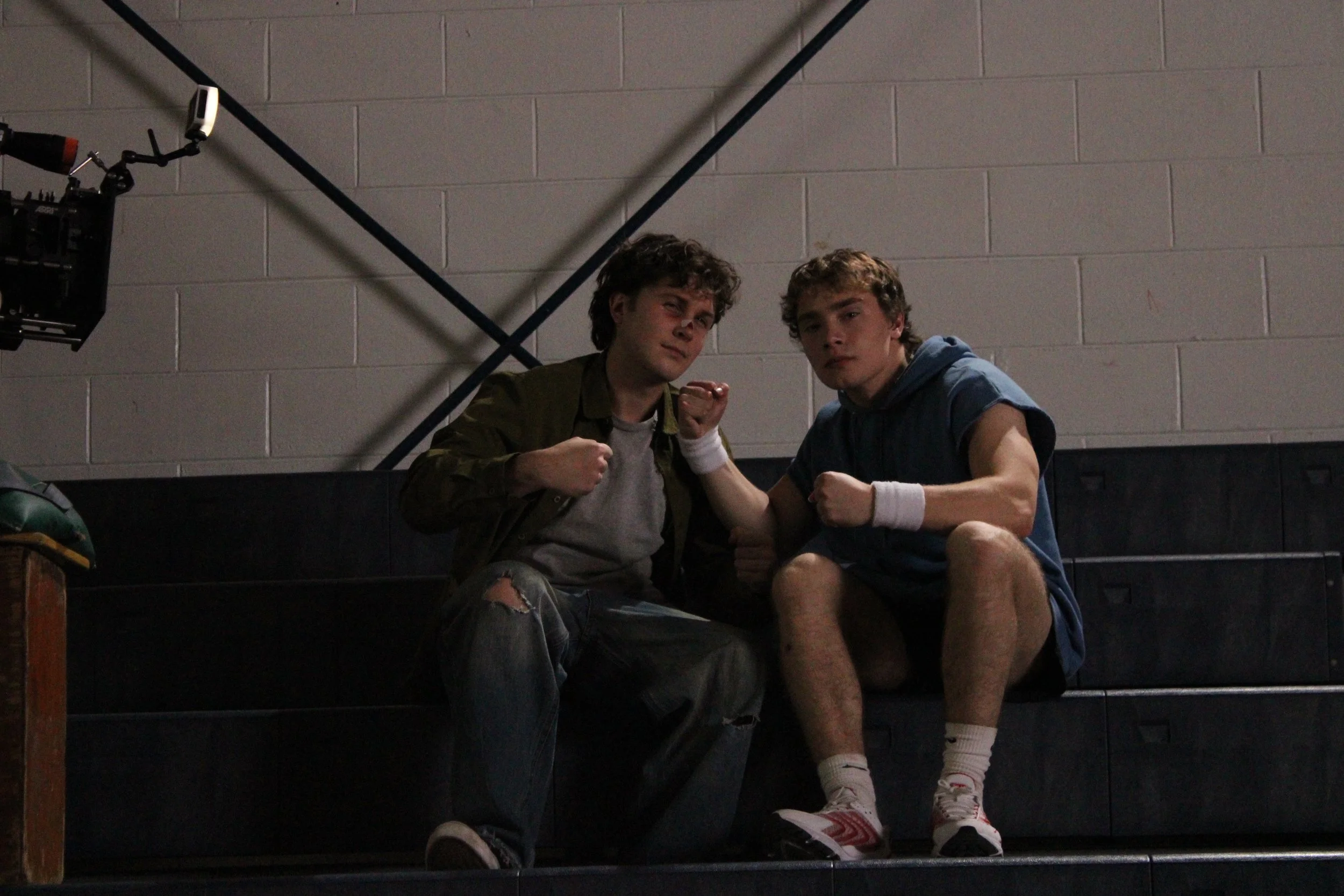
Principal photography ran four days with the full SCAD crew. All major VFX plates were captured: gym speed sequences, hallway void shots, explosion aftermath wide, bathroom pre-explosion build-up, and the classroom void scenes. A rigger handled wire work for the slo-motion Taylor speed shot. All anamorphic camera data, lens information, and tracker placement were logged on the VFX shoot day sheet for match-move reference in post. The anamorphic workflow established by Zach made the EXR handoff process clean throughout the entire post pipeline.
06
January – April 2026
Post Production & Compositing
Wire Removal · CopyCat ML · Screen Replacement · Invisible VFX · Explosion Comp · Digital Double
Post production covered 45 VFX shots across approximately 92 editorial cuts. Hard per-shot deadlines were set early, sorted by difficulty and dependency on the current edit state, some shots were held until edit ranges were confirmed, but a significant portion could be started and progressed independently.
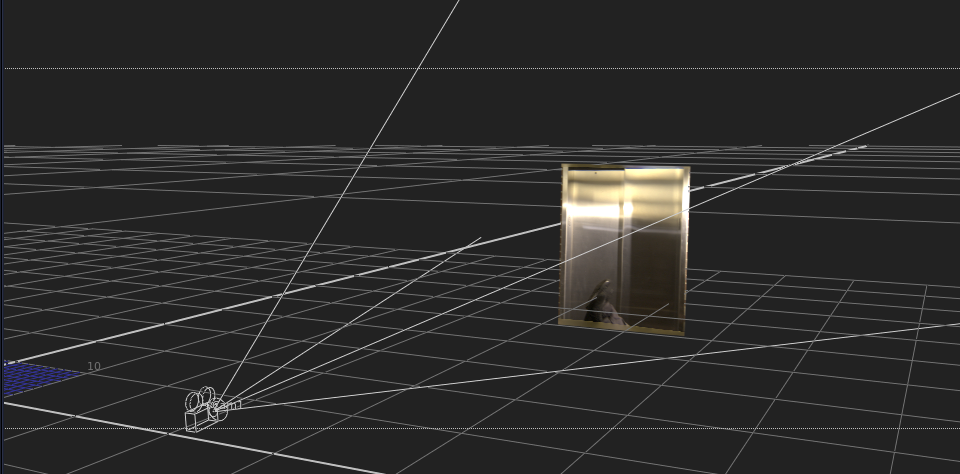
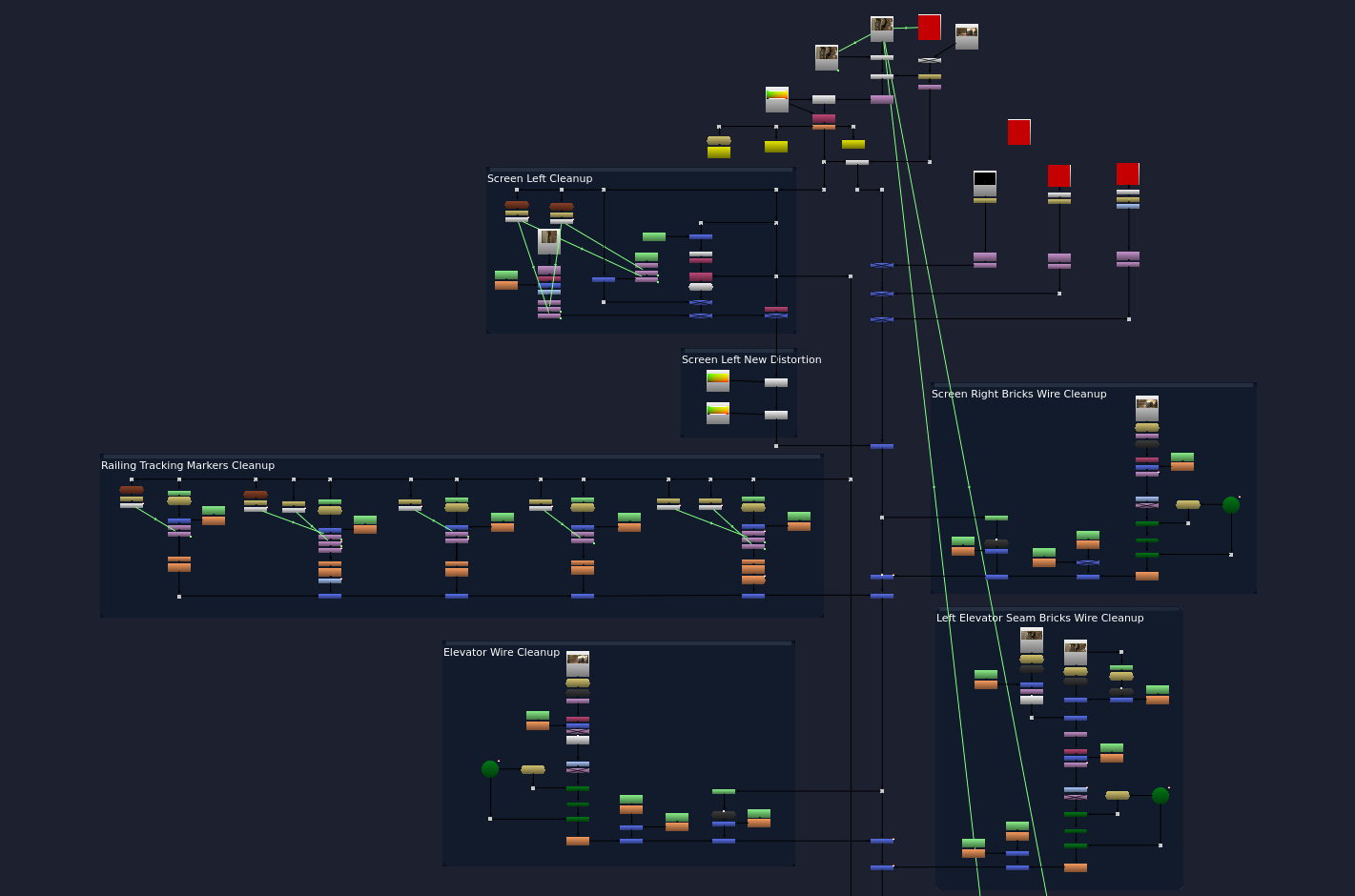
The slo-motion wire removal shot was technically the most demanding clean-up task. The wire itself was handled using a tracked Alembic camera solve (under 0.8 pixel error) from Zach, with a projected still frame used as the clean plate for roto masking around the wire area, visualized in Nuke's 2.5D space. The back hook, which was more complex geometry and harder to project-paint cleanly, was solved differently: 9–10 frames were hand-cleaned in Photoshop at spread time intervals and fed into CopyCat as ground truth to train a per-shot model. After a few rounds of iteration, the model delivered a result clean enough to hold at normal viewing distance.
Here is the Before and After for the Wire Cleanup as well as the Nuke script.

The trail was simulated using frame-by-frame rotomation to match the movement of the speedster in this shot. This allowed for proper motion to match the movement of our actor. Using AI assisted roto, I was able to place the trail behind the actor, to integrate it properly. I also used a combination of lightwrap and BeebleAI relighting to help the emission from the trail be sold properly. Here is the Normal pass, before and after of the relight, and the final comp.
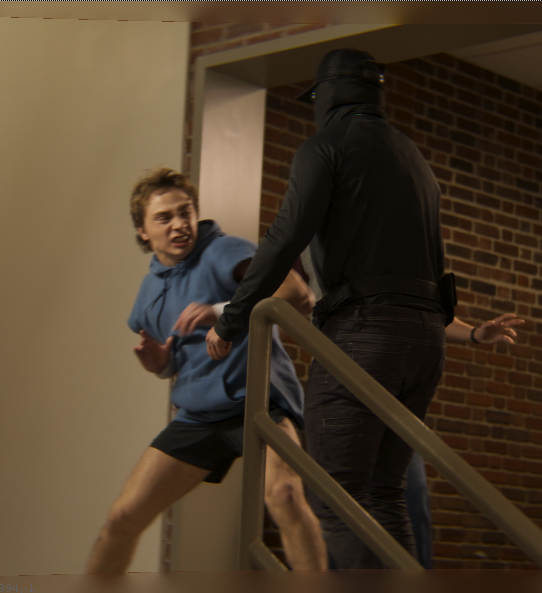
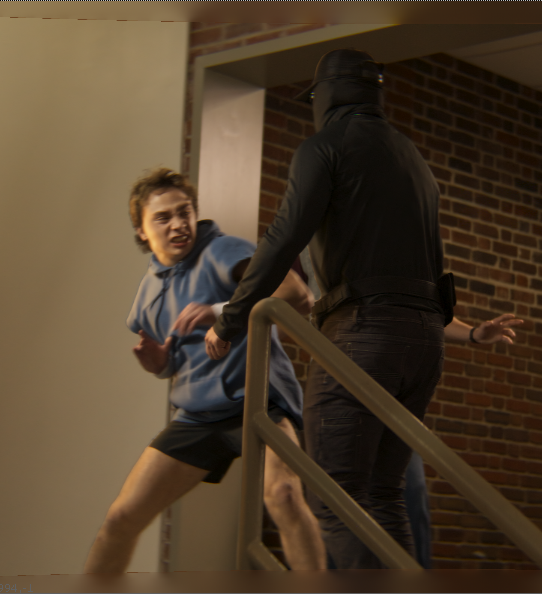
Invisible VFX made up a significant portion of the shot count and are among the work I'm most proud of on this project. The gym required a CG banner on the back wall, built by the production designer and Tripp, composited in with a corner-pin track, soft-light blend for color matching, and a gizmo-driven drop shadow. The school logo was added to the gym floor center for world-building. In several coverage shots, Taylor had to be rotoed out and re-comped from a different take to fix continuity. None of this VFX is visible, which is exactly the point.
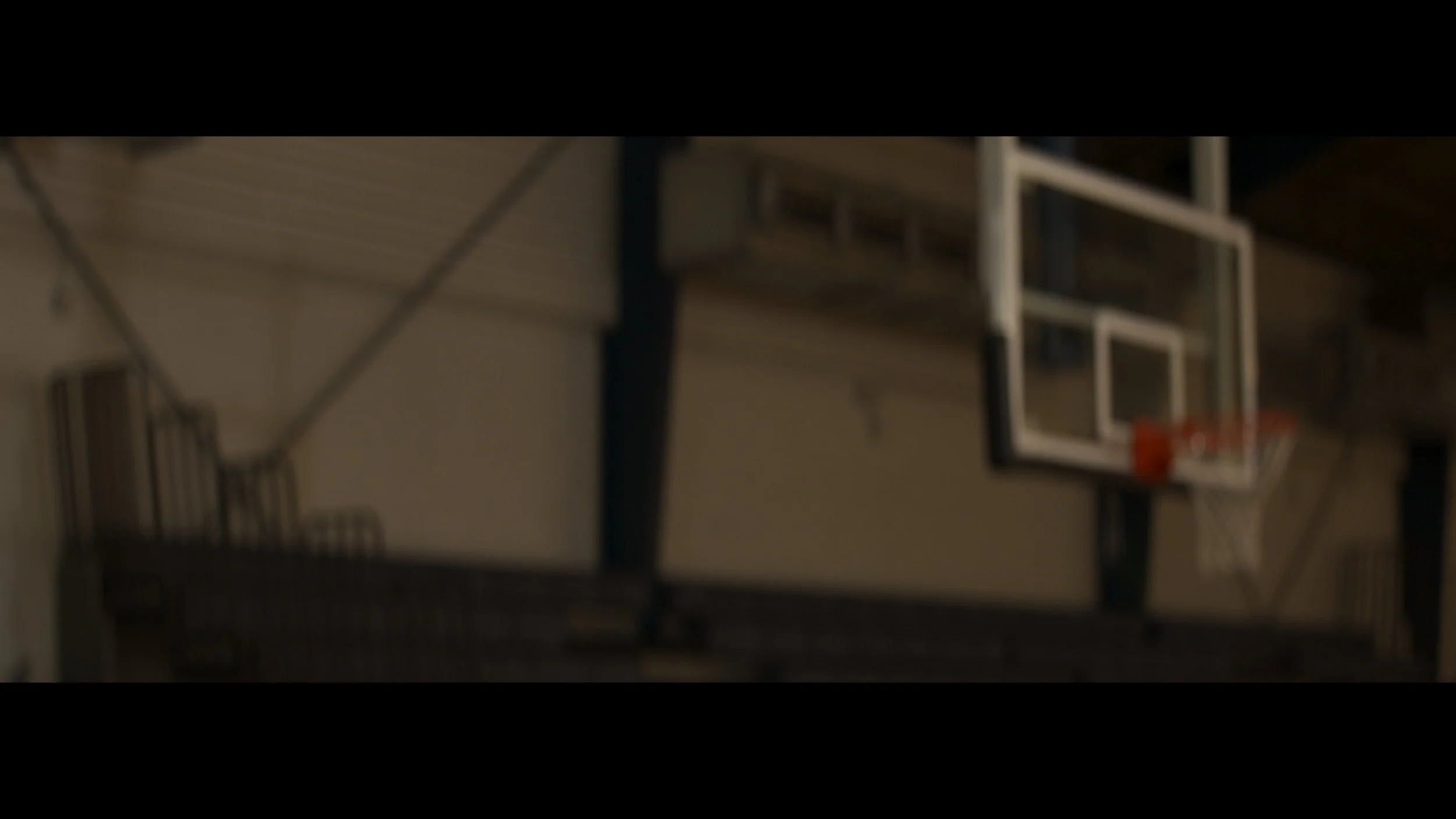
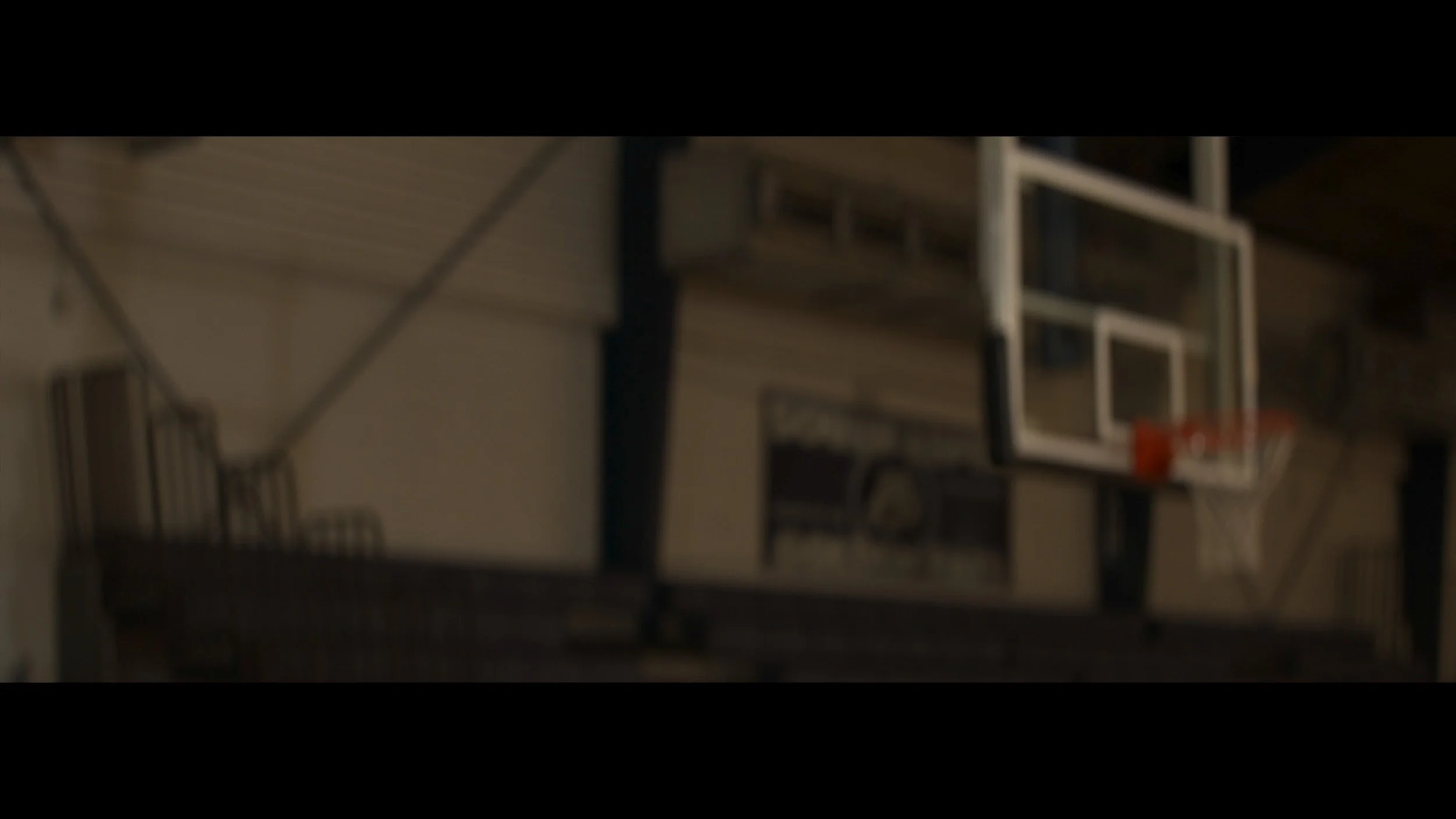
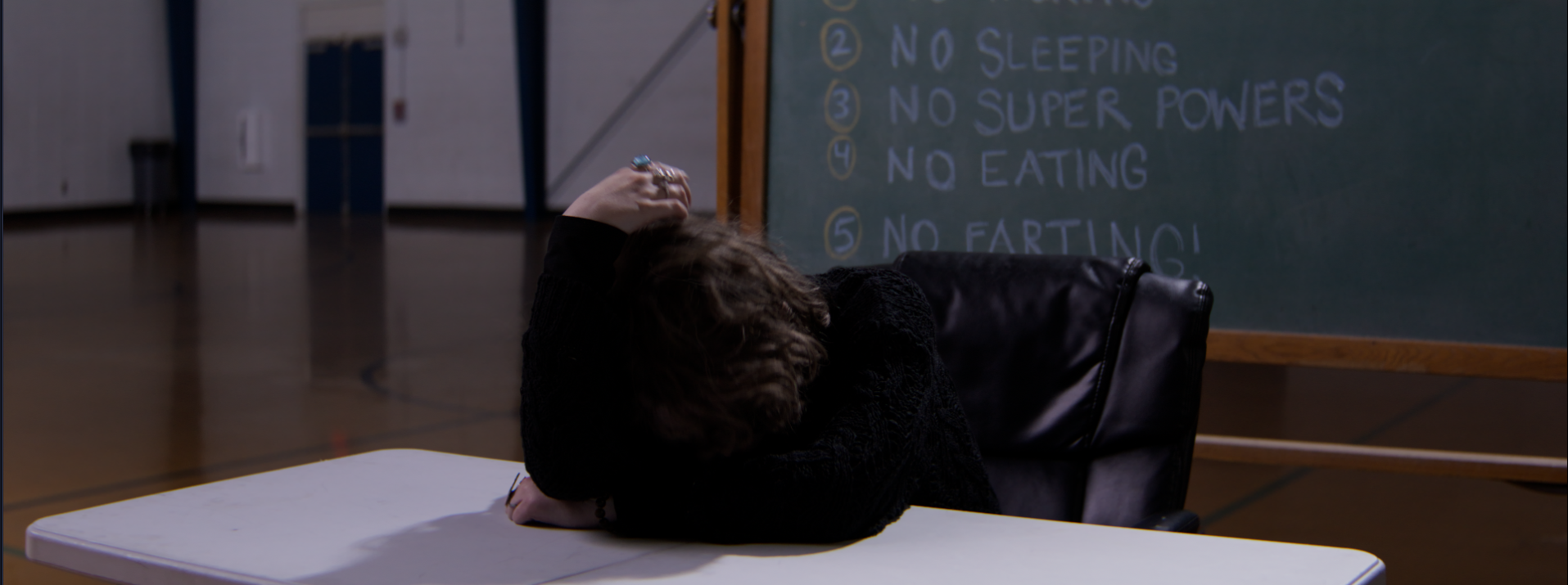
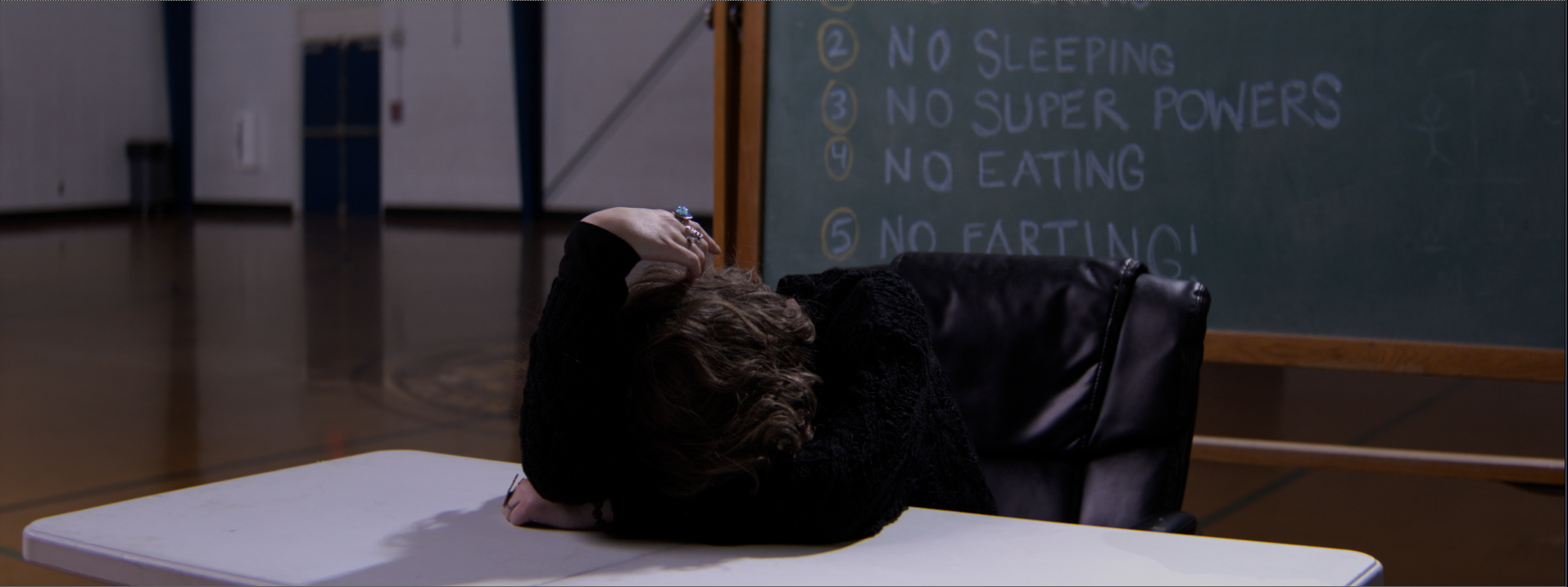
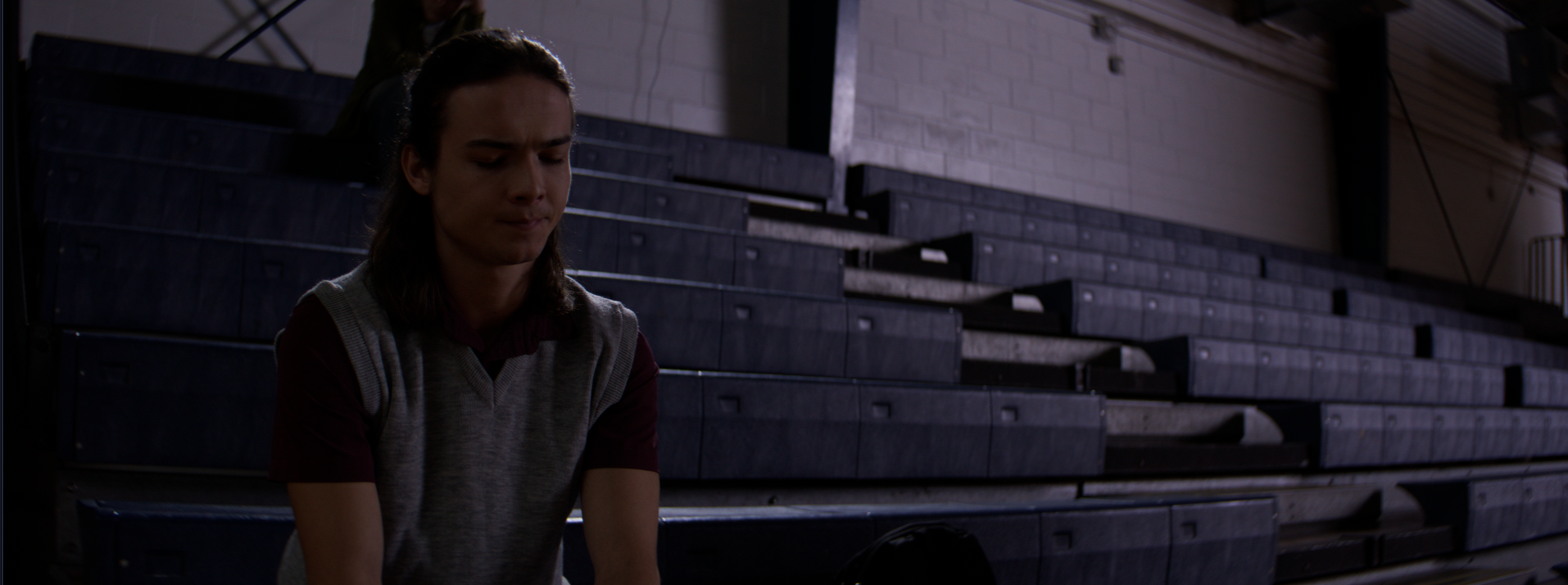
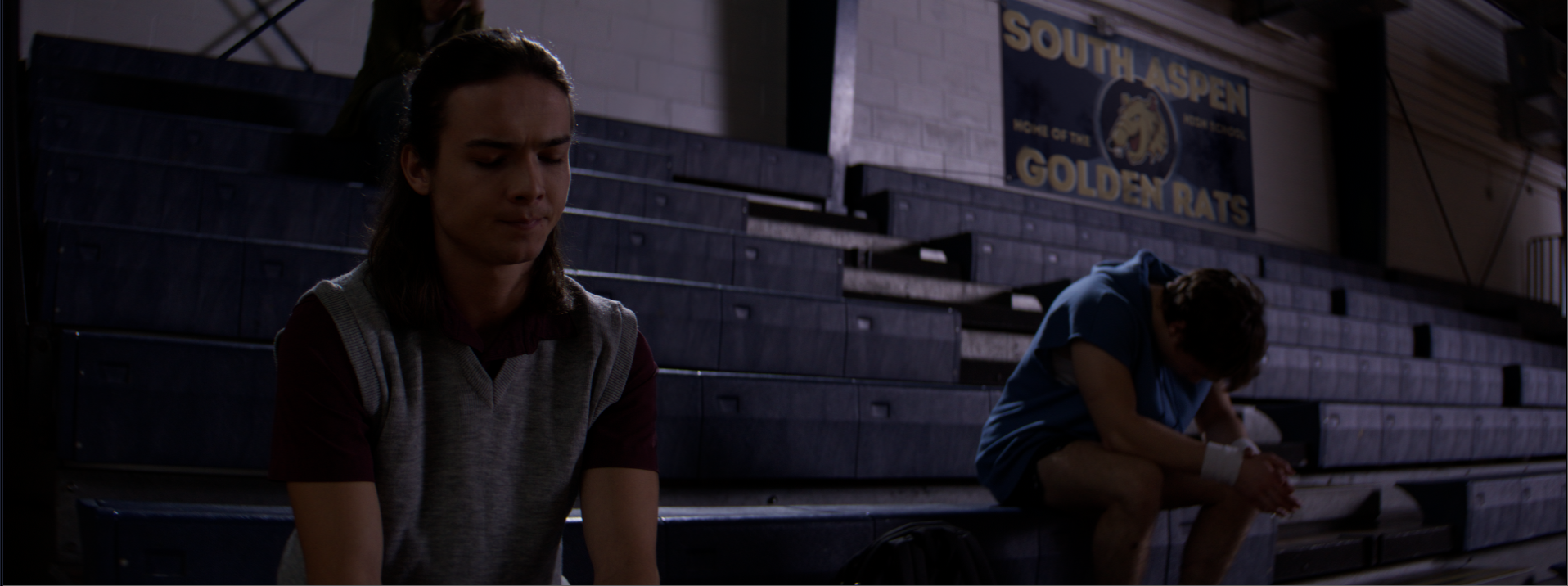
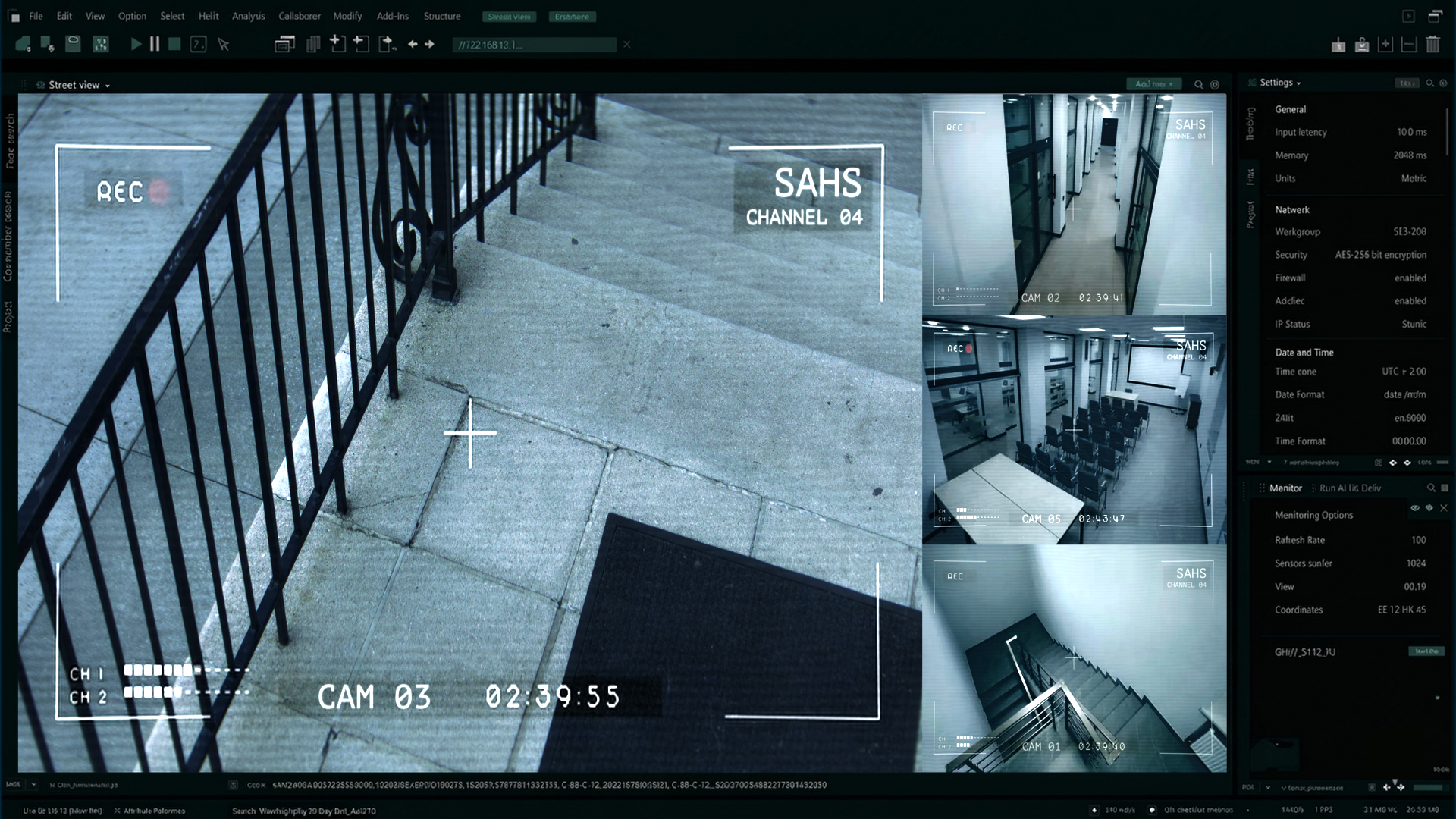
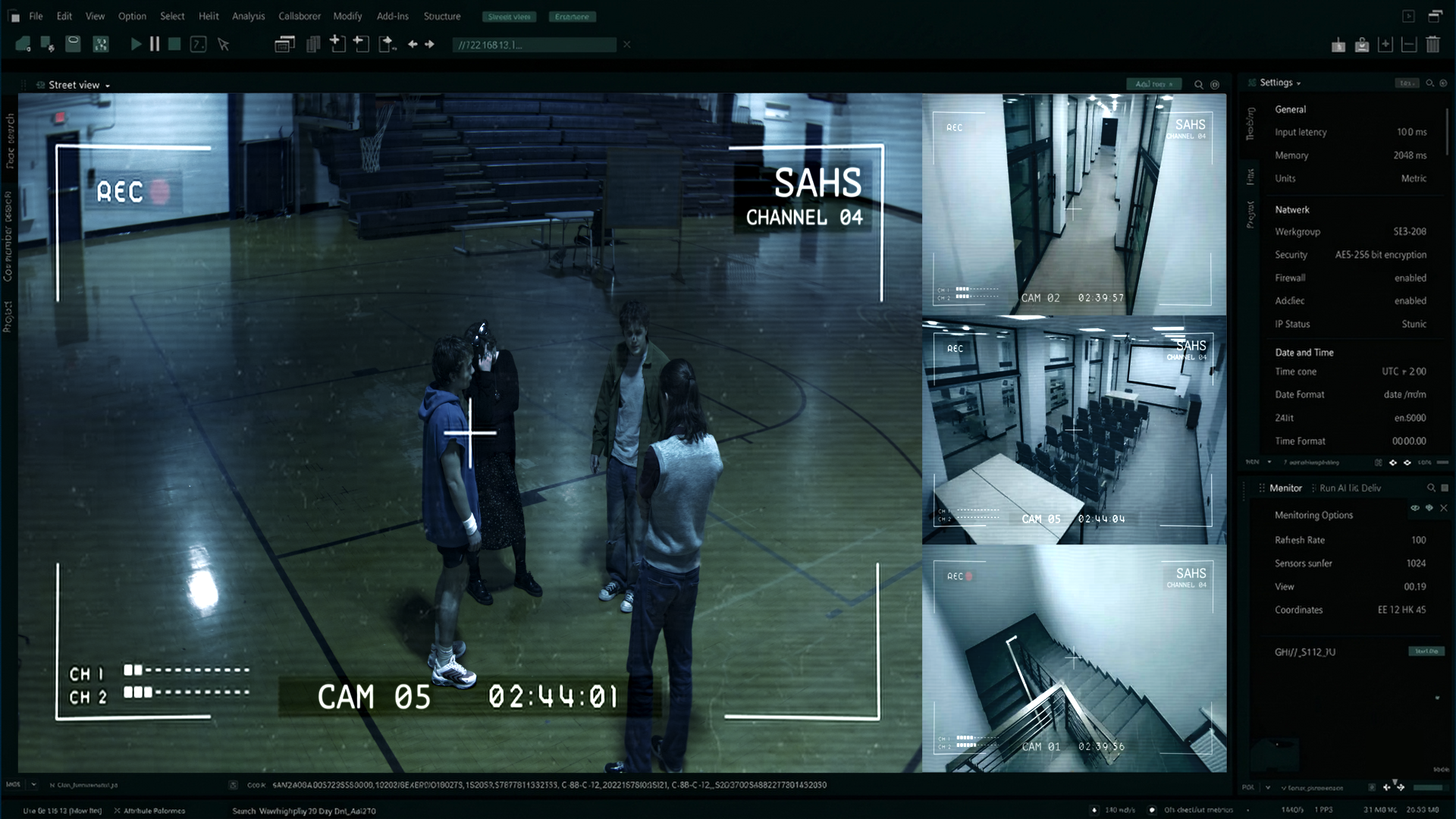
Screen replacement for Clarkson's office monitors was built in After Effects, animated security camera feeds designed to read as plausible surveillance footage, then composited via corner-pin in Nuke. AI rotoscoping tools were used to get clean edges around Fenster's hair on the over-the-shoulder comp.
For the hallway explosion shot, a set extension closed off the end of the corridor before the explosion FX from Aaron Linde were composited in through the left wall. The bathroom explosion, Fenster's subsurface glow build-up before the blast, used Houdini-rendered FX assets from Aaron combined with comp-driven glow, subsurface simulation on the skin, and color work in Nuke. It's one of the most layered composites in the film and the result reflects that investment.
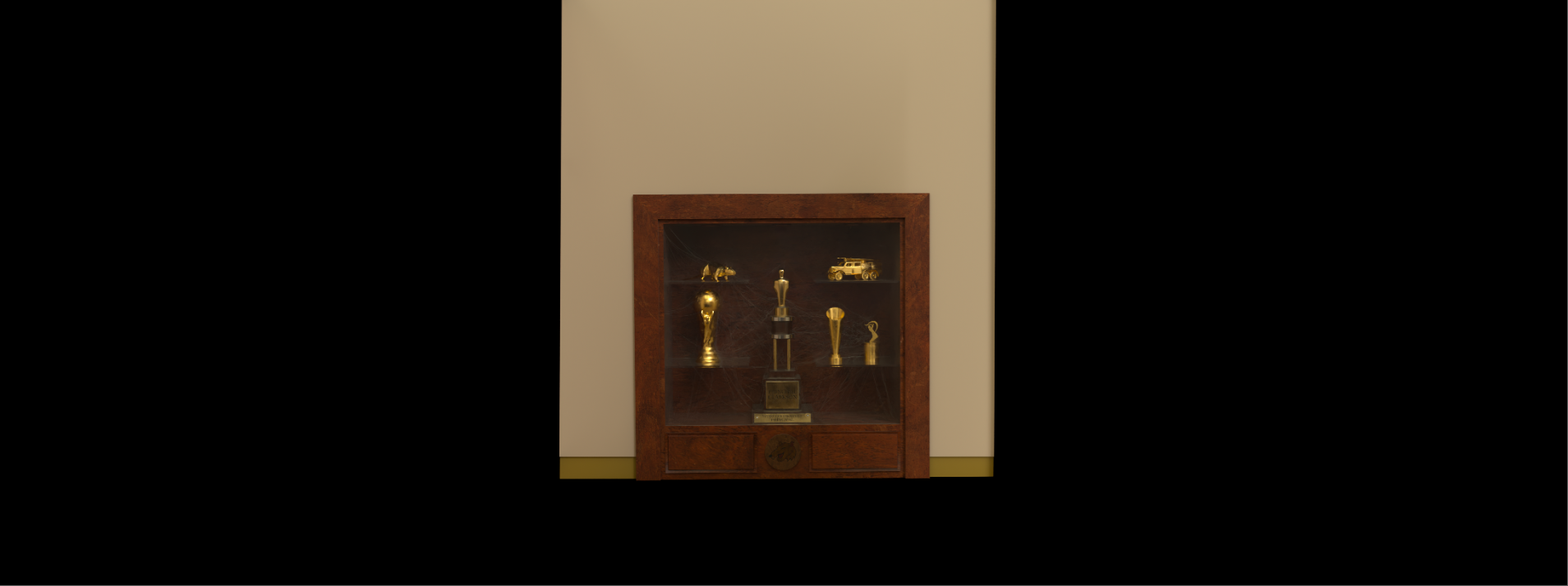
Hallway explosion final composite and breakdown.
Felix explosion final composite and breakdown.
A digital double was created in Maya for one of the wall-running speed shots where the actor wasn't filmed. A cloth simulation was run on the double, with a retime applied in comp to match the speed of the sequence. The animation required workshopping, the initial wall-running motion read as off, and the path was simplified to a cleaner corner-rounding trajectory.
The explosion aftermath wide, the crew surveying the destroyed school, required fully replacing the school facade rather than retaining any plate. After evaluating how much of the building remained visible behind the FX sim, it became clear the destruction geometry would cover too much of the original plate to blend cleanly. The school was replaced entirely, with roto on the actors being the primary remaining challenge given the lack of bluescreen on that setup.
Here is the final composite and breakdown.
07
April 20, 2026
Final Delivery
EXR Drive · Color Pipeline Handoff · Sound · Editorial
Final EXR delivery was made on April 20th, a full drive sent to editor Amelia and the colorist. Prior to final delivery, test EXRs were sent to the colorist to confirm the pipeline was properly set up end-to-end. The full post chain, VFX, color, sound, and motion media, was coordinated with the broader post-production team as picture lock approached. Sound design was handled separately, contributing atmosphere and score to the finished film.
Here is the full VFX breakdown, which doesn’t include every shot, but a good number of them.
Total delivery from VFX was 92 shots, ranging from full CG environment replacements and simulation-heavy explosion sequences to invisible work — banners, screen replacements, continuity fixes, and clean-up passes that audiences will never notice but that the film couldn't hold together without. The full CG drone shot, the last shot to lock, presented render farm issues late in the schedule due to limitations in the SCAD farm infrastructure, but was resolved before the delivery deadline.
A year of work. A lot of problem-solving, a lot of iterations that didn't make it, and a lot of shots that are genuinely hard to distinguish from the plate. For a team of students working on a senior thesis with real production pressure and real deadlines, that's what it looks like to do the work right